
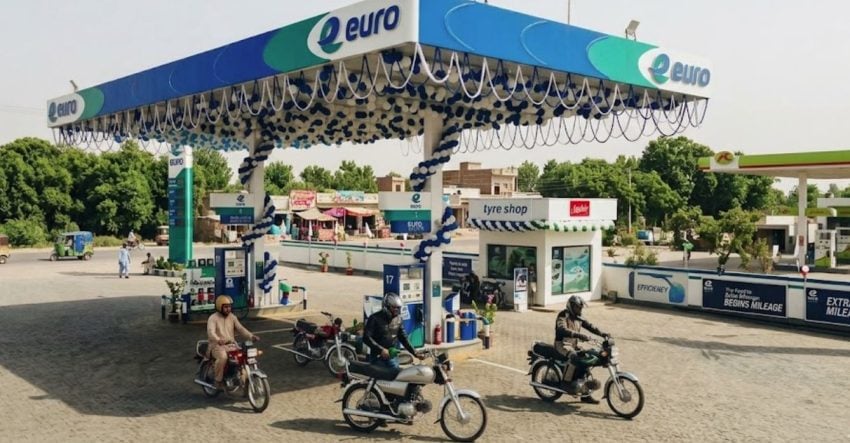
KARACHI – Confusion persists over Pakistan’s upcoming petrol price adjustment as consumers, who enjoyed relief in recent weeks, were hoping for another cut in fuel prices. However, fresh military tensions between US and Iran jolted global oil markets, raising fresh uncertainty over whether the government will be able to pass on further relief despite expectations that domestic fuel prices may remain unchanged in the upcoming review on July 10.
Pakistanis are likely to be spared another increase in fuel prices this Friday despite renewed turbulence in global oil markets. Energy experts believe recent fluctuations in international crude prices have not been high enough to justify immediate revision in domestic petroleum rates.
Although escalating tensions in Middle East fueled volatility, the average crude price during the current review period has remained within a range that supports keeping local fuel prices unchanged. However, analysts caution that any sharp surge in oil prices over the next few days could quickly alter the outlook.
Brent crude inched up to $78 per barrel, while US West Texas Intermediate (WTI) jumps to $73.65 per barrel after both benchmarks posted gains of more than $1 in the previous session, reflecting growing concerns over potential supply disruptions.
The prolonged confrontation between Washington and Tehran could drive crude prices even higher, increasing pressure on energy-importing countries such as Pakistan. If geopolitical tensions begin to ease, however, traders are expected to shift their focus back to market fundamentals, including rising U.S. crude inventories, strong domestic production, and planned output increases by major oil-producing nations.
The latest escalation came after US military launched strikes on around 90 Iranian military targets, saying the operation was aimed at safeguarding navigation through the Strait of Hormuz following the collapse of an interim peace agreement announced by President Donald Trump. Iran responded by claiming attacks on U.S. military facilities in Bahrain and Kuwait, raising fresh fears of a broader regional confrontation.
With nearly one-fifth of world’s oil and liquefied natural gas shipments passing through the Strait of Hormuz, experts say any disruption to the strategic waterway could send global energy prices sharply higher.
Is Pakistan handing Petrol Price control to Oil Companies under new Deregulation Plan?