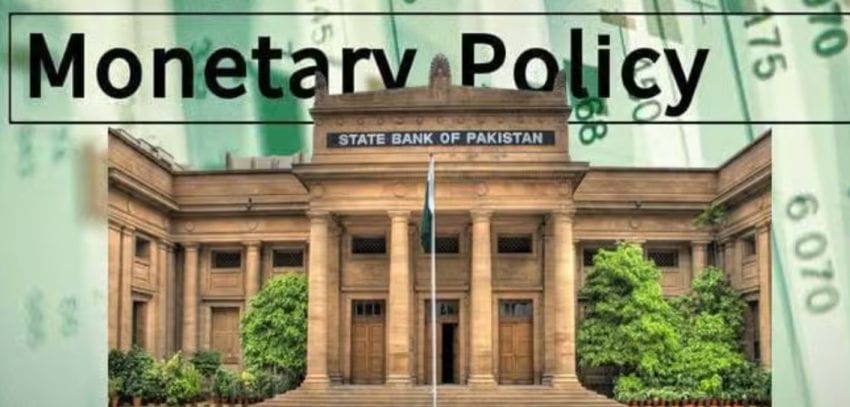
ISLAMABAD – With global oil prices rising and regional tensions adding uncertainty to economic outlook, Monetary Policy Committee (MPC) of the State Bank of Pakistan meets today to decide the country’s policy rate.
After surprising markets by keeping the rate unchanged in January, the central bank now faces a critical moment as investors and analysts closely watch whether it maintains its cautious stance amid growing inflation concerns.
MPC’s January 26, 2026 decision to keep the policy rate unchanged at 10.5%, a move that surprised many market observers who had anticipated a reduction to stimulate economic activity.
Despite expectations earlier in the year for potential easing, market sentiment shifted dramatically. Most analysts now predict that the central bank will maintain the current policy rate, citing rising geopolitical risks and volatile global energy prices.
Karachi based Brokerage house revealed State Bank will adopt cautious stance, keeping rate steady while closely monitoring the rapidly evolving global economic landscape.
Topline Securities expects no change in benchmark rate. A recent survey conducted by brokerage revealed that 96% of participants now anticipate the central bank will hold rates, reflecting growing concerns over inflationary pressures triggered by global developments.
The firm noted that escalating tensions in Gulf region sharply pushed up Brent crude oil prices by nearly 25% over the past two to three weeks, intensifying fears of renewed inflation.
State Bank will keep policy rate unchanged at 10.5%, arguing that rising global energy prices and regional instability have clouded the inflation outlook and limited the central bank’s ability to cut borrowing costs.
During its previous meeting in January, MPC highlighted that headline inflation stood at 5.6% year-on-year in December 2025, a figure broadly aligned with the central bank’s projections. However, core inflation remained elevated at around 7.4%, indicating persistent underlying price pressures.
Pakistan’s headline inflation rose to 7% year-on-year in February 2026, marking the highest level since October 2024. The figure falls within the 6–7% range projected by the Ministry of Finance, but signals growing inflationary risks.
With inflation creeping upward, energy prices soaring, and geopolitical tensions intensifying, today’s MPC meeting is being closely watched by investors, businesses, and policymakers alike.
Will State Bank of Pakistan hike policy rate amid global tensions?