
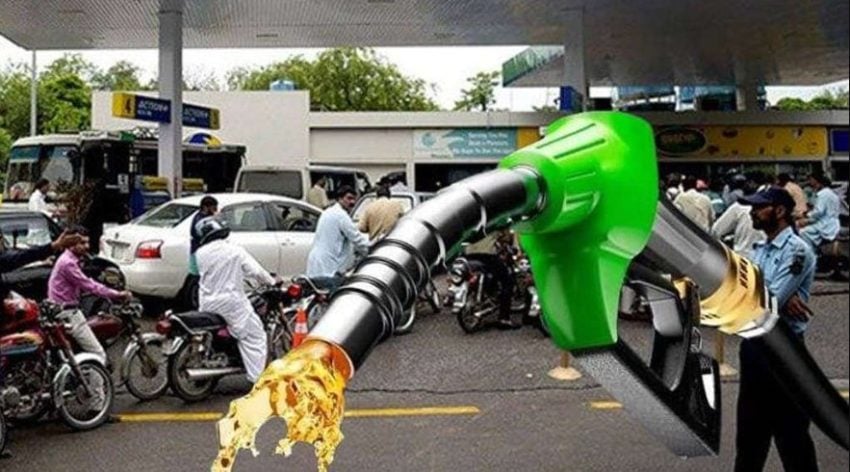
ISLAMABAD – Pakistan could be heading for major petrol levy shake-up, with the government weighing plan to slash PDL to just Rs5–10 per litre. But there’s a catch as the cash strapped nation would need to find up to Rs1.5 trillion in replacement revenue, potentially putting the wealthy, luxury consumers and untaxed sectors in the firing line.
A fresh proposal could reshape petrol prices and the government’s tax strategy is now under official consideration. Submitted by Jamaat-e-Islami and circulated by the Ministry of Planning to the Finance Ministry, FBR and State Bank of Pakistan, the proposal seeks to replace federal government’s dependence on the petroleum levy with taxes on luxury consumption, wealthy individuals, major corporations, property, agriculture and the retail sector.
But the plan comes with a major catch like the government could face massive revenue gap in the first year unless the proposed measures are implemented quickly and the IMF agrees to the shift.
The numbers underline the scale of the proposed shake-up. The government collected Rs1,557 billion through the Petroleum Development Levy in FY2025-26 against a target of Rs1,468 billion. For FY2026-27, the government expects around Rs1,576 billion from the levy.
Cutting Levy to Rs5–10 per litre over one year would leave only around Rs90–180 billion in annual revenue. That creates a potential Rs1.45–1.50 trillion hole in federal finances. The proposal therefore envisages a massive alternative revenue drive to fill the gap.
There is another complication. Petroleum levy is non-tax revenue and goes directly to the federal government. Most FBR taxes, however, are distributed between the centre and provinces under the NFC Award. The government cannot simply collect Rs1.5 trillion in new FBR taxes and expect to recover Rs1.5 trillion in federal revenue.
The proposal estimates that gross FBR collections may need to be around 2.3 times the PDL shortfall unless the government uses non-tax measures, surcharges, other levies or secures an NFC-related arrangement.
The proposed revenue offensive starts at the top. Higher Federal Excise Duty and regulatory duties could be imposed on luxury imports, while first-class and business-class air travel and high-end vehicles could also face additional taxation.
A wider luxury-tax basket could eventually generate between Rs200 billion and Rs280 billion. The government is also considering an additional 5–7.5 percentage-point surcharge on the country’s largest 200–300 corporations and ultra-high-income individuals. That measure alone could bring in another Rs180–250 billion, assuming limited profit shifting.
Banking, exploration and production, fertiliser and cement are among the sectors expected to face a substantial share of the burden. The existing super tax, already reaching 10 percent, currently generates around Rs150–200 billion.
Another target is Pakistan’s enormous tax-exemption regime. Total tax expenditure during FY2025-26 has been estimated at around Rs2.35 trillion. This includes Rs1.27 trillion in sales-tax exemption, Rs580 billion in income-tax exemptions and Rs500 billion in customs-related exemptions.
After protecting exemptions linked to food, healthcare, education and defence, around Rs1.2–1.4 trillion could potentially be targeted. Capturing 35–50 percent of this pool over two years could generate Rs450–650 billion.
Lower interest rates are being counted as another way to create fiscal room. Pakistan’s debt-servicing bill reached around Rs6.9 trillion in FY2025-26, including approximately Rs6 trillion in domestic debt. With a large portion of domestic borrowing linked to floating rates, a 100-basis-point reduction could eventually save the government around Rs350–500 billion a year as Treasury bills and other instruments reprice.
A 200-basis-point cut could create fiscal space of approximately Rs700 billion to Rs1 trillion. The proposal stresses that this would be a spending saving rather than tax revenue, and would depend heavily on inflation remaining under control.
Petrol Price hits Rs375.82, Diesel crosses Rs400 amid Fresh Hike