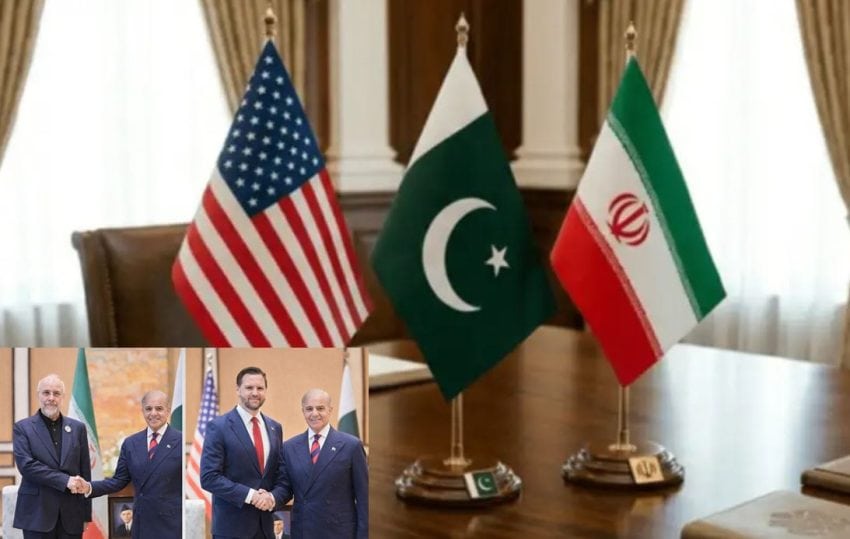
ISLAMABAD – First round of Islamabad talks ended without any major breakthrough, but US and Iran continued indirect communication through backchannels via Pakistan.
Despite no breakthrough of high-stakes talks in capital, US–Iran diplomatic track has not broken down completely, instead, it has quietly shifted into the shadows, with Pakistan emerging as an unexpected and crucial backchannel hub in one of the world’s most sensitive geopolitical standoffs.
Islamabad negotiations ended without any breakthrough, failing to bridge deep differences between Washington and Tehran. However, sources confirm that diplomacy has not stalled entirely. Instead, communication is continuing through indirect channels via Pakistan, keeping a fragile and secretive dialogue alive even after formal talks collapsed.
Iran’s Foreign Ministry spokesperson Esmaeil Baqaei confirmed that while Iranian delegation returned to Tehran, exchanges are still ongoing through Pakistani intermediaries. He further revealed that a Pakistani delegation is expected to travel to Tehran soon, signaling that quiet diplomatic movement is still underway behind the scenes.
Tehran has drawn a hard red line, with Baqaei firmly declaring that Iran’s right to enrich uranium is “indisputable.” He described it as a sovereign right that cannot be removed under pressure or threats. However, he also left a narrow door open, suggesting that while enrichment itself is non-negotiable, the level and technical scope of enrichment could still be discussed depending on Iran’s internal energy and scientific requirements.
US President Donald Trump said talks with Iran could restart within days, acknowledging Pakistan’s role in facilitating or even hosting future negotiations. Trump praised Pakistan’s leadership, particularly its military establishment, and floated Europe as another possible venue for dialogue. While describing progress as slow, he also suggested there is growing momentum toward de-escalation, saying the conflict with Iran was “very close to over.”
Islamabad meeting marked most direct engagement between US and Iranian officials in decades. Although the discussions stretched over nearly a full day across two days, they ultimately ended in failure, with no agreement reached. Even so, both sides reportedly acknowledged that diplomatic channels remain open, keeping the door to future talks slightly ajar.
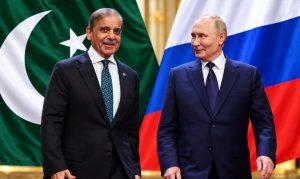
Prime Minister Shehbaz Sharif confirmed that “full efforts” are underway to stabilize the situation and preserve the fragile ceasefire between the US and Iran, which was brokered on April 8 after weeks of escalating tensions. However, he warned that the truce, set to expire on April 22, is becoming increasingly unstable.