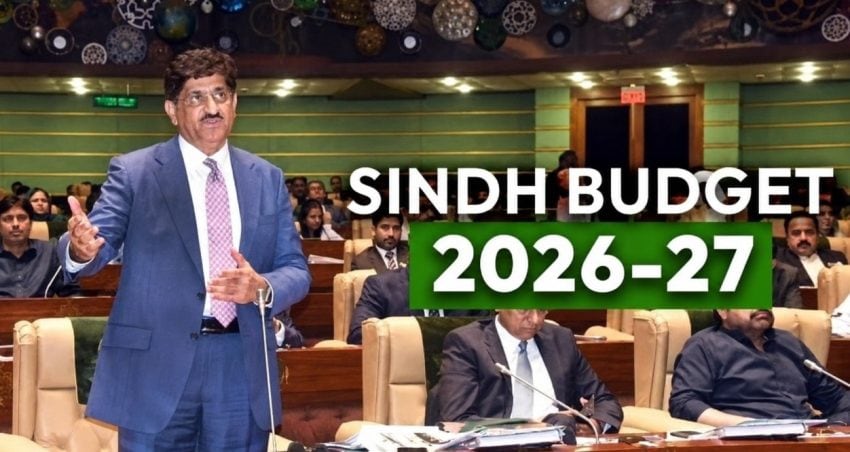
KARACHI – More than half million Sindh government employees are anxiously waiting for what could become one of the most generous salary packages announced by any province in recent years as Chief Minister Syed Murad Ali Shah presents the Sindh Budget 2026-27 today on Tuesday.
PPP led provincial government is operating under increasing pressure from IMF-backed fiscal commitments and the National Fiscal Pact, which requires provinces to generate substantial surpluses to support federal economic targets. As part of these arrangements, Sindh has reportedly agreed to reduce development spending, creating room for current expenditures such as salaries and pensions.
According to pre-budget proposals, employees from Grades 1 to 16 could receive 7 percent salary increase, while officers from Grades 17 to 22 may see less rise. Pensioners are also expected to benefit, with discussions indicating that pension increases may mirror the proposed salary hikes. In another significant move, the government is considering doubling the conveyance allowance for lower-grade employees and revising pay scales up to Grade 21.
The package would place Sindh far ahead of the federal government, which recently announced a uniform 7 percent salary increase for all federal employees in Budget 2026-27. The contrast is striking: while Islamabad opted for a cautious approach, Sindh appears ready to offer relief on a much larger scale.
The numbers reveal the challenge. Sindh is expected to receive more than Rs2.2 trillion through the NFC Award during FY2026-27, yet a significant portion of available resources is already tied to fiscal obligations. At the same time, development allocations have reportedly been scaled back sharply from earlier projections, raising concerns that employee relief is being prioritised over infrastructure and long-term growth projects.
The upcoming package is a continuation of Sindh government’s long-standing strategy of providing greater benefits to lower-grade employees. The party has repeatedly positioned itself as a champion of public-sector workers, and the expected salary differential between lower and higher grades reflects that approach. Previous Sindh budgets have also delivered increases above federal levels, reinforcing that trend.
Every rupee allocated to salaries is a rupee unavailable for schools, hospitals, roads and development projects. With current expenditure already consuming a large share of provincial resources, critics argue that Sindh risks sacrificing future growth for short-term political gains.
More updates to follow…