
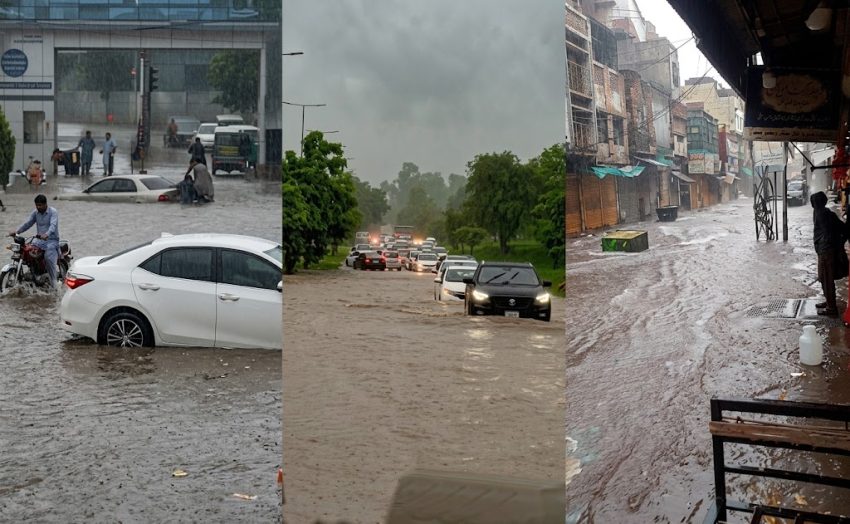
ISLAMABAD – Torrential rain brought the twin cities of Rawalpindi and Islamabad to standstill, turning roads into ponds, submerging vehicles and triggering serious flood fears as the water level in Nullah Lai surged to a dangerous 22 feet.
Intermittent heavy rainfall continued across the two cities, with low-lying areas bearing the brunt of the deluge. Water accumulated on major roads and in residential areas, while several locations witnessed flood-like conditions, disrupting traffic and making movement increasingly difficult for citizens.
New Lalazar #Rawalpindi … pic.twitter.com/tDZ2sA7rdR
— Azaz Syed (@AzazSyed) August 19, 2026
Sector F-11 after a heavy rainfall. Islamabad pic.twitter.com/ojJHlEIku6
— Islamabad Updates (@IslamabadViews) August 19, 2026
The situation around Nullah Lai remained particularly alarming. Water levels reportedly reached 22 feet at New Katarian and Gawalmandi, prompting warning sirens in nearby settlements and authorities to urge residents to remain on high alert.
In Islamabad, Saidpur recorded the highest rainfall at 66 millimetres, according to reported rainfall measurements. The intense downpour overwhelmed drainage systems in several parts of the capital, leaving roads waterlogged and creating hazardous conditions for motorists and pedestrians.
The deluge also exposed problems at the Metro Bus system, where rainwater began dripping through the roof, affecting passengers and leaving seats wet. The incident added to growing concerns over the impact of the extreme weather on public transport infrastructure.
Meanwhile, several vehicles became submerged in water in low-lying areas as rapidly accumulating rainwater turned streets into virtual waterways. Emergency and municipal teams were deployed to tackle the situation, with WASA personnel and heavy machinery operating around Nullah Lai and other vulnerable areas. The threat is far from over.
Met Office issued rain alert through Friday, forecasting further rainfall across Islamabad, upper Punjab, Khyber Pakhtunkhwa, Gilgit-Baltistan and Kashmir. Several areas may receive heavy to very heavy showers accompanied by strong winds and thunderstorms.
With Nullah Lai already swollen and drainage systems under pressure, authorities have warned citizens to stay away from the nullah, streams, drains and other low-lying areas.
Residents have also been advised to avoid unnecessary travel during periods of heavy rain, as the continuing downpour could worsen urban flooding and create further risks for commuters. For Rawalpindi and Islamabad, the message from authorities is clear: the rain has not stopped, and neither has the danger.
Punjab braces for More Heavy Rains as Sixth Monsoon Spell continues