

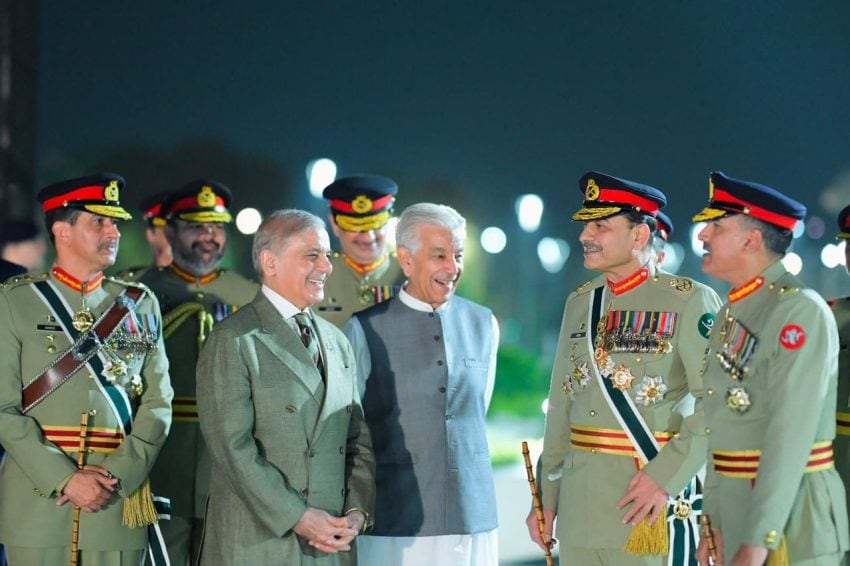
ISLAMABAD — To reshape Pakistan’s military command structure, Federal Cabinet, chaired by Prime Minister Shehbaz Sharif, approved the draft of the Defence Forces Act 2026, paving the way for key defence-sector reforms in recent years.
The draft legislation will now be placed before Parliament in its upcoming session for final approval. The proposed law is being introduced as part of the broader reforms associated with the 27th Constitutional Amendment, with the government seeking to strengthen coordination among the country’s armed forces and streamline decision-making on critical defence matters.
New Command Structure
At the heart of the proposed legislation is the establishment and legal framework surrounding the office of the Chief of Defence Forces (CDF). According to the official statement issued by the Prime Minister’s Office, the draft seeks to define the role of the CDF as well as the administrative arrangements linked to the office.
The legislation will also lay down the structure, jurisdiction and administrative responsibilities of the Chief of Defence Forces Headquarters. The proposed framework is aimed at bringing greater coordination between the country’s three armed services and creating a more integrated mechanism for responding to emerging security challenges.
The government approved amendments to the National Command Authority Act 2010, adding another critical dimension to the reform package.
National Command Authority framework is directly linked to Pakistan’s strategic command architecture. The proposed amendments are therefore being viewed as a significant development in the country’s defence and national-security policymaking structure. According to the government’s stated objective, the changes are intended to further strengthen the strategic command system while aligning it with national security requirements and international standards.
The latest move comes against the backdrop of a broader process of constitutional and defence-related reforms. After implementation of the 27th Constitutional Amendment, the government has sought to adapt the administrative and command structures of defence institutions to what it describes as the demands of modern warfare and contemporary security management.
The proposed Chief of Defence Forces position represents a central element of that process. Supporters of the reform argue that a more integrated command structure could improve coordination between the armed forces and help ensure faster decision-making during national emergencies and security crises.
The proposed changes come at a time when traditional military threats are increasingly accompanied by cyber, information and hybrid warfare challenges. Defence planners face the task of coordinating military capabilities across multiple domains while responding rapidly to evolving threats.
The government’s reform agenda is therefore aimed not merely at changing administrative arrangements but at creating what officials describe as a more effective and coordinated defence decision-making mechanism.
If Parliament approves the bill, the legal framework governing the Chief of Defence Forces and the CDF Headquarters would formally become part of Pakistan’s defence architecture. The legislation could potentially affect how coordination, administration and strategic decision-making are organised across the armed forces.
Proponents of move believe that clearer institutional arrangements could reduce delays, improve coordination and allow defence resources to be deployed more efficiently. The government also sees the reforms as a way of strengthening Pakistan’s overall defence preparedness in the face of evolving internal and external security challenges.
With the Federal Cabinet having approved the draft, attention now shifts to Parliament. The legislation will have to pass through the parliamentary process before it can become law. Its approval would mark a major development in Pakistan’s military and constitutional reform trajectory, formally giving legal shape to the proposed Chief of Defence Forces structure.
Field Marshal Asim Munir to lead Pak Army as Chief of Defence Staff until 2030