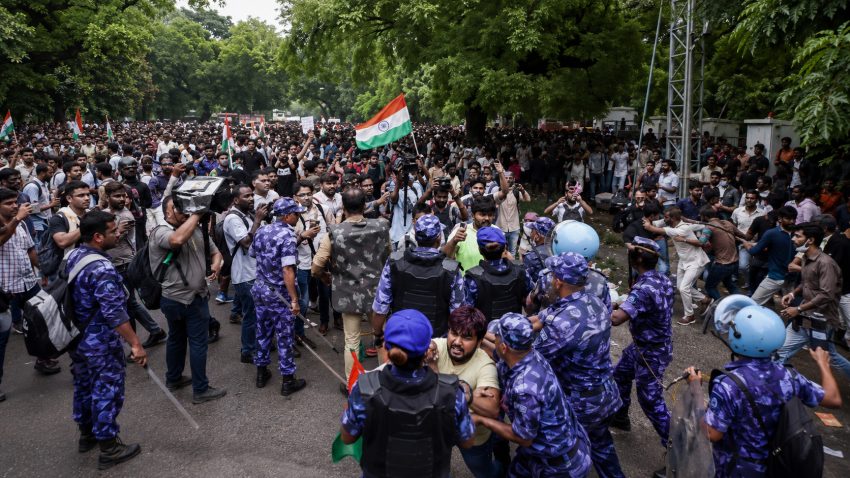
NEW DELHI – Thousands of protesters flooded the streets of central Delhi as youth-led Cockroach Janta Party (CJP) staged its biggest demonstration yet, marching towards Parliament to demand sweeping reforms in India’s education system.
The unprecedented turnout brought major roads to a standstill, with thousands of students travelling from across the country to join the protest. The movement, which has been protesting for weeks, is demanding the resignation of the education minister over recent examination paper leaks.
While the government initially allowed the demonstrations to continue, the minister dismissed the protesters as the “B-team of disruptive elements.” Until Monday, no government representative had met the demonstrators.
Police caned protesters in New Delhi as thousands gathered for a ‘Cockroach’ movement march on parliament demanding the resignation of education minister Dharmendra Pradhan https://t.co/21rvMs3Bad pic.twitter.com/XGKH4hvaue
— Reuters (@Reuters) July 20, 2026
Tensions escalated after protesters alleged that internet services were suspended in the protest area. According to multiple posts shared on X, participants claimed they received government notifications informing them that mobile internet had been shut down under official instructions. Several demonstrators also said they were unable to access the internet until they moved away from the protest site, raising fresh concerns over communication restrictions during the march.
A massive security operation was launched across central Delhi, with hundreds of police officers and paramilitary personnel deployed around key locations. Police ordered protesters gathered at Jantar Mantar to clear the area while attempting to prevent the crowd from moving closer to Parliament.
The situation became more volatile after activist and educator Sonam Wangchuk was forcibly hospitalised by police during the 21st day of his hunger strike in support of the CJP, further intensifying public anger and drawing more supporters to the movement.
Despite its name, the Cockroach Janta Party is not a political party. It began as a satirical campaign before evolving into a powerful youth-led movement. The group adopted the name “cockroach” after a senior judge reportedly used the term to describe young people, with supporters embracing it as a symbol of resilience and determination.
Although police managed to disperse sections of the crowd and gradually restore traffic movement in some areas, thousands of protesters continued occupying the streets, making it the largest gathering since the movement began. Many participants said they had travelled for hours to reach Delhi and take part in the march.
The protests have been driven largely by outrage over the National Eligibility cum Entrance Test (NEET) controversy. Nearly 2.28 million candidates appeared for the medical entrance examination on 3 May after months, and in many cases years, of preparation. However, the exam was later cancelled following allegations that the question paper had been leaked, forcing students to retake the test under heightened security.
The cancellation sparked widespread frustration among students and became one of the key reasons behind the CJP’s nationwide campaign. Protesters and affected families have also alleged that nearly 20 students died by suicide after suffering severe distress following the cancellation.
Opposition leaders voiced support for the protesters while condemning the police response. Congress leaders called the reported baton charge on students as “an attack on democracy,” arguing that a government unable to conduct fair examinations had no moral authority to remain in power.
What Is the Cockroach Janata Party and Why Is India’s Government So Afraid of It?