
The United States carried out its ninth consecutive night of military operations against Iran, targeting a range of strategic sites as tensions between the two countries continued to escalate.
According to the U.S. Central Command (CENTCOM), the latest strikes were conducted at 10 p.m. ET on July 19. The operation focused on Iranian military command centers, air defense systems, coastal surveillance facilities, missile and drone launch sites, maritime capabilities, and communications infrastructure.
CENTCOM said the objective was to further reduce Iran’s ability to threaten commercial shipping and civilian vessels passing through the Strait of Hormuz.
The US military stated that the operations were being conducted under the direction of the Commander in Chief and added that its forces remain prepared for any further developments.
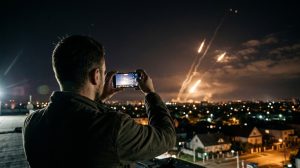
Meanwhile, Iranian media reported explosions in the southeastern city of Chabahar. Additional reports also indicated attacks in Sirik, Hormozgan Province, Bushehr, and Konarak, although further details about the incidents were not immediately available.
Separately, Iran’s Islamic Revolutionary Guard Corps (IRGC) claimed it had carried out retaliatory attacks against US military facilities in the Gulf region. According to the IRGC, a drone strike destroyed a US early-warning radar system in Qatar.
The IRGC also claimed it targeted equipment and aircraft parts hangars at Ali Al Salem Air Base in Kuwait and struck an MQ-9 drone base, alleging that several drones were destroyed. The organization said these operations were conducted in response to recent U.S. military attacks on Iranian territory.
In a separate development, Iranian Foreign Minister Abbas Araghchi said in a recent interview that Iran had been encouraged to enter negotiations before what he described as the 12-day war. However, he maintained that Iran could neither be pressured nor persuaded to abandon its position on uranium enrichment.
Araghchi also said communication among senior Iranian officials had been disrupted during the early stages of the conflict but stressed that the country’s policies and strategic principles remained unchanged throughout the fighting. He further stated that Iran had emerged stronger from the conflict and argued that the international community now better understood the strategic importance of the Strait of Hormuz to Iran.