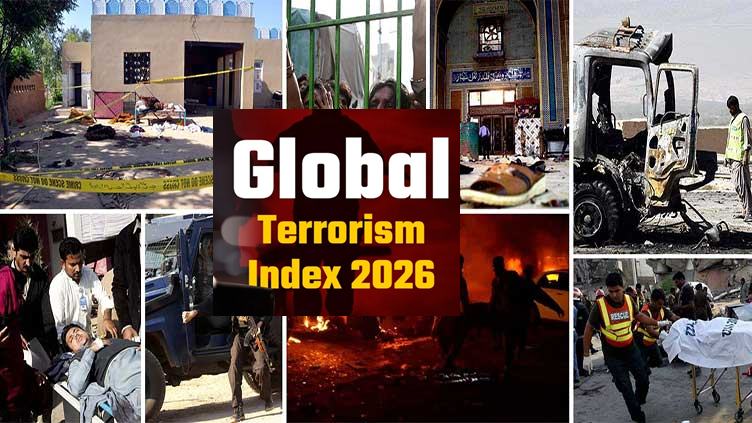
ISLAMABAD – As tensions between Islamabad and Kabul continue unabated, the latest report by Global Terrorism Index (GTI) confirms a continued upward trajectory in attacks, pushing country to the top of the global index amid an intensifying security crisis.
The South Asian nation, a home to more than 250 million, has been ranked number one on the Global Terrorism Index (GTI) for the first time, a report released by the Institute for Economics and Peace, showing concerning picture of escalating violence, with terrorism-related the deaths in the country rising by 6% in 2025 to reach 1,139 fatalities.
Covering 163 countries and nearly the entire global population, this Index evaluates nations based on the frequency of terrorist incidents, deaths, injuries, and hostage-taking. The latest findings indicate that Pakistan is now facing its most severe wave of terrorism since 2013, with 1,045 incidents recorded alongside the surge in fatalities.
The report marks Islamabad’s worsening security environment to combination of internal and regional factors, including strained relations with neighboring Afghanistan and the growing activity of banned militant outfits such as the Tehreek-i-Taliban Pakistan (TTP) and the Balochistan Liberation Army (BLA).
Khawarij rremained most dominant and lethal force within Pakistan, and is now ranked the third deadliest terrorist group globally. The group alone is responsible for a significant majority of attacks in the country, accounting for more than two-thirds of all incidents since 2009 and vastly outpacing other active groups.
Last year, TTP-linked attacks jumped by 24%, increasing from 481 to 595 incidents, with KP bore brunt due to near Afghan border. The group was responsible for 637 deaths in a single year.
Although the overall number of terrorist attacks in Pakistan saw a slight decline in 2025, hostage situations surged dramatically. The number of hostages jumped from 101 in 2024 to 655 in 2025. A major contributing factor was a high-profile incident involving the Jaffar Express, during which 442 individuals were taken hostage. Without this single event, the report estimates hostage numbers would have actually fallen by around 30%.
Worldwide deaths dropped by 28% to 5,582, while attacks fell by nearly 22%. Despite this downward trend, groups such as the Islamic State and its affiliates remain the deadliest, followed by organizations including TTP and Al-Shabaab. Collectively, these groups were responsible for roughly 70% of all terrorism-related deaths globally.
Pakistan slams India of backing TTP, other Terror Networks amid Afghanistan Strike Row