
ISLAMABAD – Arch-rivals Pakistan and India are facing another heated moment over Pakistan’s military operations across the Afghan border. As Operation Ghazab lil-Haq continues, statements from officials such as Randhir Jaiswal and Tahir Andrabi intensified the standoff, adding yet another layer of tension to the already volatile regional landscape.
Pakistan’s Foreign Office strongly rebuked India for criticising Islamabad’s cross-border military action in Afghanistan, calling the remarks “absurd, unwarranted and shamefully hypocritical.”
The strong reaction comes as Pakistan presses ahead with Operation Ghazab lil-Haq, started in late February after what officials described as unprovoked firing by Afghan Taliban forces from across the border.
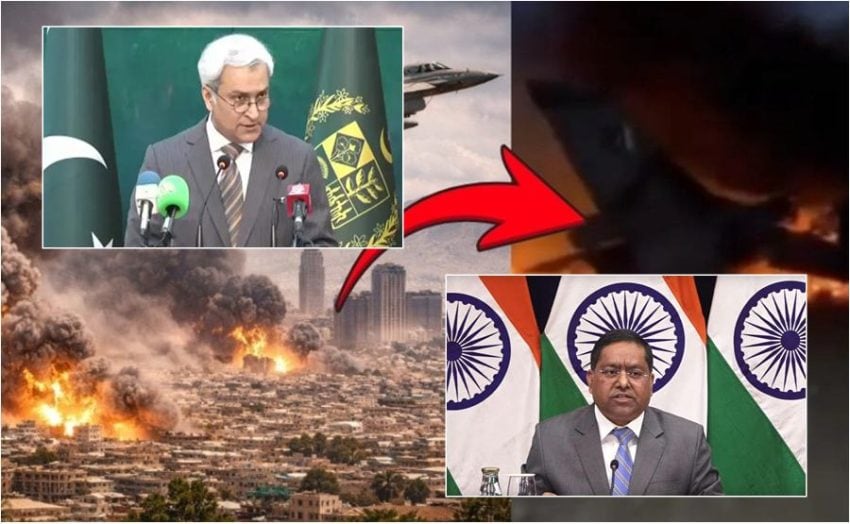
The diplomatic clash was triggered a day earlier when India’s Ministry of External Affairs spokesperson, Randhir Jaiswal, alleged that Pakistani strikes inside Afghanistan resulted in the deaths of several civilians and labelled the operation an “act of aggression.”
Pakistan’s Foreign Office spokesperson, Tahir Andrabi, rejected the accusations, insisting that Pakistan’s actions were lawful, precise and specifically targeted at terrorist hideouts and logistical bases located inside Afghan territory. He said India’s criticism was not only baseless but also deeply hypocritical.
Andrabi went further, accusing India of actively supporting militant networks operating from Afghan soil. According to him, groups referred to by Pakistan as Fitna-al-Khawarij and Fitna-al-Hindustan have been receiving backing from New Delhi. The term Fitna-al-Khawarij is used by the state to describe militants associated with the banned Tehreek-e-Taliban Pakistan, while Fitna-al-Hindustan refers to militant organisations involved in insurgent activity in Balochistan.
He claimed that India’s reaction reflects frustration over what Pakistan described as the dismantling of its “terrorist franchise” in Afghanistan.
Foreign Office launched broader criticism of India’s record, accusing it of repeatedly violating international law and human rights. The statement specifically referenced India’s control over Jammu and Kashmir, which Pakistan says remains under illegal occupation in violation of the United Nations Charter and relevant resolutions of the United Nations Security Council.
India’s policies rooted in Hindutva ideology resulted in systematic marginalisation of minority communities, the spread of Islamophobia and the alleged use of water resources as a political tool in breach of treaty commitments.
Foreign Office further accused New Delhi of acting as destabilising force not only in Kabul but across the wider region. It urged New Delhi to refrain from making what it described as unfounded allegations and instead focus on halting activities that Pakistan claims fuel terrorism within its borders from Afghan territory.
Islamabad also reiterated that it will continue taking all necessary measures to defend itself and protect its citizens in accordance with international law and the UN Charter.
The diplomatic dispute had already surfaced earlier this month at United Nations. During a debate on Afghanistan at the UN Security Council on March 10, Pakistan’s Permanent Representative, Asim Iftikhar Ahmad, strongly criticised India’s stance. He said India’s remarks were unsurprising given what he described as New Delhi’s hostility toward Pakistan and its alleged attempts to destabilise the country through its Afghan policy.
Ahmad also accused Modi government of supporting militant organisations such as the Tehreek-e-Taliban Pakistan and the Baloch Liberation Army, both of which Islamabad considers major security threats.