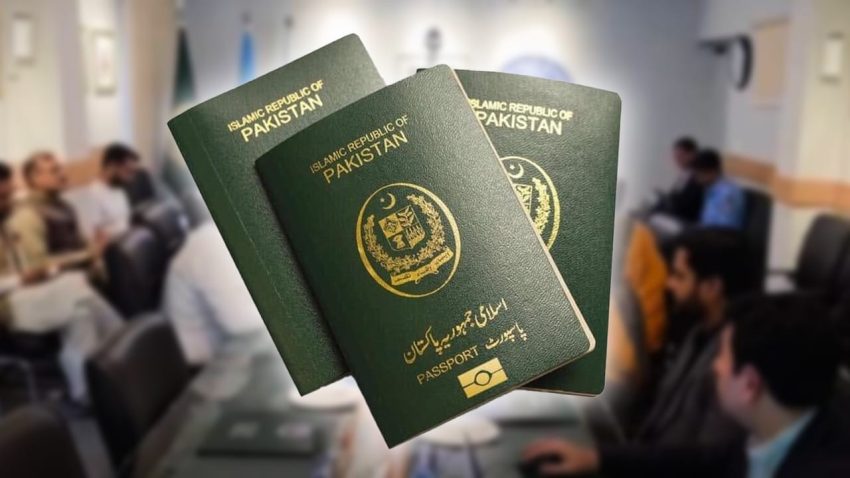
ISLAMABAD – Pakistan has introduced a facility to make passport renewal easier for pilgrims planning to perform Hajj in 2027, allowing applicants to renew their passports before the usual renewal period.
The Ministry of Religious Affairs requested the relaxation, following which the passport authorities issued instructions to facilitate Hajj applicants.
Under the new arrangement, intending pilgrims for Hajj 2027 will be able to apply for passport renewal in advance. The Ministry of Religious Affairs has made it mandatory for pilgrims to have a valid Pakistani passport until November 16, 2027.
Passport offices across Pakistan and abroad have been directed to receive and process early renewal applications from Hajj applicants. The facility will be available under passport rules that allow early renewal in specific circumstances.
The ministry clarified that Hajj applications will not be accepted without a valid Pakistani passport, urging applicants to ensure their travel documents remain effective for the required period.
Meanwhile, the federal cabinet, chaired by Prime Minister Shehbaz Sharif, has approved the Hajj Policy and Plan 2027-2030, marking the introduction of a four-year framework for Hajj arrangements.
During the cabinet meeting, the Ministry of Religious Affairs presented details of the new policy, stating that the multi-year plan aims to improve long-term planning, strengthen administrative arrangements, and provide better facilities to pilgrims.
Officials said that under the new policy, people wishing to perform Hajj will not need to register every year. Instead, they will be able to register once and remain eligible to perform Hajj in any year until 2030. A priority-based waiting list will be prepared through this system.
The policy also includes the introduction of a Shariah-compliant Hajj savings scheme, allowing citizens to save gradually for future Hajj expenses. The initiative is aimed at helping people plan financially for the pilgrimage.
Authorities said the entire Hajj management system is being shifted to a digital platform, covering registration, payments, complaint handling, monitoring, and other related services to improve transparency and efficiency.
The new policy also includes arrangements for government and private Hajj schemes, long and short Hajj programs, mandatory training for pilgrims, Takaful coverage, and emergency response measures.
Prime Minister Shehbaz Sharif directed that the appointment of Hajj assistants should be carried out through a transparent, merit-based process. He also called for third-party validation of government and private Hajj arrangements to ensure quality services for pilgrims.