TEHRAN/WASHINGTON – The confrontation between US and Iran entered another dangerous phase, with both sides exchanging military strikes that heightened fears of a wider conflict across Middle East.
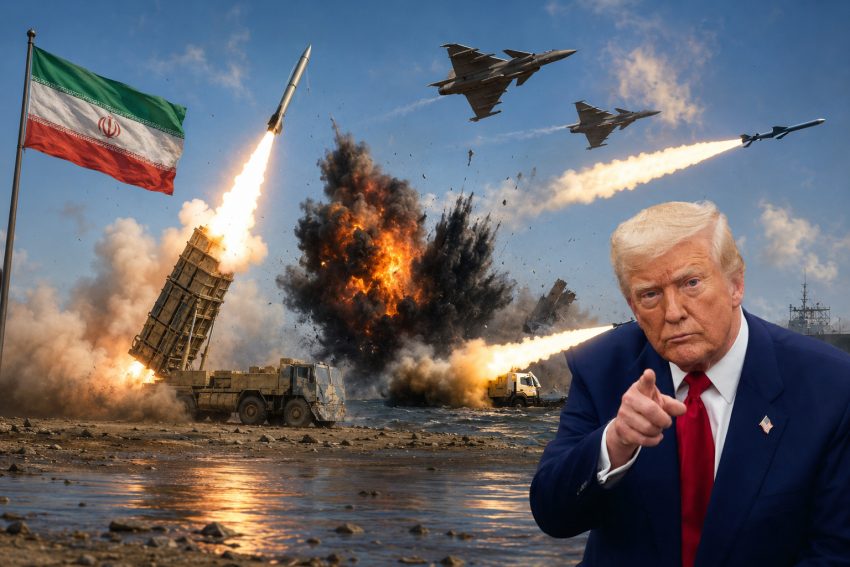
After months of intense fighting, Iran’s Islamic Revolutionary Guard Corps (IRGC) said it launched ballistic missiles and drones at two major US military facilities, Ali Al Salem Air Base in Kuwait and the headquarters of the US Fifth Fleet at Port Salman in Manama, Bahrain. Tehran called these attacks retaliation for recent US airstrikes on five Iranian coastal locations.
The latest developments came after a second straight day of US military operations. US Central Command (CENTCOM) said American fighter jets struck multiple Iranian targets in and around the Strait of Hormuz, claiming the operation was carried out after a commercial vessel was hit by drones near the strategic waterway. CENTCOM also released aerial footage that it said showed the strikes.
U.S. Navy and Air Force fighter jets conducted strikes tonight on 10 Iranian military targets at multiple locations in and near the Strait of Hormuz for Iran's drone attack on M/T Kiku. pic.twitter.com/Z0TLZRqmF6
— U.S. Central Command (@CENTCOM) June 28, 2026
IRGC warned that any further military action by Washington would be met with what it called a “crushing response.” It also argued that the interim memorandum of understanding (MoU) with the United States gives Iran responsibility for managing maritime traffic through the Strait of Hormuz. The group said ships that ignore these arrangements could face tougher action and warned that continued attacks could bring the ongoing peace process to an end.
According to Iranian and US accounts, the latest American strikes targeted the coastal city of Sirik, Bandar-e Lengeh and Qeshm Island. The US military also said it had carried out attacks on ten Iranian sites, saying the operations were intended to respond to repeated attacks on commercial shipping in the Strait of Hormuz.
The fighting quickly raised security concerns across the Gulf. Air raid sirens sounded twice in Bahrain, while Kuwaiti authorities said their air defence systems intercepted incoming missiles and drones targeting the country.
The broader regional situation also remained tense. Israel confirmed carrying out airstrikes in southern Lebanon, saying Hezbollah fighters were among those targeted. At the same time, Israeli Prime Minister Benjamin Netanyahu repeated his opposition to the creation of a Palestinian state, saying there is “no room for two states” between the Jordan River and the Mediterranean Sea.
UAE, Bahrain, Kuwait and other Gulf naitons condemned Iran’s missile and drone attacks, calling them a violation of the country’s sovereignty and a threat to regional stability. In a statement carried by the Bahrain News Agency, the Foreign Ministry urged the UN Security Council to hold an emergency meeting to discuss the escalating crisis and ensure those responsible are held accountable.
Hormuz has once again become the focal point of growing tensions between Tehran and Washington. Iran maintains that Article 5 of the interim US-Iran MoU gives it responsibility for facilitating commercial shipping through the strategic waterway.
Under the agreement, Tehran says it will work to ensure the safe passage of commercial vessels free of charge for 60 days after the deal takes effect. The document also states that normal shipping should resume immediately, with full maritime traffic expected within 30 days after military obstacles and sea mines are cleared.
The agreement further says Iran will hold discussions with Oman and other Gulf coastal states on the future administration and maritime services of the Strait of Hormuz, in line with international law and the rights of the coastal states. However, Tehran’s latest warning that ships operating outside its stated arrangements could face stronger action has added to growing concerns over the security of one of the world’s most important energy and shipping routes.
US-Iran Ceasefire under strain as Tehran claims strikes on US-Linked Targets