
History often turns on moments that seem technical on paper but are revolutionary in spirit. On Wednesday, January 14, 2026, Pakistan didn’t just sign a document because it signaled a paradigm shift. The high-profile ceremony in Islamabad, where an MoU was inked between the government and SC Financial Technologies affiliated with World Liberty Financial, marks the nation’s decisive entry into the future of global finance.
The optics of the event revealed its magnitude. With Prime Minister Muhammad Shehbaz Sharif and Chief of Army Staff Field Marshal Asim Munir personally overseeing the signing alongside Deputy PM Ishaq Dar, the state conveyed a message of absolute unity and strategic intent. The agreement, signed by Finance Minister Muhammad Aurangzeb and Zachary Witkoff, is more than a collaboration. It is the first publicly announced partnership between a sovereign state and World Liberty Financial, a family entity of US President Donald Trump.
For years, critics have watched from the sidelines waiting for Pakistan to stumble. Instead, Pakistan is leaping ahead. This collaboration aims to explore integrating the USD1 stablecoin into our national payment structures. This is the definition of staying ahead of the curve.
The potential benefits of this deal for the common citizen are immense. For a country like Pakistan, where remittances are the lifeblood of the economy, the current mechanisms of international transfer can be slow and expensive. Integrating a regulated stablecoin framework opens the door to near-instantaneous and low-cost cross-border payments. It bridges the gap between the dollar-dominated global economy and Pakistan’s burgeoning digital infrastructure.
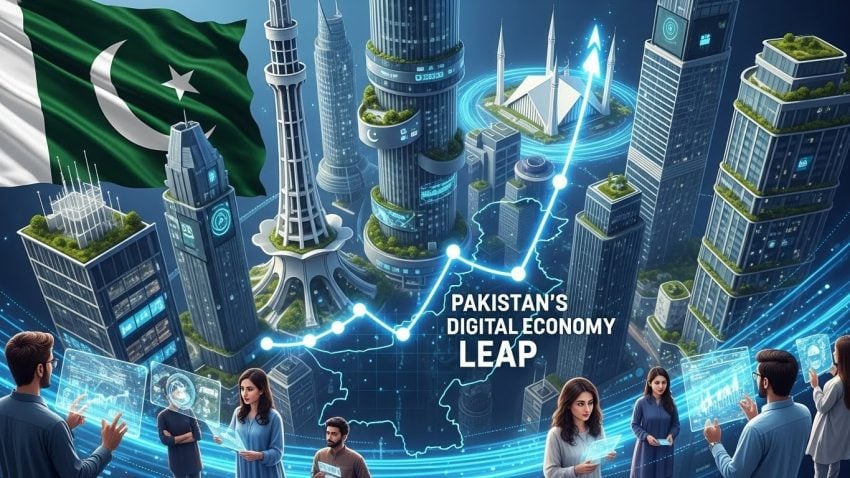
By moving towards a regulated structure for digital assets, Pakistan is shedding its previous hesitations regarding cryptocurrency. Instead of banning the future, we are now seeking to shape it. The Digital Pakistan vision is no longer just a slogan because it is becoming a regulatory reality that invites global innovation to set up shop on our soil.
The real promise here lies in the leadership. Muhammad Aurangzeb brings a prudent, banker’s mindset to the table that is refreshing to see. He is approaching this with his eyes wide open. By framing this initially as a ‘dialogue,’ he is showing that Pakistan isn’t rushing into the hype; we are meticulously checking the ground before we build on it.
The goal is to align new financial architectures with national interest, regulation, and rupee stability. It is a balancing act but one that is necessary. By engaging with major global players like the Trump family-affiliated firm, Pakistan is not only embracing technological advancement but also cementing its economic diplomacy with the United States. It suggests that the US dollar will remain a key pivot for our digital growth while ensuring stability in our external accounts.
Perhaps the most exciting prospect is the global precedent Pakistan is setting. While major economies struggle to find the middle ground between traditional banking and the crypto revolution, Pakistan is attempting to build that bridge. If we succeed in overcoming the barriers that have stumped other nations, Islamabad could become a case study for financial modernization in the developing world.
The presence of the country’s top civil and military leadership at the signing underscores a vital point. There is stability, continuity, and high-level support for economic modernization. This consistency is exactly what foreign investors crave. The deal with SC Financial Technologies is a vote of confidence in Pakistan’s market potential and its regulatory maturity. As we explore the use of stablecoins for payments, we are opening our doors to a faster, more efficient, and globally connected economy. 2026 has started not with hesitation but with a bold step onto the digital frontier. Pakistan is ready for business, and more importantly, it is ready for the future.