

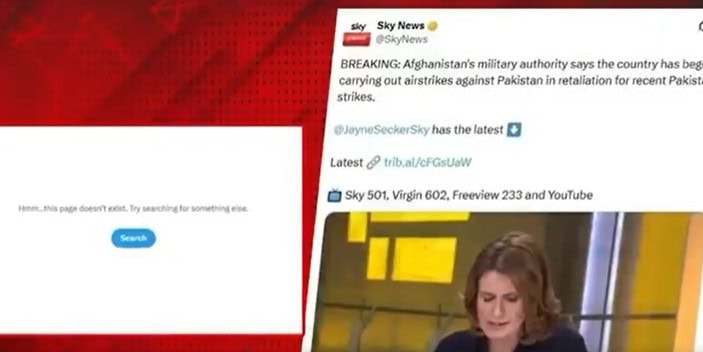
LAHORE – A digital firestorm broke out after Sky News published, and later deleted, controversial post on social media alleging that Afghanistan’s Air Force launched strikes inside Pakistan during rapidly escalating border tensions.
Within minutes, thousands of Pakistani social media users mobilized online, fiercely challenging the claim. Critics pointed out that Afghanistan does not currently got any operational air force, calling the report inaccurate and inflammatory at a time of extreme regional sensitivity.
Under mounting public pressure and a wave of backlash, the broadcaster removed the post, intensifying debate over media responsibility during active military developments.
🚨🚨 Operation Ghazab Lil Haq/ Update 01:20 hr 27 Feb 2026@SkyNews anti-#Pakistan false propaganda has been exposed by the Pakistani public on social media
After intense pressure from Pakistani social media, Sky News was forced to delete its X post
Sky News had made a false… pic.twitter.com/RPsHOlXBSS
— Pakistan Armed Forces News 🇵🇰 (@PakistanFauj) February 26, 2026
The controversy quickly evolved into broader narrative war. Users accused network of promoting what they described as anti-Pakistan and anti-armed forces narratives. Afghan-born journalist Yalda Hakim was also drawn into the debate, with some online commentators alleging longstanding bias in Pakistan-related coverage, claims that fueled even more heated discussion across platforms.
Operation Ghazab lil-Haqq
Hashtags linked to Operation Ghazab lil-Haqq” surged into trending lists as online users demanded accountability, fact-checking, and responsible reporting. The episode has reignited questions about the power of social media to challenge international media organizations in real time, and the risks of misinformation during volatile security situations.
The media clash unfolded against the backdrop of intensifying Pak-Afghan tensions. On February 26, 2026, Pakistan’s military launched coordinated strikes at multiple points along its mountainous western frontier. Officials in Islamabad stated that the operation was carried out in response to what they described as unprovoked cross-border fire and militant threats originating from Afghan territory.
Security sources reported that artillery and other heavy weapons were deployed at no fewer than six locations. The affected areas include Bajaur, Kurram, Mohmand, and parts of Chitral and Khyber in northwestern Pakistan, regions long considered strategically sensitive due to their terrain and history of militant activity.
Pakistani authorities maintain that the strikes were a defensive response aimed at neutralizing cross-border threats and safeguarding national security.
As military developments continue along the border, the digital confrontation between Pakistani users and an international broadcaster has amplified a separate but equally intense battleground: information.
The incident sparked widespread debate about verification standards, editorial responsibility, and the consequences of publishing unconfirmed military claims during active conflicts. In an era where posts can circle the globe in seconds, the pressure on news organizations to get it right, especially in flashpoint regions, has never been higher.