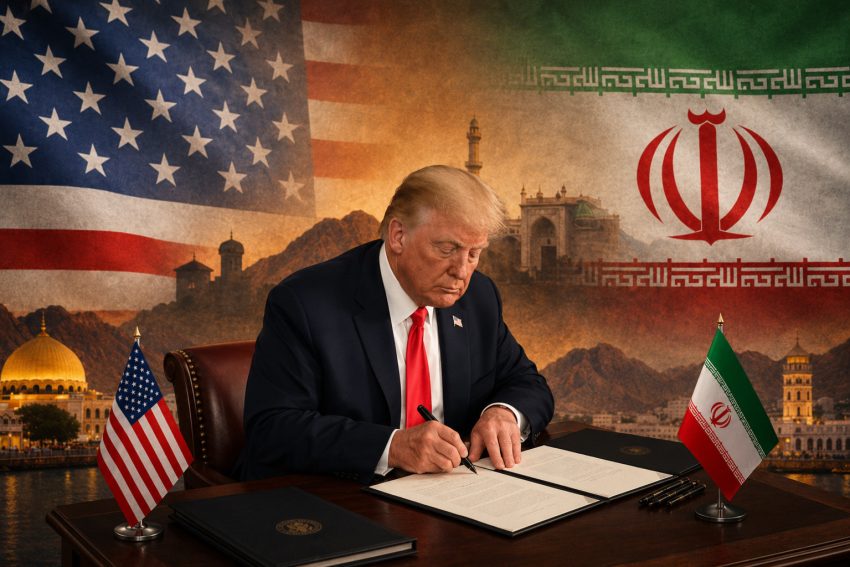
WASHINGTON – US President Donald Trump moved unexpectedly to finalise a preliminary agreement with Iran, showing document late at night at Palace of Versailles in dramatic diplomatic development that shows both urgency of negotiations and growing concerns within the White House over the economic and political costs of continued conflict.
The agreement, known as Islamabad Memorandum of Understanding (MoU), was originally expected to be formally signed during scheduled ceremony in Switzerland. However, Trump reportedly rejected any delay and ordered the agreement to be executed immediately after negotiators completed the final text. According to reports, French President Emmanuel Macron quickly facilitated arrangements at Versailles, where Trump signed the document following discussions with senior American and French officials.
The 14-point memorandum is not a permanent peace agreement but rather framework intended to guide 60-day negotiation process between Washington and Tehran. The document aims to halt military operations, reopen commercial traffic through the Strait of Hormuz, ease some economic restrictions, and create conditions for broader negotiations on Iran’s nuclear program and regional security issues.
Under the agreement, Iran is expected to allow commercial shipping through the Strait of Hormuz while United States will ease certain wartime restrictions. However, several major disputes, including long-term nuclear limitations, uranium stockpiles, sanctions relief, and regional security arrangements, remain unresolved and have been deferred to future negotiations.
Sources familiar with White House said global economy played decisive role in accelerating the deal. Months of conflict disrupted energy markets, increased fears of inflation, and raised concerns about a broader economic slowdown. Senior administration officials reportedly warned that prolonged instability in the Gulf region could trigger serious consequences for global oil supplies and international markets.
Trump himself acknowledged those concerns during international meetings, emphasizing that he wanted to avoid further economic disruption. Rising oil prices and uncertainty surrounding the Strait of Hormuz—a critical artery for global energy shipments—became major factors driving diplomatic efforts.
The agreement already sparked intense debate in the United States. Critics argue that the framework grants Iran substantial economic and strategic benefits without securing firm commitments on key security issues. Particular criticism has focused on proposals for a multibillion-dollar reconstruction and investment framework that opponents describe as excessive concessions.
Supporters of the administration maintain that Tehran only entered negotiations because of sustained military and economic pressure. Trump has repeatedly argued that the agreement represents a position of American strength rather than compromise.
Islamabad played key role in facilitating contacts between the United States and Iran, helping bridge gaps during weeks of difficult negotiations. Qatar also served as a key intermediary, maintaining communication channels and hosting extensive discussions aimed at preventing further escalation.
Negotiations reportedly experienced multiple setbacks, with both sides exchanging threats and accusations before eventually agreeing on a common framework. Mediators worked through several rounds of intensive discussions to prevent military confrontations from derailing the process.
Despite signing, the agreement’s future remains uncertain. Shortly after the memorandum was concluded, regional tensions involving Israel and Hezbollah complicated efforts to move forward with follow-up negotiations. A planned round of talks in Switzerland was disrupted amid renewed security concerns, highlighting the fragile nature of the diplomatic breakthrough.
Inside the US administration, some officials reportedly remain skeptical about Iran’s willingness to fully implement future commitments. Nevertheless, senior policymakers concluded that continuing the conflict posed greater economic and political risks than pursuing negotiations.
Mohsin Naqvi reaches Mashhad with regional security, US-Iran diplomacy on Agenda