
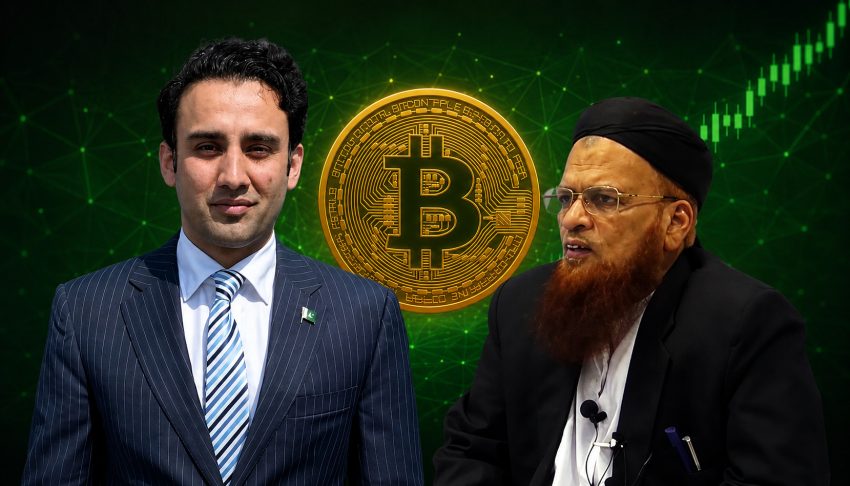
ISLAMABAD – Pakistan’s debate over cryptocurrencies and blockchain took another turn when the country’s top cleric called these virtual assets trading Haram.
Amid buzz after recent decree, Pakistan Virtual Assets Regulatory Authority (PVARA) Chairman Bilal Bin Saqib engaged Islamic scholar Mufti Muhammad Taqi Usmani, who argued that cryptocurrency trading is impermissible under Islamic law.
Sharing details of the discussion on social media, Bilal said he explained that blockchain technology, digital assets, stablecoins, and tokenized real-world assets should not be viewed as one and the same. Instead, he argued that each represents distinct technology with different use cases, requiring independent technical assessment as well as comprehensive Shariah evaluation before any conclusions are reached.
Today, I had a constructive discussion with Mufti Taqi Usmani Sahib on digital assets and the ongoing conversation around their Shariah status.
We are united on one fundamental objective: protecting Pakistanis from fraud, exploitation, and financial harm.
I shared that…
— Bilal bin Saqib MBE (@Bilalbinsaqib) July 11, 2026
He also stressed that as the digital asset ecosystem continues to evolve globally, Pakistan should encourage sustained dialogue between religious scholars, regulators, policymakers, and industry experts. According to Bilal, such engagement is essential for developing policies that remain consistent with Islamic principles while keeping pace with emerging financial technologies.
Despite the meeting, there was no indication that Mufti Taqi Usmani changed his earlier religious opinion or issued a revised fatwa on cryptocurrency trading.
The high-level meeting comes at a time when Pakistan is exploring the regulation of digital assets, while the religious ruling has raised fresh questions about how blockchain technology and cryptocurrencies will fit into the country’s financial future.
According to the Fatwa, changing the terminology, from cryptocurrency to virtual currency, token, or stablecoin, does not alter their religious status. The fatwa maintains that all such digital assets belong to the same category and therefore fall under the same religious prohibition.
For the unversed, Fatwa does not constitute state law. However, given Mufti Taqi Usmani’s influence in Islamic finance and jurisprudence, the ruling is expected to shape the views of many Muslims on cryptocurrency trading and investment.
Is Crypto Trading Haram? Pakistan’s Top Islamic Scholar’s Fatwa sparks new debate