

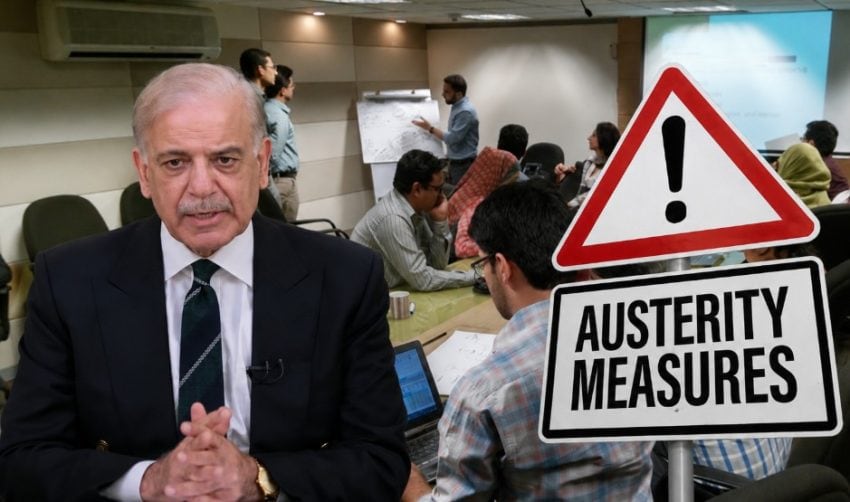
ISLAMABAD – Weeks after ending emergency fuel-saving restrictions, Pakistan could be heading back into Austerity 2.0 as Gulf crisis pushing global oil prices higher and squeezing foreign exchange reserves.
Pakistani government is once again weighing tough measures, including possible return of the four-day workweek, to shield economy from another energy shock. Pakistan could be heading back to era of fuel conservation and austerity within days as escalating conflict in Middle East threatens to send global oil prices soaring and put fresh pressure on the country’s fragile foreign exchange reserves.
PM Shehbaz Sharif and other high ups reviewed proposals aimed at cutting fuel consumption, with the federal cabinet expected to take up the matter this week or next for formal approval. If approved, measures similar to those imposed earlier this year could return in an effort to contain the economic fallout of higher energy imports.
The move comes as Pakistani government imposed daily fuel price revisions in fuel deregulation. However, senior officials have acknowledged that the change is limited to the frequency of price announcements and does not alter the state’s control over petroleum pricing.
Officials said Ogra has always prepared daily pricing calculations behind the scenes, even when consumers saw weekly or fortnightly adjustments. The regulator will continue using international benchmark prices published by S&P Global Energy Platts, but calculations will now follow a rolling average system in which the oldest daily price is replaced by the latest quotation.
The first adjustment under the revised mechanism reflected import prices over a nine-day period, from July 9 to July 17, instead of the five-day window previously used for weekly revisions.
Global Oil Prices
Oil prices surged over weekend amid escalating tensions between US and Iran, which is causing disruptions to global energy supplies. Brent crude climbed more than 3% to above $90 per barrel, reaching nearly $91, while WTI rose to around $85 per barrel.
Markets are increasingly worried that the conflict could threaten oil flows through the Strait of Hormuz. Shipping activity through the strait has already declined, while attacks on regional energy infrastructure, including oil facilities, power plants, and other strategic sites, have added to supply concerns.
Oil prices surge above $90 as US-Iran tensions disrupt Strait of Hormuz flows