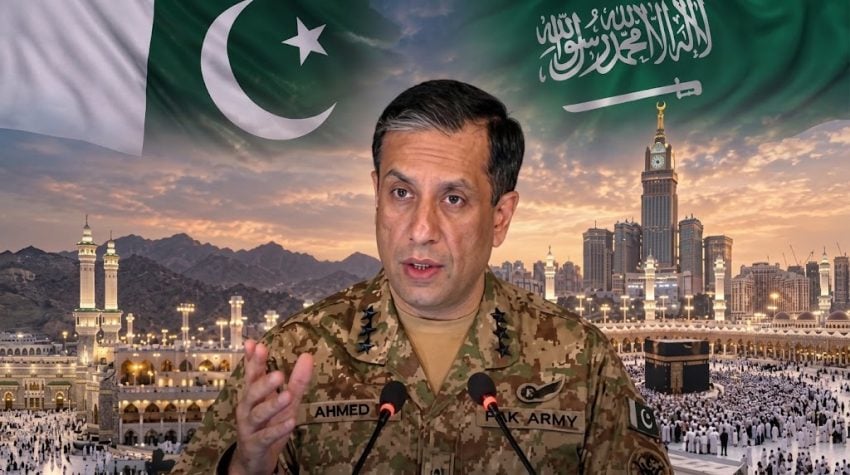
A little before 6:50 pm on Tuesday, Saudi air defences caught a drone south of Makkah and brought it down before it got anywhere near the restricted airspace around Islam’s holiest city. The coalition fighting in Yemen pinned it on the Houthis. The Houthis pinned it on nobody, insisting they hadn’t targeted Makkah at all and calling the account a lie. Within the hour, the Organisation of Islamic Cooperation was calling it a violation of the sanctity of Islam’s holy sites, and the coalition reached for a phrase that isn’t going anywhere soon: the security of Makkah is a red line. Nobody needed that explained. Pakistanis send hundreds of thousands of people to that city every year for Hajj and Umrah. This was never staying a security briefing for long.
Prime Minister Shehbaz Sharif was out with a statement within hours. Dastardly, heinous, an outrageous act that left Pakistanis saddened and perturbed, he said, and he meant it. He praised the Saudi troops who had stopped it. But buried under all that stronger language was a quieter, more important line: exercise maximum restraint, step back from the brink, let dialogue do what missiles and drones cannot. Almost nobody online read that far.
Because the argument that actually caught fire was a different one. Pakistan has a defence pact with Saudi Arabia and Turkiye. Someone tried to hit Makkah. So Pakistan should be going after the Houthis right now, today, no more waiting. It is not a crazy instinct, exactly. Love for Makkah runs deep, and patience for process runs thin on a timeline built for outrage. But that is not how a single defence alliance on earth has ever actually worked, and it is not what Pakistan’s own military spokesman said when someone asked him this exact question, hours before Twitter got there first.
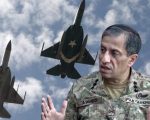
DG ISPR Lieutenant General Ahmed Sharif Chaudhry gave an interview early Wednesday and called the Makkah Defence Alliance, the pact Pakistan signed with Saudi Arabia and Turkiye last month, defensive and complementary, not a rival to anyone’s existing ties. Built for collective deterrence, he said. No regional ambitions. Not, in his own words, a club for Muslim countries only. And when he was asked what actually happens if one member gets attacked, he gave the only answer a serving officer can give on camera: that is classified. Not a dodge. Every real pact keeps that part quiet, because deterrence only works if nobody, including the public, knows exactly when or how the response lands.
Which is where the online version of events falls apart. The people who actually wrote this pact know what its classified triggers say and what each option costs, diplomatically and militarily. A comment section does not. That is not an argument for sitting on hands. It is an argument for putting responsibility where it belongs, with the government and the generals who signed the agreement, not with a public that has never been shown a single page of it.
For now, the prime minister and the country’s top military spokesman are on the same page: stand with Saudi Arabia, avoid escalation, choose talking over shooting. Fair enough to ask whether that restraint starts looking like hesitation next to a coalition partner already using the words red line, or whether too much silence around a mutual defence trigger quietly undercuts the whole point of having one. Those are real questions. They just do not get decided by whoever is loudest online before the facts have even settled.
DG ISPR says Makkah Defence Agreement is defensive, not against other alliances