

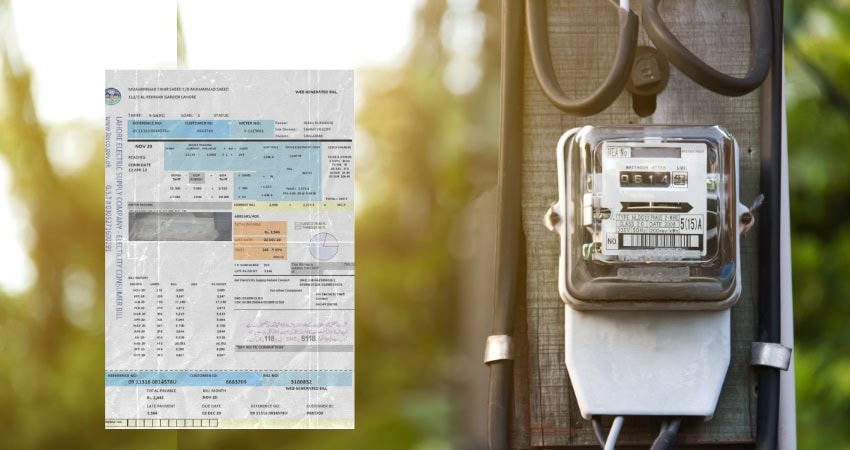
ISLAMABAD – Pakistan’s National Assembly Public Accounts Committee (PAC) was informed that electricity distribution companies imposed excessive billing on consumers by charging thousands of additional units, while refunds were not issued unless affected customers formally lodged complaints.
The revelation came during a PAC meeting chaired by Shahida Akhtar, where audit officials said consumers who did not apply for overbilling refunds were not reimbursed, even if they had been overcharged.
Committee member Senator Afnan Ullah Khan criticized the practice, saying many people had sold their jewellery to pay inflated electricity bills. He questioned how a single consumer could be billed for as many as 3,200 units and sought details on whether industrial consumers were among the 278,000 consumers who received refunds for overbilling involving 904.6 million units.
Responding to the committee, the CEO of Lahore Electric Supply Company (LESCO) said some tube-well and industrial consumers were among those refunded. He also claimed that electricity thieves had adopted sophisticated methods to manipulate meters, including installing devices to control meter readings.
PAC member Hussain Tariq referred to media reports alleging that some consumers had been charged with an additional 41,000 units in a single day.
PPP lawmaker Shazia Marri rejected attempts to shift blame onto consumers, saying the audit report highlighted the poor performance, negligence and inefficiency of electricity distribution companies.
Senator Afnan Ullah said the current system effectively allowed companies to overbill consumers who failed to file complaints, making it difficult to determine the true scale of overbilling across the country.
Chairperson Shahida Akhtar said consumers had been unfairly burdened with charges for electricity they had never used.
Energy Secretary Dr Fakhray Alam Irfan told the committee that power companies had submitted audit records late and urged that the audit objection remain open until smart meters are installed.
He said the government plans to install 16 million smart meters this year to reduce billing errors and electricity losses. Discussions have also been held with Saudi Arabia and Türkiye, while a public-private partnership is being considered to accelerate the smart meter rollout.
The secretary added that any faulty electricity meter replaced in the future would be substituted with a smart meter instead of a conventional one.
The committee directed that the matter be resolved at the Departmental Accounts Committee (DAC) level and that a progress report be submitted to the Public Accounts Committee.