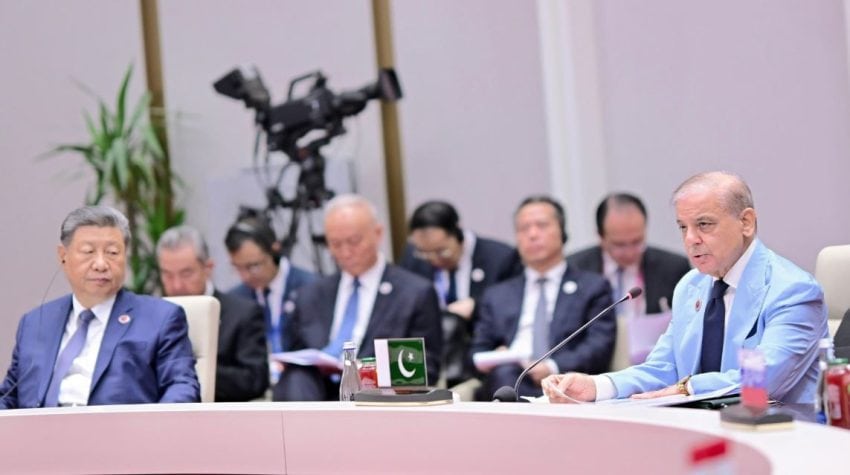
BISHKEK – Prime Minister Shehbaz Sharif issued strong warning against using water as a tool of political pressure, calling shared water resources the “lifeblood” of the region.
Speaking at the SCO summit in Bishkek, he stressed that binding water treaties must be respected in both letter and spirit, warning that such agreements cannot be abandoned at will.
PM also puts Pakistan’s diplomatic initiative at centre of efforts to defuse the escalating US-Iran conflict, declaring the Islamabad Memorandum of Understanding (MoU) the “most viable and sustainable pathway” to ending the confrontation through negotiations. He argued that the understanding could provide a broadly acceptable platform for the parties to step back from confrontation and return to dialogue.
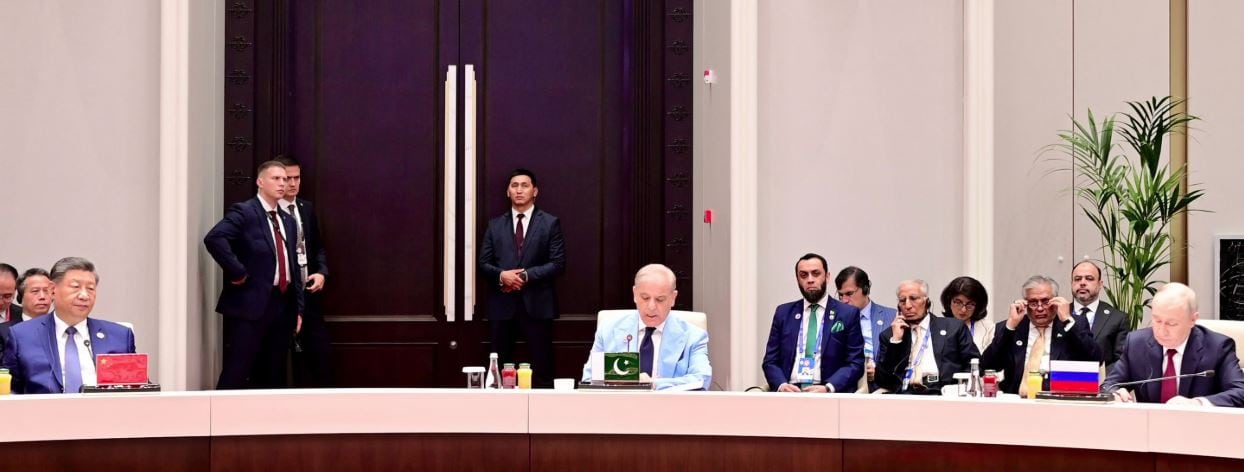
“The Islamabad MoU is the most viable and sustainable pathway to ending the ongoing conflict,” the prime minister said, stressing that negotiations and diplomacy remained the route to peace.
The remarks placed Pakistan’s mediation efforts firmly at the centre of Shehbaz’s international message as Islamabad takes over the SCO Council of Heads of State chairmanship for 2026–27.
‘Cooperation over confrontation’
Speaking separately at the SCO Council of Heads of State meeting, Shehbaz delivered a wider appeal for regional unity, warning that growing geopolitical tensions, economic fragmentation, climate pressures and rapid technological change were creating an increasingly unstable world.
The premier said the 25-year-old organisation had evolved into a major regional platform capable of delivering security, stability and economic opportunity to its members. He congratulated Kyrgyzstan on completing its 2025–26 SCO chairmanship and praised its efforts to deepen practical cooperation among member states.
Shehbaz also congratulated the leadership and people of Kyrgyzstan and Uzbekistan on their respective Independence Days.
Pakistan, he said, remained committed to the UN Charter and SCO principles, particularly the peaceful settlement of disputes and respect for international law.
Shehbaz said Pakistan had consistently pushed for peace when the sovereignty and territorial integrity of an SCO member state was violated earlier this year, triggering a major regional crisis. The fallout, he said, went well beyond the battlefield. Disruptions to energy supply routes had shaken the global economy and imposed a heavy economic burden on Pakistan and other countries.
Against that backdrop, Islamabad positioned itself as an “honest and sincere mediator and facilitator”.
‘Water must never be weaponised’
In one of the strongest warnings directed at South Asia, Shehbaz said water could not be transformed into a weapon of political pressure. Calling water as “lifeblood” of the region, he argued that agreements governing shared water resources were binding international commitments and could not simply be discarded.
“The treaties governing our shared waters are solemn binding international commitments,” he said, calling for their implementation “unconditionally in both letter and spirit”.
The warning comes as Pakistan continues to emphasise the importance of water security and treaty obligations in its regional diplomacy.