
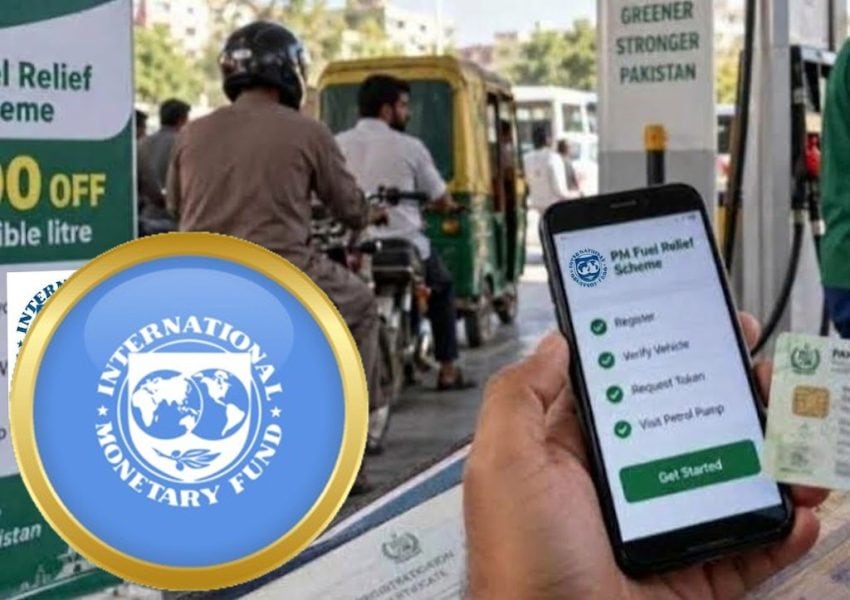
ISLAMABAD – Pakistan’s petrol relief scheme hits a fresh hurdle as the government and the IMF remain divided over fuel subsidies, leaving the future of the relief programme uncertain.
A disagreement emerged between Pakistan and International Monetary Fund (IMF) over petrol subsidies and massive Rs3.6 trillion gas-sector circular debt, with both sides still struggling to agree on how the financial burden should be handled.
The global lender is pushing Pakistan to end broad fuel subsidies and provide relief only through a targeted mechanism. The government, however, is not prepared to immediately withdraw the fuel compensation scheme for motorcycles and small vehicles, although its continuation beyond three months remains uncertain.
According to officials, the IMF estimates that the actual cost of the three-month fuel relief programme could exceed Rs75 billion. The disagreement comes as Pakistan has provided the IMF with a detailed breakdown of petrol prices. The imported cost of petrol before taxes and margins is around Rs250 per litre, while consumers are paying approximately Rs390 per litre.
The cost structure presented to the IMF includes nearly Rs110 per litre in taxes and around Rs27 per litre in various margins. IMF has opposed both fuel subsidies and cross-subsidies, while urging Pakistan to provide assistance through targeted support instead. The dispute extends beyond petrol prices, with the gas sector facing a circular debt burden of around Rs3.6 trillion.
The government and IMF have also failed to agree over approximately Rs1.4 trillion in gas-sector receivables. The IMF has pushed for the write-off of receivables linked to delayed payments, while Pakistan has raised concerns about the financial implications for gas distribution and exploration companies.
The government proposed settling circular debt through tariff differential claims of Sui gas companies, with payments ultimately involving major state-linked energy firms including OGDCL, PPL and GHPL.
Another key part of the plan involves using around Rs850 billion in additional gas-company dividends to help settle the outstanding debt.
IMF, however, expressed reservations over the proposal, arguing that using the Rs850 billion in dividends would not be fiscally neutral.
Petroleum Division argued a major portion of circular debt originated from tariff differential claims created by policy-driven public-service obligations, which prevented Sui companies from fully recovering their costs. The government also explored other mechanisms for addressing the debt, including potential use of petroleum levy revenues and savings linked to LNG arrangements.
IMF questioned whether some of these proposed sources would generate sufficient and sustainable funds, while also raising concerns over the impact on minority shareholders and other stakeholders. A detailed meeting on the gas-sector circular debt management plan is expected next week.
For now, two major petroleum-sector issues remain unresolved: the future of fuel relief and the treatment of gas-sector receivables and circular debt. IMF acknowledged progress in Pakistan’s gas-sector reforms, particularly efforts to reduce unaccounted-for gas and contain the accumulation of fresh debt.
How Much Petrol Relief is Coming for Pakistanis? PM Shehbaz Signals IMF Backing for Subsidy