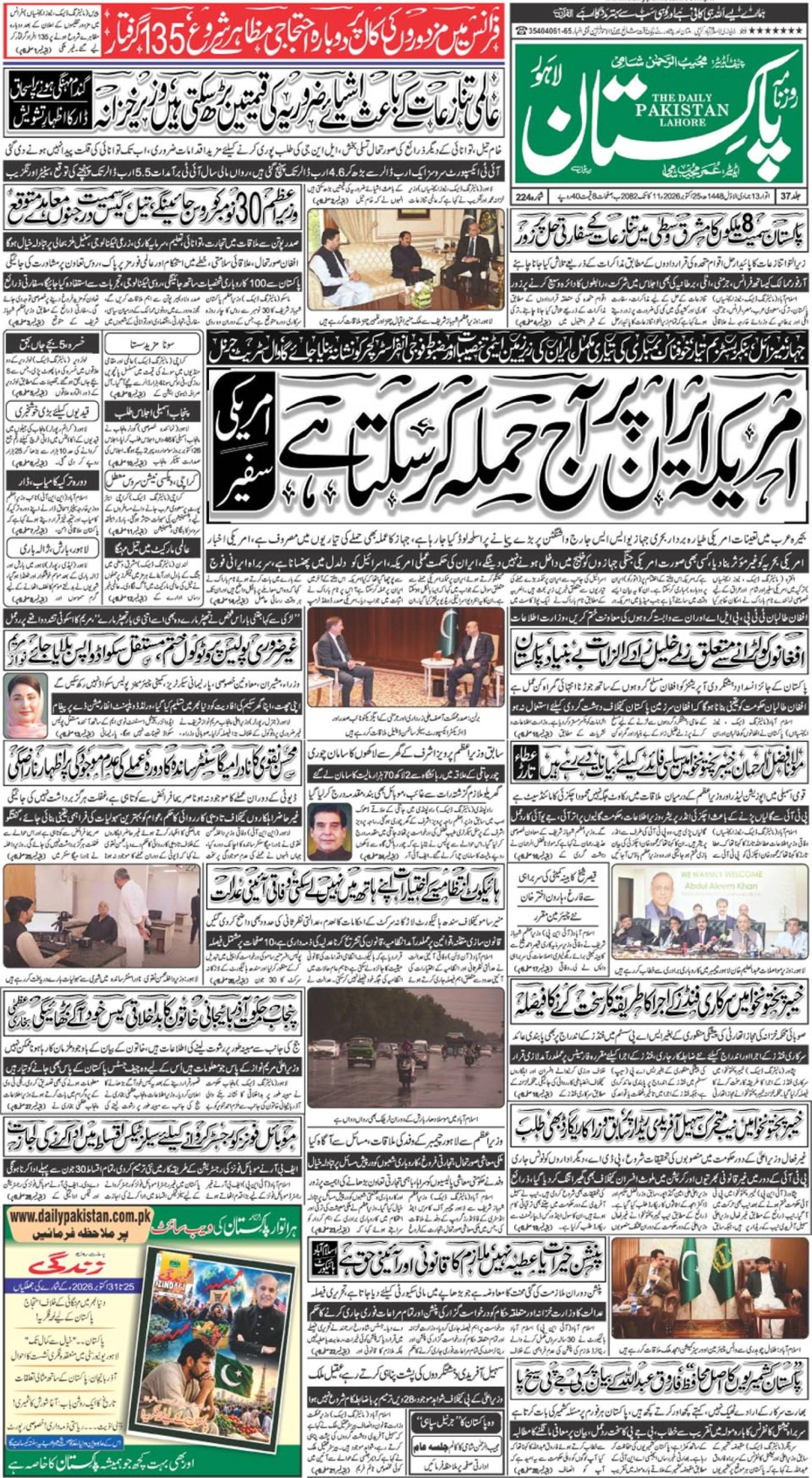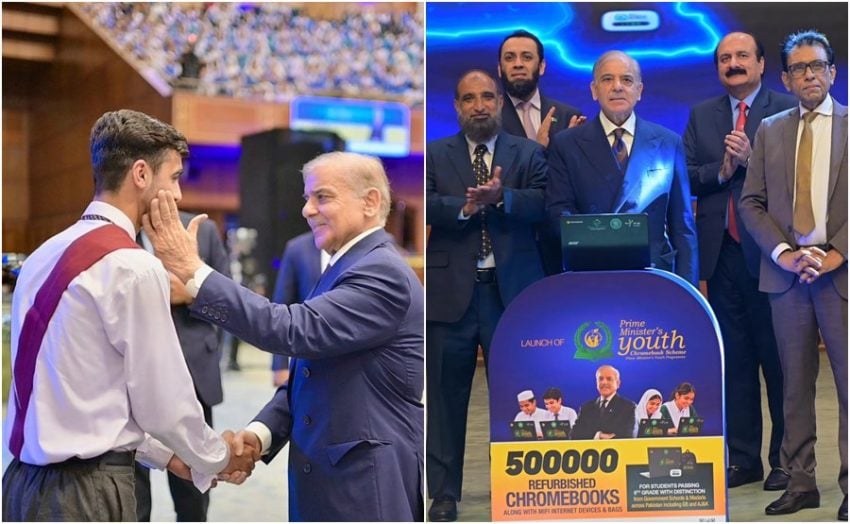
ISLAMABAD – Prime Minister Shehbaz Sharif launched an ambitious programme to provide half a million Chromebooks to students nationwide over the next two years, opening new doors to digital learning for hundreds of thousands of young Pakistanis.
Prime Minister’s Youth Chromebook Scheme was formally inaugurated at a ceremony in Islamabad today, marking another step towards making tech -based education more accessible, particularly for students who cannot afford modern digital devices.
Investing in the youth of Pakistan.
Prime Minister Muhammad Shehbaz Sharif arrives at the Convention Centre for the launch of the Prime Minister’s Youth Chromebook Scheme.
#PMYouthChromebookScheme https://t.co/WBOJoQ1OmC
— Prime Minister’s Youth Programme (@PMsYouthProgram) October 25, 2026
The initiative aims to bridge technological divide between students from different economic backgrounds, enabling young people to attend online classes, access international educational resources and build the skills required to compete in an increasingly digital world.
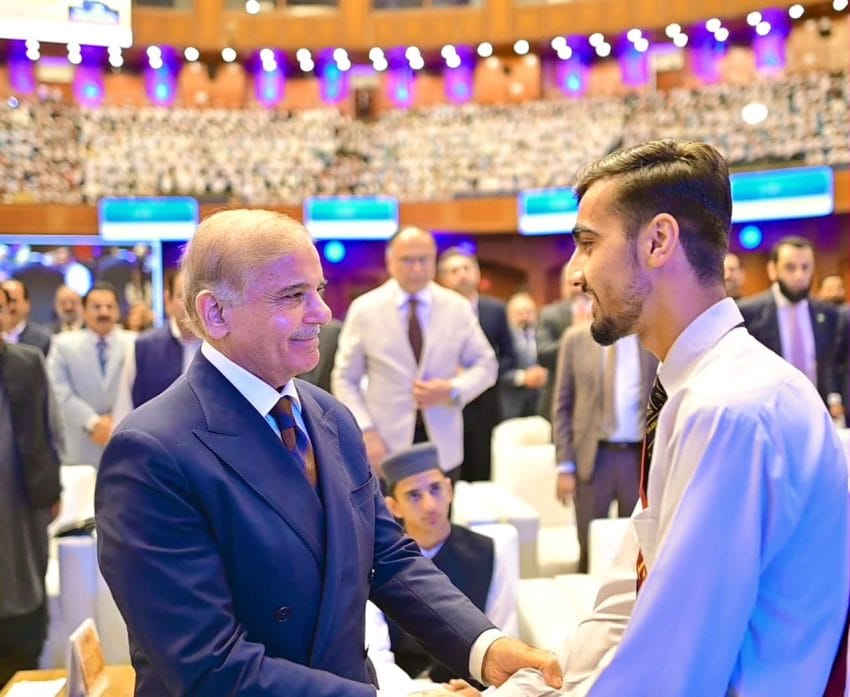
Addressing the ceremony, Prime Minister Shehbaz Sharif made it clear that Pakistan’s greatest investment was not in buildings or infrastructure alone, but in the education and capabilities of its young population. PM termed students country’s most valuable asset and stressed that providing them with modern educational tools was a collective responsibility of the government and the state.
5Lac Chromebooks in Two Years
Sharif led government plans to provide half million Chromebooks within two years, substantially accelerating the pace of its previous student technology initiatives.
He highlighted progress made under PML-N govt, and recalled that approximately 600,000 laptops had been distributed to students over a decade. This time, the government intends to provide 500,000 devices in only 24 months, reflecting its renewed emphasis on expanding digital access in education.
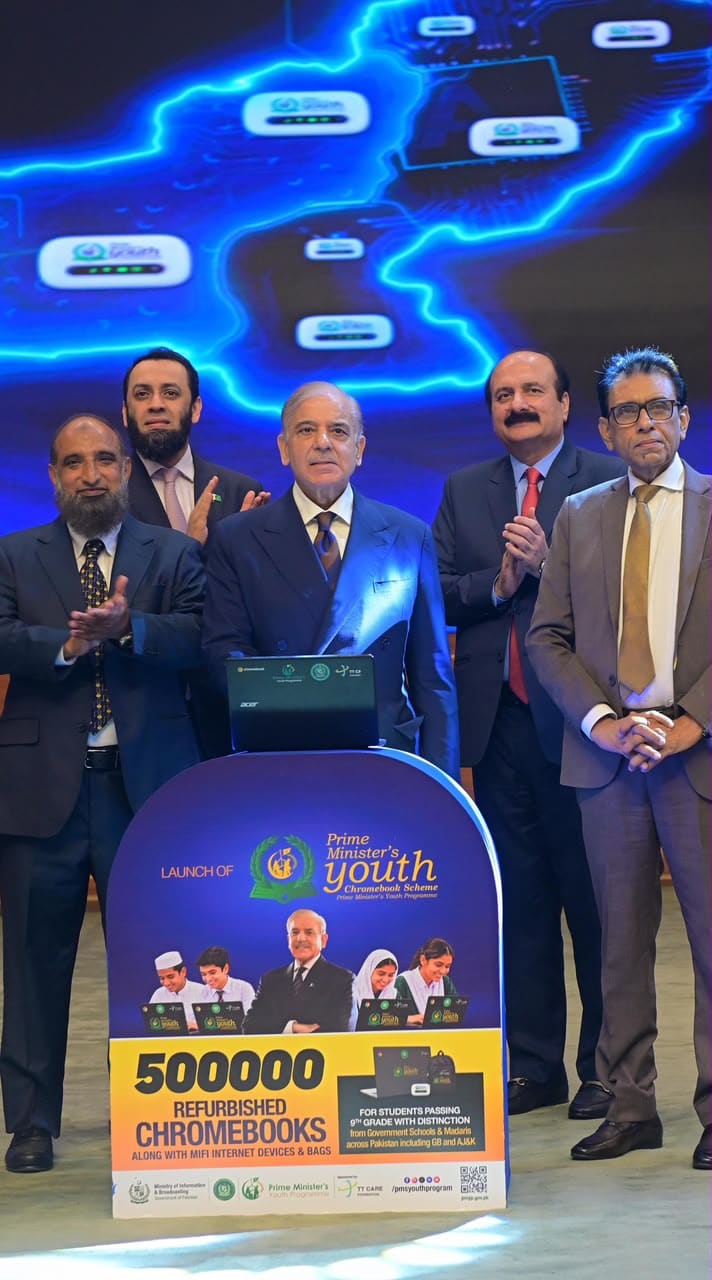
PM stressed that the distribution would recognize students’ hard work, abilities and educational achievements, reinforcing the principle that opportunities should be linked to merit rather than financial privilege. He also expressed optimism that the Chromebooks would help young Pakistanis continue their education remotely, participate in virtual classrooms and access learning material that was previously beyond their reach.
Delivering a message of encouragement to young Pakistanis, Shehbaz said that intelligence, ambition and determination were not confined to wealthy households. He stressed that students from financially disadvantaged families possessed the same potential to excel as their more privileged counterparts, provided they were given equal opportunities.
The government was committed to removing barriers that prevented deserving students from receiving quality education and preparing themselves for future challenges. Chromebook programme is intended to support this vision by bringing modern digital learning tools within the reach of students across the country.
He also highlighted the government’s continuing efforts to strengthen education through the expansion of Danish schools. Sharif announced that at least 27 such institutions were being established across Pakistan to provide modern educational facilities and essential services to deserving students completely free of charge.
Prime Minister’s Youth Programme Chairman Rana Mashhood Ahmad Khan, who addressed the ceremony before the premier, described the Chromebook initiative as an important development in the government’s efforts to empower young people. He revealed that the Tokyo Technology Care Foundation had taken practical steps to support digital facilities for 500,000 Pakistani students.
Eligibility
Only students enrolled in Government/Public Schools can apply. Private school students are not eligible.
Eligibility depends on the region:
- Punjab, Sindh, Khyber Pakhtunkhwa, and Balochistan: Top-performing Grade 9 (SSC-I) students.
- AJK, Islamabad Capital Territory (ICT), and Gilgit-Baltistan: Top-performing students of both Grade 9 (SSC-I) and Grade 10 (SSC-II).
Students must appear on the list of top performers that their education board has submitted to IBCC. There is no single nationwide marks cutoff; each board decides its own “top-performing” criteria.
How to Apply
Applications are submitted online only through the official portal: https://pmychromebooks.ibcc.edu.pk/
Simple steps:
- Select your education board.
- Enter your CNIC/B-Form number, roll number, or registration number (numbers only, no dashes) along with your date of birth.
- Click “Find my record” to load your details from the board’s list.
- Review the information carefully.
- Upload the required documents.
- Submit the form and download your reference slip.
You can apply only once. Once submitted, the form cannot be edited. If your record is not found, try a different number or contact your school/board. Providing incorrect information can cancel your allocation.
Documents Needed
Prepare clear scans (each under 300 KB):
- Recent colour photograph (front-facing, plain background) – JPG or PNG
- SSC-I or SSC-II mark sheet – JPG, PNG or PDF
- Attested copy of your B-Form or CNIC – JPG, PNG or PDF
- Attested copy of father’s or guardian’s CNIC – JPG, PNG or PDF
The announcement has generated interest among students seeking access to free educational devices. However, the government has not yet detailed the complete application and registration process in the information shared at the launch.
The official registration portal, eligibility conditions, application deadlines, academic criteria and province-wise distribution arrangements have yet to be clarified.
Students should therefore follow updates from the Prime Minister’s Youth Programme and other authorized government channels for information about how to apply.
The launch of the 500,000-Chromebook initiative, alongside the expansion of Danish schools, signals a broader effort to strengthen Pakistan’s education sector by connecting academic opportunity with modern technology.
For hundreds of thousands of students, particularly those from families struggling to afford digital devices, the programme could provide an important opportunity to access learning resources, develop valuable skills and pursue a more promising educational future.