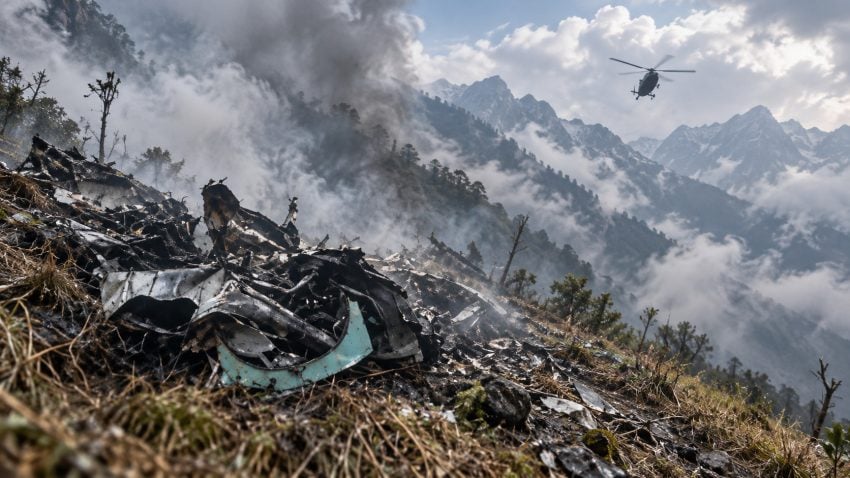
NEW DELHI — India’s aviation safety and aerial monitoring capabilities are facing fresh scrutiny after passenger helicopter vanished from tracking systems and crashed in Himalayan state of Uttarakhand on Friday, killing all six people on board, including the pilot.
The helicopter, operated by private company Trans Bharat Aviation, was travelling from Hindu pilgrimage destination of Badrinath to Dehradun when it suddenly lost communication while flying over the Joshimath valley in Chamoli district.
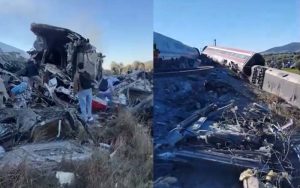
🇮🇳🔞 Just In: All 6 On Board Were Killed in Helicopter Crash Near Joshimath While Returning from Badrinath; Debris and Bodies found.
A Trans Bharat Aviation helicopter returning from Badrinath to Dehradun crashed near Chai village in Joshimath, Uttarakhand, on 30 October 2026 amid bad weather, killing all six people on board — pilot Capt. Himanshu Sabharwal and five passengers from Bengaluru, including a police inspector.
The wreckage was found and bodies recovered by Army and disaster teams; the operator’s fleet has been grounded.
— World In Last 24hr (@world24x7hr) October 30, 2026
Uttarakhand Civil Aviation Development Authority (UCADA) said the aircraft disappeared from tracking system at approximately the same time that radio communication was lost, triggering an emergency search operation in the mountainous region. The helicopter, registered as VT-HCX, had departed Badrinath at approximately 1:14 pm. Its wreckage was subsequently discovered near Chhai village, close to Joshimath, after reports of smoke rising from the mountainside.
Authorities confirmed that all five passengers and the pilot died in the accident, turning what began as a missing-aircraft emergency into another aviation tragedy in India’s Himalayan pilgrimage corridor.
The incident renewed concerns over effectiveness of aviation monitoring, emergency communication and flight safety arrangements in one of India’s most geographically challenging regions. Joshimath holds importance because of proximity to India-China border and major Indian military installations. The region is also covered by military and civilian aviation infrastructure, making the sudden disappearance of a passenger helicopter particularly concerning.
The loss of both communication and tracking has raised questions about the reliability of civilian aviation monitoring in difficult mountain terrain, although authorities have not established whether any surveillance or technical failure contributed to the crash.
India invested heavily in modernising its military radar networks, aerial surveillance capabilities and aviation infrastructure, particularly in sensitive border regions. However, the latest tragedy shows continuing challenges of operating aircraft in the Himalayas, where rapidly changing weather, poor visibility, extreme altitude and difficult terrain can complicate navigation and rescue missions.
The incident brings attention to Indian government’s broader aviation safety commitments, with questions emerging over whether existing monitoring and emergency response measures are adequate for high-risk mountain routes.
Rescue personnel from the district administration, disaster management authorities, Indian Army and State Disaster Response Force were mobilised to locate the aircraft. The search operation faced difficult mountainous conditions, with reports indicating that rain and poor visibility complicated efforts to reach the crash site.
Despite the region’s military significance, the operation required coordinated ground searches and emergency response teams to locate the wreckage. The crash has also revived concerns about the safety record of helicopter operations serving Uttarakhand’s Char Dham pilgrimage destinations.
According to an Aircraft Accident Investigation Bureau report released earlier in October, the Char Dham aviation sector recorded eight helicopter accidents and one serious incident between 2015 and 2025. Five of those accidents were fatal, while several were linked to failures to follow established flight procedures.
The latest tragedy adds to pressure on aviation regulators and operators to strengthen safety procedures, flight monitoring and emergency preparedness along high-altitude routes. In response, Trans Bharat Aviation’s entire helicopter fleet has been grounded as a precautionary measure.
Uttarakhand Chief Minister Pushkar Singh Dhami has ordered an investigation into the crash and assured assistance to the victims’ families. India’s Aircraft Accident Investigation Bureau is expected to examine the circumstances surrounding the accident, including the loss of communication, flight conditions and possible operational or technical factors.