LONDON – Oil prices tumbled on November 2 amid diplomatic signals from Washington and Tehran fuelled hopes of ending 9-month long conflict and restoring stability to Gulf energy supplies.
The selloff shows growing expectations that negotiations could cut threat to oil shipments through Hormuz. However, neither side has announced a comprehensive agreement, and preparations for possible renewed fighting continue. West Texas Intermediate (WTI), the U.S. benchmark, was quoted in one intraday update at $99.50 a barrel, down approximately 4.44%, while Brent fell 4.61% to $108.20.
Prices varied across trading sessions, contracts and reporting times. Other updates put WTI’s losses at roughly 4% to more than 6.5%, with earlier readings around $100–$101 and some trackers showing approximately $97.40 towards the close. Brent’s reported decline ranged from about 3% to more than 7%. Earlier quotations hovered around $109–$110, while later updates placed the benchmark near $106–$108, within a broader reported range of approximately $105 to above $110.
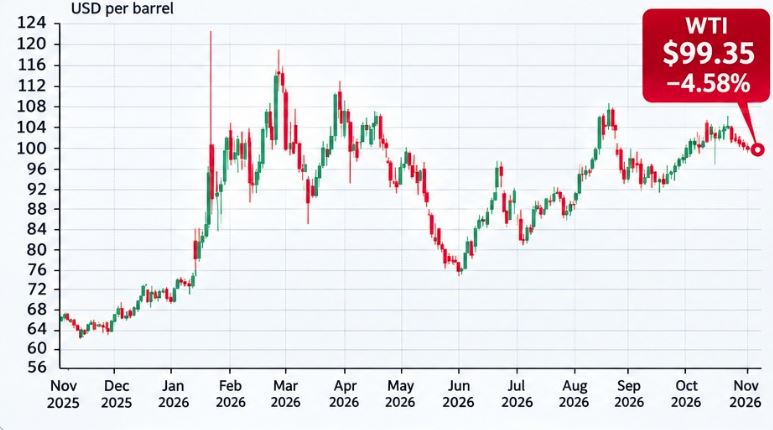
The retreat suggested traders were reducing the premium attached to potential supply disruptions after sharp gains the previous week. Qatar-mediated diplomatic contacts helped drive the shift, while WTI’s break below $100 added momentum to the decline.
US Secretary of State Marco Rubio said President Donald Trump preferred a negotiated settlement and had not decided whether to resume military strikes. Speaking over the weekend around the G20 foreign ministers’ meeting, Rubio said Washington retained the military capability to act if required, but stressed that Trump favoured resolving the confrontation peacefully.
Trump also suggested conflict could end soon, either through a deal or another course of action. He has described negotiations as progressing while keeping military options available. Those signals encouraged markets, but they have stopped short of establishing a clear route to a settlement.
Iran indicated that agreement remains possible if its conditions are met. Statements attributed to Foreign Ministry spokesman Esmaeil Baghaei and Foreign Minister Abbas Araghchi point to continued exchanges through mediators, including Qatar and contacts in Doha.
The discussions reportedly involve condensed version of earlier proposals. A framework previously described as requiring roughly seven days could potentially be implemented in as little as two days to reopen the Strait of Hormuz under Iranian terms.
Tehran’s demands included an end to hostilities on all fronts, the lifting or easing of the U.S. naval blockade, oil-related sanctions relief or waivers, and the release of frozen assets. Iran has sought such steps before, or alongside, negotiations over nuclear issues.
Despite maintaining diplomatic contacts, Iranian officials have signalled that they do not expect Washington’s fundamental position to change after the U.S. midterm elections. Tehran is also preparing contingencies, reportedly including the identification of additional targets.
The conflict involving US, Israel and Iran already disrupted Gulf shipping, heightened concerns over passage through Hormuz and driven oil prices higher at earlier stages. Previous negotiating frameworks and ceasefire efforts have also come under strain.
Iran orders Military to put all US, Israeli Assets within Strike Range as fresh War Threat looms