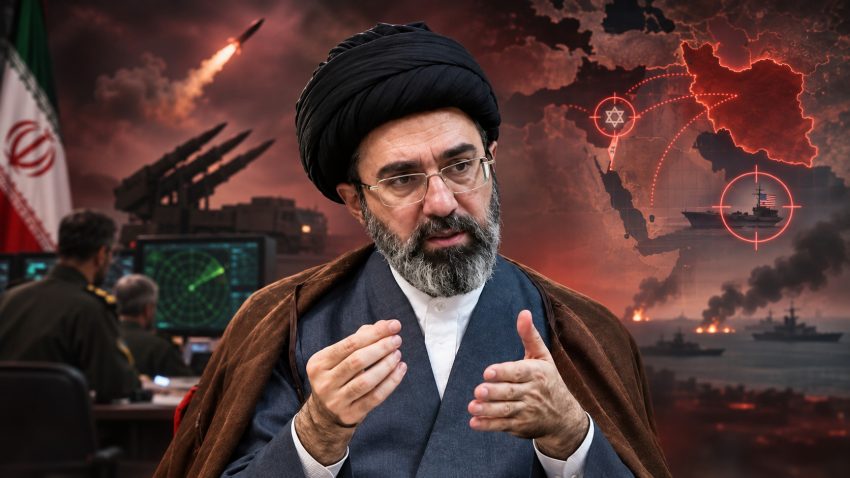
TEHRAN –Fears of another major confrontation in Middle East intensified after Iran’s Supreme Leader Ayatollah Mojtaba Khamenei ordered country’s armed forces to prepare for strikes against American and Israeli assets without geographical restrictions, while a senior Iranian security official warned that any renewed war would bring devastating consequences for Washington.
The sweeping military directive comes as Washington and Terhan remain locked in tense standoff following the conflict that erupted with joint US-Israeli attacks on February 28, 2026. Despite the increasingly aggressive warnings, diplomatic efforts to prevent another outbreak of fighting remain underway, with Qatar acting as a key intermediary between Tehran and Washington.
Supreme Leader Mojtaba Khamenei instructed senior military commanders to revise the country’s operational target database to include all physical and non-physical assets belonging to the United States and Israel. The directive calls for comprehensive military preparations to ensure Iranian forces can respond swiftly and forcefully to potential threats, regardless of geographical boundaries.
Khamenei also declared that Iran would determine the timing and conditions for ending any renewed military confrontation initiated by its adversaries. The instructions underline Tehran’s determination to strengthen its deterrence capabilities after months of confrontation with Washington and Tel Aviv. However, the announcement represents a military preparedness directive rather than a formal declaration of war, and no fresh military offensive was announced alongside the order.
Iran’s Supreme National Security Council Secretary Mohsen Rezaei delivered an even stronger warning, threatening severe retaliation if the United States launches another military campaign against the Islamic Republic.
In his interview with Iranian state television, Rezaei argued that Washington must face consequences for previous attacks or other countries could conclude that striking Iran carries little risk. He warned that Tehran would establish a level of deterrence powerful enough to discourage any country from attacking Iranian territory.
Rezaei declared that Iran would break America’s horns if fighting resumed, questioning how Washington would maintain its global influence after suffering such a setback. Iranian security chief also claimed that Tehran had tested anti-ship missiles against the USS George Washington aircraft carrier. His assertion was not independently verified.
While Iranian leaders threatened military retaliation, US President Donald Trump offered contrasting assessment, claiming that negotiations with Tehran were progressing well and that Iranian authorities were interested in reaching an agreement.
Speaking to reporters in Florida on Saturday, Trump nevertheless questioned Iran’s credibility, accusing its leadership of making commitments and subsequently retreating from them. Discussing diplomatic contacts involving Qatar, the American president stressed that Washington was under no immediate pressure to finalize a deal.
When asked whether he was considering another military strike against Iran, Trump sharply criticized the question and refused to reveal any potential military plans. US president also repeated his assertion that previous American operations had destroyed Iran’s naval and air capabilities, along with significant portions of its weapons-production infrastructure.
Despite public threats from both sides, a diplomatic opening has emerged after Iran confirmed receiving a letter from US Vice President JD Vance. Mohsen Rezaei disclosed that he had personally reviewed the correspondence but had not yet sent an official response.
Iranian official also noticed Washington’s diplomatic language, which according to them is softer tone. The letter is particularly important as it shows that high-level communication between Washington and Tehran continues even as both governments maintain tough public positions.
Iranian representatives met Qatari mediators in Doha on Saturday following lengthy discussions in Tehran the previous day. The negotiations are focused on finding a possible arrangement to prevent renewed fighting, although major disagreements remain over Iran’s nuclear programme, sanctions and regional security.
Alongside the military warnings, Tehran has acknowledged an increasingly sensitive internal debate over whether its longstanding nuclear doctrine should remain unchanged if another war breaks out. Rezaei confirmed that no formal government decision had been made to revise the country’s nuclear policy.
However, he acknowledged that Iranian officials were discussing whether maintaining the previous approach would still serve the country’s interests in the event of another military confrontation. He stressed that discussions should not be interpreted as an official policy shift, making clear that Tehran had not authorized any new nuclear strategy.
Rezaei also pointed to growing public frustration over attacks on Iranian nuclear installations despite Tehran’s previous cooperation with international monitoring mechanisms. He argued that Iranian citizens increasingly want to understand why their country should maintain its existing nuclear approach after its facilities were targeted.
According to Rezaei, Iran had allowed inspections by the International Atomic Energy Agency and permitted monitoring cameras at its nuclear sites, yet those facilities still came under military attack. He said such developments had prompted questions among Iranians about whether continuing the same nuclear strategy remained justified.