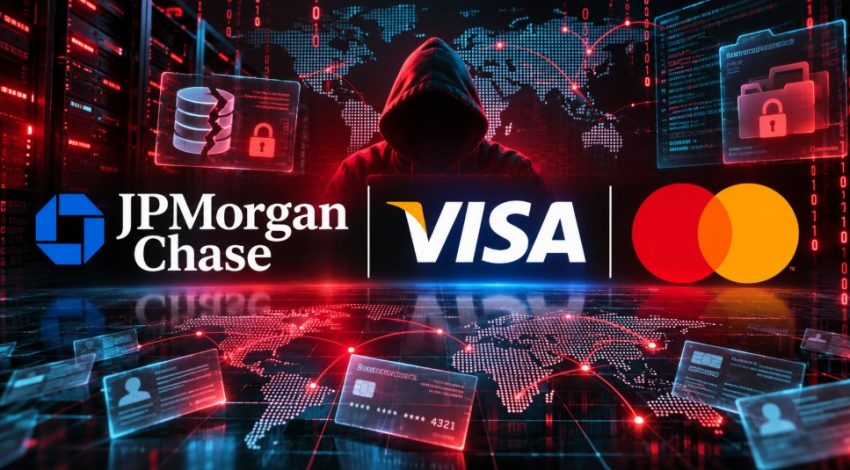
LONDON – Hackers released thousands of customer records allegedly stolen through third-party service providers linked to JPMorgan Chase, Visa and Mastercard, raising serious concerns about the vulnerability of sensitive financial customer information, even as the companies insist their core banking and payment systems remain secure.
A new cyber-extortion group got access to datasets of three of the world’s most influential financial institutions after an alleged ransom deadline expired. The group, first tracked in September, had reportedly named the companies on its leak website around November 16, giving them approximately 48 hours to meet its demands.
With no reported payment, the attackers proceeded to release the information, triggering scrutiny of security weaknesses within the financial industry’s extensive network of external service providers. Among the most sensitive disclosures was information apparently associated with Chase Reserve, an exclusive invitation-only Visa card generally linked to clients holding at least $10 million in managed assets.
An analysis of the published files identified approximately 16,000 customer email addresses, alongside some telephone numbers and account identifiers. Another 124 email addresses reportedly belonged to bank employees. Despite potentially sensitive nature of the information, the entire published dataset measured just 502 kilobytes.
JPMorgan Chase acknowledged unauthorized access involving third-party service providers but maintained that its internal banking systems had not been compromised. The bank said the incident primarily involved marketing-related information and confirmed that banking services continued uninterrupted.
Visa separately confirmed a security incident involving an external service provider operating in the Asia-Pacific region. Researchers examining the published material identified records associated with more than 6,000 premium cardholders, including names, email addresses, telephone numbers, messaging application details and restaurant reservation information.
The records appeared connected to exclusive dining and loyalty services, with references to markets including Hong Kong, Taiwan, Japan, South Korea, Singapore, Malaysia, Australia and the Philippines. Visa made it clear that its payment infrastructure remained unaffected and that no payment card numbers were exposed.
Booking.com HACKED: Millions of Travelers’ Data Exposed in Major Breach
Mastercard also comes under attack involving an external provider, as the company confirmed limited exposure of email addresses associated with a particular cardholder benefits program. Around 2,000 entries reportedly appeared in the published material, although researchers questioned whether some records were test data.
Investigators are examining similarities between the leaked datasets that could indicate a common source. Cybernews researcher Aras Nazarovas identified comparable formatting and organizational patterns across the records, raising suspicions that the information may have originated from a shared supplier or connected vendor systems.