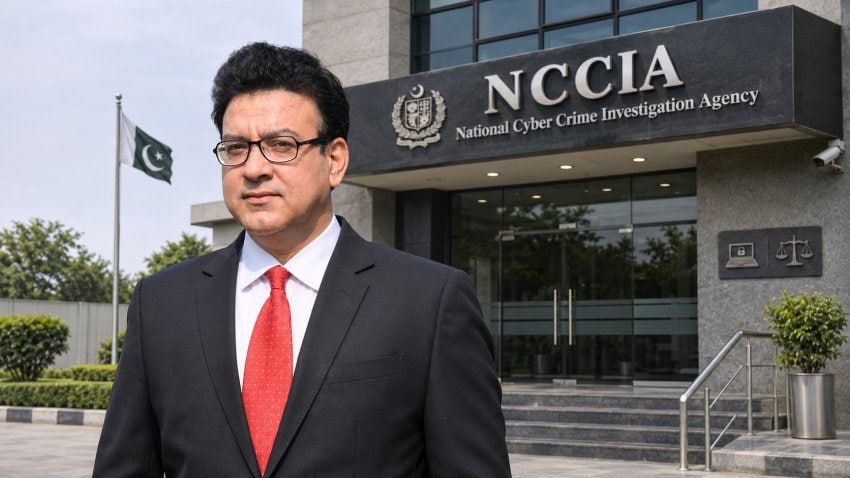
ISLAMABAD – Seasoned TV anchor and journalist Junaid Saleem comes under National Cyber Crime Investigation Agency (NCCIA) scrutiny over allegations of circulating false and fabricated information through his social media.
The notice to former Hasb-e-Haal anchor sparked fresh debate over press freedom and the growing use of cybercrime laws against journalists and political commentators in Pakistan. According to an official notice issued on November 22, NCCIA’s Cyber Crime Reporting Centre in Islamabad launched inquiry against Saleem over allegations related to the publication and dissemination of misleading information online.
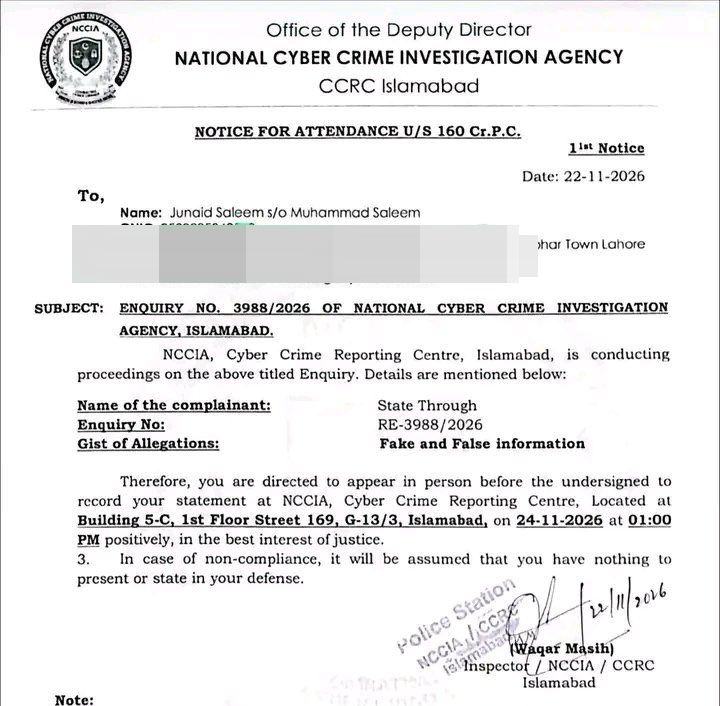
The journalist has been ordered to appear before NCCIA investigators today on Tuesday to explain his position and record a statement concerning the allegations. The notice invokes Section 160 of the Code of Criminal Procedure, which empowers investigators to require individuals to appear for questioning during an inquiry or investigation.
It further cautions that failure to comply with the directions could invite legal action under the Prevention of Electronic Crimes Act (PECA) 2016 and relevant provisions of the Pakistan Penal Code.
NCCIA was supposed to Stop Online Harassment, Now its Own Officer faces Harassment Allegations!
While NCCIA notice accuses journalist of spreading false information, it does not mention any particular TikTok video, political statement, social media post or allegation that prompted the inquiry.
Junaid Saleem is among Pakistan’s popular TV personalities, having spent years in news broadcasting, political analysis and current affairs programming. He rose to wider prominence through the popular political satire show Hasb-e-Haal, which combined comedy with commentary on the country’s political and social affairs.
Saleem is also chief editor of Daily Insaf and is associated with Insaf Digital, extending his presence beyond conventional television journalism.
In recent months, several journalists, TV anchors and online commentators faced NCCIA inquiries or notices over allegations involving misinformation, political statements and social media activity.
Media rights organisations and press freedom advocates have warned that lengthy investigations and repeated legal notices can place considerable pressure on journalists, even when allegations do not ultimately lead to prosecution or conviction.