
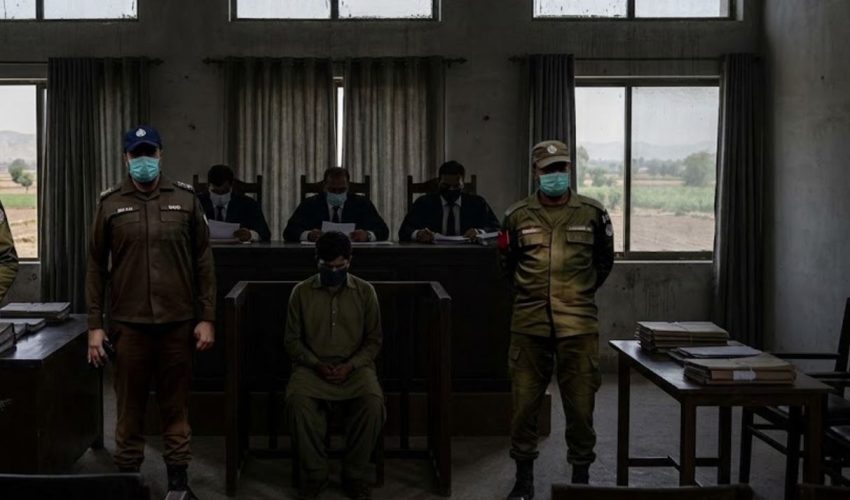
LAHORE – Punjab approved major changes to anti-terrorism law, paving the way for high-security terrorism cases to be tried under system where the identities of judges, prosecutors, police officers, lawyers and witnesses can be kept secret.
The unusual model of confidential anti-terrorism proceedings, potentially leaving the public with a trial in which the judge, prosecutor, witnesses and other key participants are known only through codes, designations or sealed records.
Punjab Assembly passed the Anti-Terrorism (Punjab Amendment) Bill 2026 despite strong opposition protests and objections. Opposition members also proposed amendments, but these were rejected before the bill was passed. The legislation introduces Section 21AAA into the Anti-Terrorism Act, 1997, creating a special mechanism for cases designated as “special security cases.”
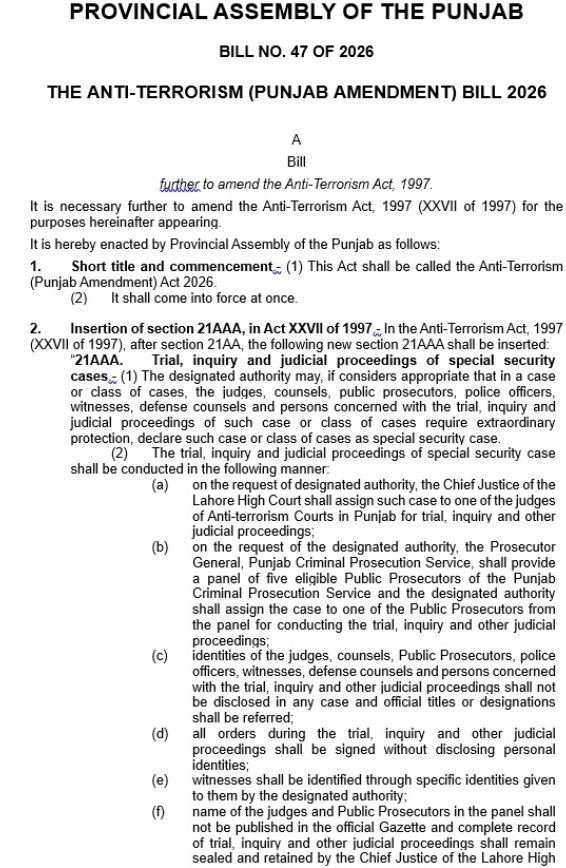
Under the new framework, a terrorism case can be placed under extraordinary security measures if the designated authority determines that the people involved in its trial, inquiry or judicial proceedings face serious security threats.
One of the key provisions allows identities of the judge, public prosecutor, police officers, defence counsel, witnesses and other persons involved in proceedings to remain undisclosed. Instead of names, their official designations or specially assigned identities can be used.
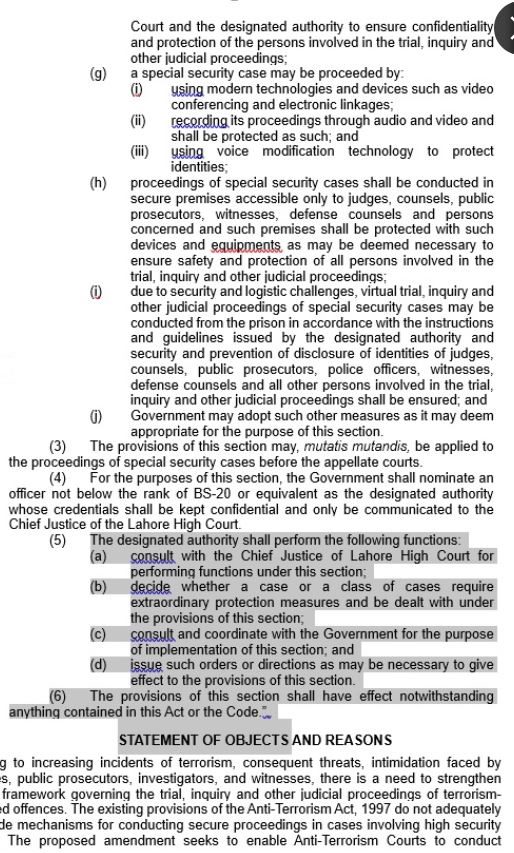
Witnesses will be identified through specific codes or identities assigned by the designated authority, while orders passed during proceedings will be signed without revealing the personal identities of those involved. Even the names of judges and public prosecutors selected for such cases will not be published in the Official Gazette.
The complete record of the trial, inquiry and other judicial proceedings will also remain sealed and securely retained by the Chief Justice of the Lahore High Court and the designated authority.
Perhaps the most consequential feature of the amendment is the creation of a “designated authority.” The provincial government will nominate an officer not below BS-20 or an equivalent rank for the role. The officer’s identity and credentials will be kept confidential and communicated only to the Chief Justice of the Lahore High Court.
The designated authority will have the power to determine whether a case or class of cases requires extraordinary protection and should be dealt with under the special-security provisions.
The authority will also coordinate with the government, consult the Chief Justice and issue directions necessary to implement the mechanism.
For a case declared a special security case, the Chief Justice of the Lahore High Court will, on the designated authority’s request, assign it to an Anti-Terrorism Court judge. Similarly, the Prosecutor General of the Punjab Criminal Prosecution Service will provide a panel of five eligible public prosecutors, from which the designated authority will select one prosecutor for the case.
Proceedings may be conducted using video conferencing, electronic linkages and audio-video recording. The law also permits the use of voice-modification technology to protect the identities of participants.
Prison-Based Hearings
Special-security cases can be heard at secure premises accessible only to judges, lawyers, prosecutors, witnesses and other relevant persons. The premises may be equipped with whatever security devices and equipment are considered necessary to protect those involved.
Where security or logistical challenges make physical hearings difficult, proceedings may also be conducted virtually from a prison, subject to instructions issued by the designated authority. The law’s confidentiality and protection provisions can also be applied, with necessary modifications, to proceedings before appellate courts.
The bill’s Statement of Objects and Reasons says the amendment is needed due to terrorism incidents and the threats, intimidation and security risks faced by judges, prosecutors, investigators and witnesses while the existing Anti-Terrorism Act does not provide adequate mechanisms for conducting proceedings in cases involving exceptionally high security risks.