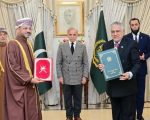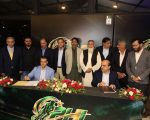

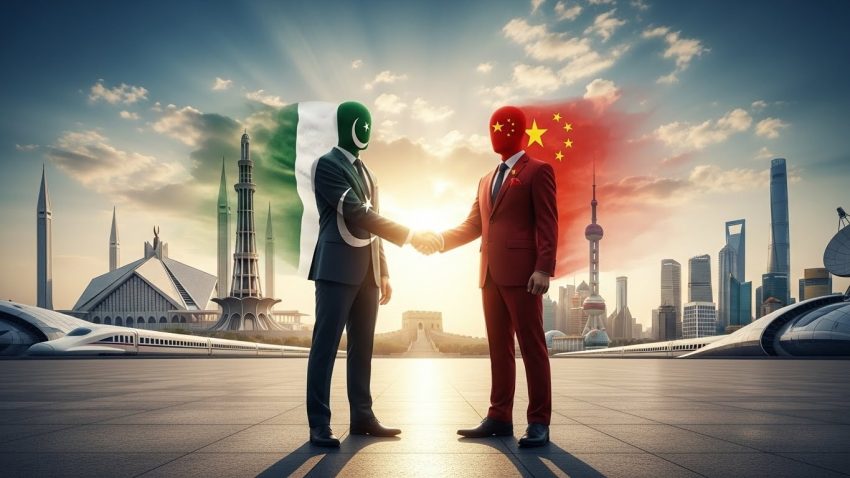
I was monitoring the feed from the Diaoyutai State Guesthouse in Beijing this Sunday, watching the final signatures being placed on the Joint Press Communiqué, and one realization hit me harder than usual. While the rest of the globe is cracking under geopolitical pressure, the link between China and Pakistan isn’t just holding on—it is hardening into steel. The visit of our Deputy Prime Minister, Ishaq Dar, to Beijing this week was far more than the usual diplomatic pageantry or a routine checklist of bilateral obligations. It was a loud, deliberate signal sent to every capital—friend or foe—that the axis between Islamabad and Beijing remains the only real anchor of stability in this region.
On paper, they called this the “Seventh Round” of strategic talks. But if you have been in this game as long as I have, you know the round number doesn’t matter. The context does. Next year, we hit the 75-year mark as partners. That is three-quarters of a century. I have watched Western “allies” hug us one day and sanction us the next, depending on which way the political wind was blowing in Washington. China has never done that. They have stayed in the trenches with us. This weekend was just another reminder that while other capitals offer us lectures, Beijing offers us lifelines.
Let’s strip away the diplomatic jargon for a second. When the communiqué talks about “CPEC 2.0” and “industrial cooperation,” your eyes might glaze over. But here is what that actually puts on the dinner table: it moves us away from just laying asphalt and pouring cement. It means we are finally looking at the minerals sitting under the dust in Balochistan and figuring out how to turn them into cash flow using Chinese tech.
Look at the decision to keep the Khunjerab Pass open year-round. To a bureaucrat in Islamabad, that is just a logistical line item. But to a trader in Gilgit facing a brutal winter, that is the difference between bankruptcy and feeding his family. And I have to admit, reading the confirmation about a Pakistani astronaut heading to the Chinese Space Station gave me a bit of goosebumps. It signals that our neighbor doesn’t just view us as a market for their goods; they are willing to pull us up into the future with them.
But let’s be honest about the most important part of this visit: the cover it provides us. We live in a rough neighborhood. We have a belligerent neighbor to the East that thinks it can rewrite international law whenever it feels like it. So, when Beijing stands on a podium and reiterates that Kashmir is a dispute that must be solved through the UN—not via New Delhi’s unilateral dictates—that is genuine armor. In return, we back the One China principle without blinking. It is a fair trade. We respect their sovereignty, and a global superpower with a Security Council veto respects ours.
I also paid close attention to the language on security. China didn’t just offer condolences; they acknowledged the blood Pakistan has actually spilled fighting terror. When the joint statement called out “double standards,” that was a direct shot at the global powers who turn a blind eye to the terror networks bleeding into our borders from Afghanistan and India. Beijing gets it. They know that if Karachi burns, the Belt and Road is blocked. Locking shields to dismantle those terror networks is a survival necessity for both of us.
So, where does this leave us? The handshake in Beijing was strong, but we have homework to do. China is pouring billions into our economy; the absolute least we can do is ensure their engineers don’t have to look over their shoulders while they work. Our agencies did brilliant work in Karachi recently, but that shield has to stay up, 24/7. Now is the time to match their enthusiasm with our efficiency. If we create a seamless, ‘one-window’ experience for investors, we ensure that Chinese capital transforms effortlessly into Pakistani industry, creating a win-win situation without delay.
Our enemy were saying that Pakistan is isolated. To them, I say: look at the footage from Sunday. We have the world’s emerging superpower firmly in our corner, investing in our earth and taking our astronauts to space. That isn’t isolation. That is strategic genius. As we head deeper into 2026, the axis between Beijing and Islamabad is the lighthouse in a very stormy sea, proving that in a world full of fair-weather friends, we managed to keep the only one that truly counts.
The Dawn of 2026: Why Pakistan is Finally Turning the Corner