

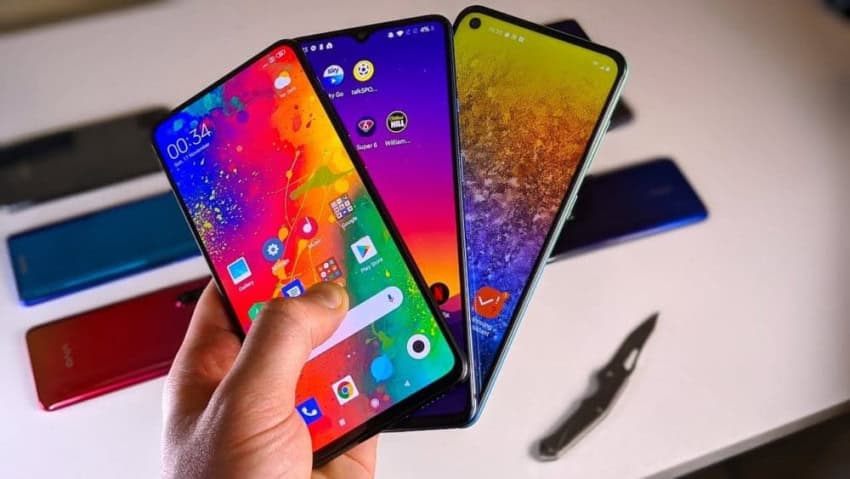
ISLAMABAD – Pakistani authorities are looking to ban imported devices as phone imports increased by over 40 percent during July–November of FY2025–26, reaching over $800 million.
Amid the soaring number, federal government announced complete ban on import of used mobile phones under newly unveiled Mobile and Electronic Devices Manufacturing Policy 2026–33 amid shift toward large-scale local production and export-led growth.
The ambitious policy aims to turn South Asian nation into a regional manufacturing hub for global smartphone brands. Drawing inspiration from industrial success stories of India, Vietnam, and Bangladesh, the policy seeks to replace imports with domestic assembly, localisation, and exports.
The policy was presented during a high-level meeting chaired by Prime Minister’s aide on Industries and Production, Haroon Akhtar Khan, who reviewed progress and brought all stakeholders onto a single implementation roadmap.
A detailed briefing highlighted the stark economic advantages of local assembly over complete imports. Addressing the meeting, Haroon Akhtar Khan declared that the core objective of the policy is to create large-scale employment, strengthen Pakistan’s industrial base, and reduce dependence on imports.
Under this framework, Pakistani government has taken tough stance on performance and compliance. Mandatory export targets have been declared counterproductive, citing the auto sector as a cautionary example.
EDB will define minimum component requirements for SKD kits, at least 40 parts for smartphones and 15 parts for feature phones. Valuation rulings will be institutionalised through joint coordination between the EDB, PMPMA, and the Customs Valuation Directorate. In a major move to curb under-invoicing, both imported CBU phones and locally manufactured devices will be placed under the third schedule of sales tax.
The policy also introduces strict tariff and financing framework. Export targets will be directly linked with implementation of Tax Increment Financing (TIF). A minimum tariff gap of 30 percent between CBU and SKD imports will be enforced, while TIF levy may be imposed on both categories. Electronic waste management has been acknowledged as a complex challenge and will be addressed under a separate mechanism.
The government also warned of zero tolerance for violations. Incentives will be withdrawn and penalties imposed for failure to meet localisation targets, reporting obligations, or operational requirements.
Mobile manufacturers strongly underscored the need for quality certification for exports and urged the government to establish state-backed testing and certification labs to ease compliance with global standards.
The meeting was attended by Secretary Industries and Production Saif Anjum, CEO Engineering Development Board (EDB) Hammad Mansoor, and representatives of the Pakistan Mobile Phone Manufacturers Association (PMPMA).
Hello! I can certainly summarize those policy points for you in short, easy-to-read bullet points.
Ban on Imported Phones in Pakistan
-
Mandatory Export Targets: Considered counterproductive (with the auto sector as an example).
-
Quality Certification: Mandatorily required for exports, but should not be applied by force.
-
Local Infrastructure: Government should be responsible for setting up local testing labs.
-
Mobile Phone SKD Kits (Minimum Parts):
-
Smartphones: Minimum 40 parts per Semi-Knocked Down (SKD) kit.
-
Feature Phones: Minimum 15 parts per SKD kit.
-
Penalties on Targets: Penalties should be applied on performance targets.
-
-
Valuation Rulings Institutionalization: Rulings must be institutionalized with the participation of the Engineering Development Board (EDB) and Pakistan Mobile Phone Manufacturers Association (PMPMA), alongside the Customs Valuation Directorate.
-
Sales Tax Schedule: Complete Built-Up (CBU) and locally manufactured mobile phones should be placed in the 3rd Schedule of Sales Tax to prevent under-invoicing.
-
Export & Tax Linkage: Export targets should be directly linked to the implementation of Tax Increment Financing (TIF).
-
Tariff Gap: The tariff gap between CBU and SKD imports should be a minimum of 30 percent.
-
TIF Levy: Tax Increment Financing Levy may be applicable on both CBU and SKD imports.
-
E-Waste Management: Acknowledged as a complex subject.
Haroon Akhtar reiterated that Prime Minister Shehbaz Sharif’s vision is to transform Pakistan into an export base for global brands, enabling the country to integrate into global value chains. Representatives of mobile manufacturers informed the meeting that leading global brands such as Samsung, Xiaomi, Oppo, Vivo, Nokia, and others are potential candidates for investment in Pakistan under the new policy framework.
It was highlighted that growth in the mobile sector will have a positive spillover effect on other electronic industries, fostering broader industrial development. The Special Assistant further stated that the new policy will introduce an export-oriented, globally competitive industrial framework, aligned with international standards.
He noted that strict compliance mechanisms will be enforced, and incentives will be withdrawn and penalties imposed in cases of violations related to localisation targets, reporting requirements, or operational obligations. In cases of non-compliance, suspension of import licenses and financial penalties will also be applicable, as decided by the committee.
Mobile manufacturers stressed the importance of quality certification for exports and recommended the establishment of local testing and certification laboratories at the government level to facilitate compliance with international standards.
Haroon Akhtar Khan directed that both the public and private sectors must work closely together to ensure the successful implementation of the Mobile and Electronics Device Manufacturing Policy and to achieve Pakistan’s goals of export-led growth and industrial transformation.
Mobile Phones likely to get more expensive in 2026, Here’s why