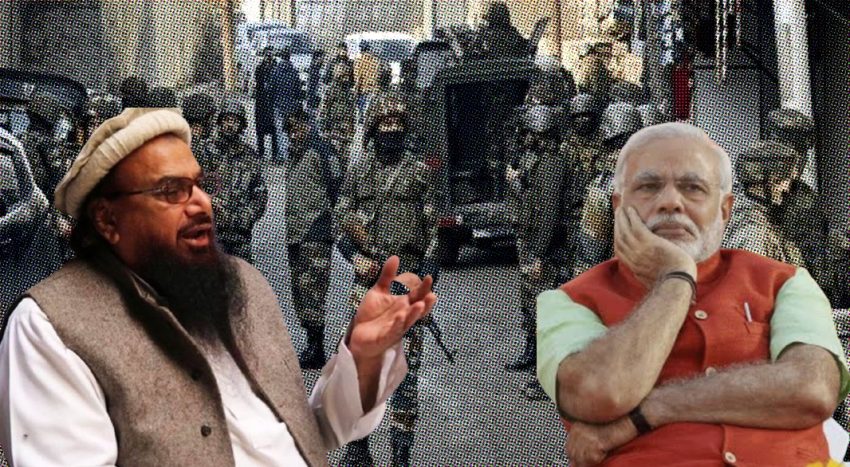
NEW DELHI – India’s National Investigation Agency (NIA) named jailed Jamaat-ud-Dawa (JuD) chief Hafiz Saeed as the alleged mastermind behind Pahalgam attack, despite his imprisonment in Pakistan since 2020.
The move reignited debate over New Delhi’s Blame Game, with Pakistan rejecting claims and maintaining that the Modi-led government failed to publicly present evidence linking Pakistan to the attack.
NIA said Hafiz Saeed has been charged with waging war against India and conspiring from across the border, despite the fact that he has been imprisoned in Pakistan for years.
The charges stem from Pahalgam attack, which claimed the lives of dozens of tourists and triggered one of the most serious military escalations between India and Pakistan in recent years. In the aftermath, New Delhi blamed Islamabad for the attack, suspended the Indus Waters Treaty, and launched military strikes inside Pakistani territory. Pakistan responded militarily and rejected India’s accusations, maintaining that no credible evidence had been presented to substantiate the claims.
Initially, Indian authorities pointed to TRF as the group responsible for the attack, and now a narrative is being built that TRF is merely proxy for banned Lashkar-e-Taiba (LeT), with Hafiz Saeed directing operations from behind the scenes.
The accusation inevitably raised questions because Saeed is not a fugitive living freely. He was arrested by Pakistani authorities in July 2019 amid intensified scrutiny over terror financing under the Financial Action Task Force (FATF) framework. Since February 2020, he has been convicted in multiple cases.
According to latest publicly available United Nations information, he is serving a cumulative 78-year prison sentence based on seven convictions and remains incarcerated at Kot Lakhpat Central Jail in Lahore.
Pakistan consistently denied any role in the Pahalgam attack and has repeatedly called on India to produce evidence supporting its allegations. Prime Minister Shehbaz Sharif also proposed an independent international investigation into the incident, a proposal that India did not accept.
Those familiar with development points out a familiar pattern as a major security incident is swiftly followed by allegations against Pakistan, while the evidence underpinning those allegations remains largely outside the public domain. They question how an individual who has reportedly been in prison since 2020 could allegedly coordinate such an operation, arguing that the public deserves more than official assertions.
How Pahalgam Valley Became a Political Instrument Overnight for BJP