
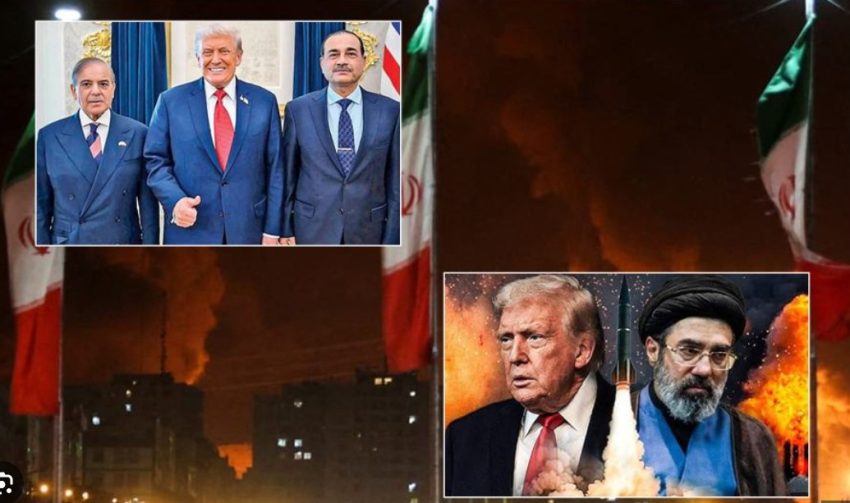
ISLAMABAD – Pakistan’s civil and military leadership steps up on the global stage, with Prime Minister Shehbaz Sharif and Army Chief Field Marshal Asim Munir leading from the front to broker peace and end US‑Iran conflict. As the Middle East remained on brink due to instense fighting, Islamabad emerges as critical mediator, hosting talks aimed at stoping hostilities and pushing for regional stability.
The world now watches as Islamabad positions itself at the heart of a potentially historic Middle East peace process, with the promise of further announcements in the coming days.
As both sides agreed for talks in Pakistan, Prime Minister Shehbaz Sharif hailed landmark ceasefire, inviting both nations to Islamabad for high-stakes talks aimed at settling all outstanding disputes.
“With the greatest humility, I am pleased to announce that the Islamic Republic of Iran and the United States of America, along with their allies, have agreed to an immediate ceasefire everywhere including Lebanon and elsewhere, EFFECTIVE IMMEDIATELY. I warmly welcome the sagacious gesture and extend deepest gratitude to the leadership of both the countries and invite their delegations to Islamabad on Friday, 10th April 2026, to further negotiate for a conclusive agreement to settle all disputes. Both parties have displayed remarkable wisdom and understanding and have remained constructively engaged in furthering the cause of peace and stability. We earnestly hope, that the ‘Islamabad Talks’ succeed in achieving sustainable peace and wish to share more good news in coming days”
Sharif said delegations from the US and Iran will meet in the Pakistani capital on Friday, April 10. He expressed hope that the “Islamabad Talks” would pave the way for enduring peace.
With the greatest humility, I am pleased to announce that the Islamic Republic of Iran and the United States of America, along with their allies, have agreed to an immediate ceasefire everywhere including Lebanon and elsewhere, EFFECTIVE IMMEDIATELY.
I warmly welcome the…— Shehbaz Sharif (@CMShehbaz) April 7, 2026
Pakistan leveraged its stable ties with Tehran and Washington, as well as deep cultural and religious connections, including hosting the world’s largest Shia population outside Iran, to play a decisive mediation role.
The agreement hinges on Iran reopening the strategically vital Strait of Hormuz, with Trump stating the move came after consultations with Sharif and Pakistan Army Chief Asim Munir. “This will be a double-sided ceasefire!” Trump declared, saying progress toward long-term peace in the Middle East.
Iran also hailed the development as a historic victory. According to its Supreme National Security Council, the US has, in principle, accepted Iran’s 10-point plan, which includes lifting primary and secondary sanctions and withdrawing American combat forces from regional bases. Control over the Strait of Hormuz remains with Iran, but regulated passage will occur under the supervision of its armed forces.
Iranian Foreign Minister Seyed Abbas Araghchi stressed that safe navigation through the Strait will be coordinated with Iran’s military, expressing gratitude to Sharif and Munir for their pivotal role in persuading the US to halt strikes.
Markets reacted instantly, as US stock futures surged, Dow futures jumped 1.53%, S&P 500 gained 1.58%, and Nasdaq rose 1.68% while crude oil prices, including West Texas Intermediate, plunged over 10%, reflecting the geopolitical relief and newfound stability in the region.
Here’s Iran’s 10-Point Agenda Now for Talks with US in Pakistan