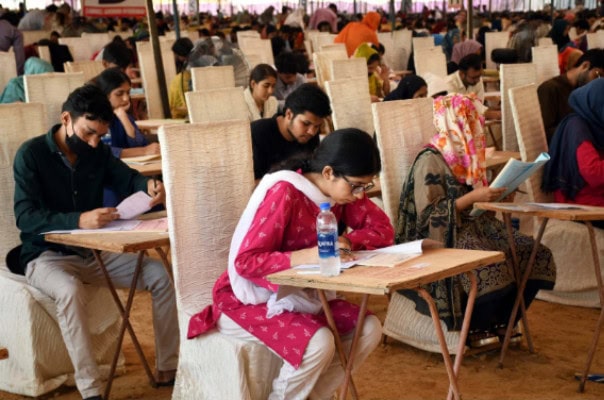
ISLAMABAD – A subcommittee of the Senate Standing Committee on Health has recommended major reforms to the MDCAT and medical college admission system, including holding the test twice a year and reducing its admission weightage from 50% to 30%.
The report, prepared by a subcommittee comprising Convener Anusha Rahman, Senator Samina Zehri and Senator Jahanzeb, recommended reducing reliance on a single examination to determine a student’s future in medical education.
It proposed giving students a second opportunity to take the MDCAT in the same year so that those who fail the test do not lose an entire academic year.
The committee also recommended assessing the possible impact of introducing negative marking in the MDCAT and allowing test results to remain valid for up to three years.
It stressed that the examination date should be announced well in advance and should not be changed except under extraordinary circumstances.
The subcommittee called for a formal complaint and review mechanism for ambiguous, incorrect or disputed questions in the MDCAT. It said students should not have to depend on private academies for months to prepare for the examination.
The report also stressed the need to make the MDCAT fair and uniform for students from FSc, Cambridge and O/A Level backgrounds. It recommended involving experts from Cambridge, O/A Level and International Baccalaureate systems in developing the MDCAT syllabus.
Medical Seats and Doctor Shortage
The committee also raised concerns over the number of medical college seats compared with the number of applicants.
According to the report, around 169,520 candidates appeared in the MDCAT in 2024, while approximately 16,648 passed the examination. The total number of medical and dental seats in the country stood at around 22,300.
The committee termed the situation, in which the number of eligible candidates is lower than the available seats, an important issue for the admission policy.
It recommended preparing a five-year plan to increase medical college seats, gradually expanding seats in public-sector medical colleges and creating more opportunities for medical education in underdeveloped areas, including Balochistan and Azad Kashmir.
The report noted that more than 40,000 qualified Pakistani doctors have moved abroad for employment in recent years.
Questioning the policy of restricting access to medical education despite the country’s need for doctors, the committee called for a comprehensive policy to increase the healthcare workforce.
It also recommended reviewing the high fees charged by private medical colleges, increasing financial assistance for deserving students and ensuring effective utilisation of vacant medical seats.
Permanent Relief Mechanism Proposed
The subcommittee proposed a permanent relief mechanism for MDCAT candidates affected by floods, natural disasters and security situations, eliminating the need for separate decisions during emergencies each year.
The Pakistan Medical and Dental Council (PMDC) was also urged to publish complete annual data on MDCAT registrations, results, available seats and admissions.
The committee recommended establishing an immediate complaints mechanism, a fast-track email service and an effective call centre for students.
It further called for making the PMDC more transparent, accountable and effective, stressing that any major change to MDCAT policy should undergo legal review and receive formal approval.
Overall, the subcommittee declared the existing medical admission system in need of major reforms, calling for a fair, merit-based and transparent system aligned with Pakistan’s actual healthcare workforce needs.