
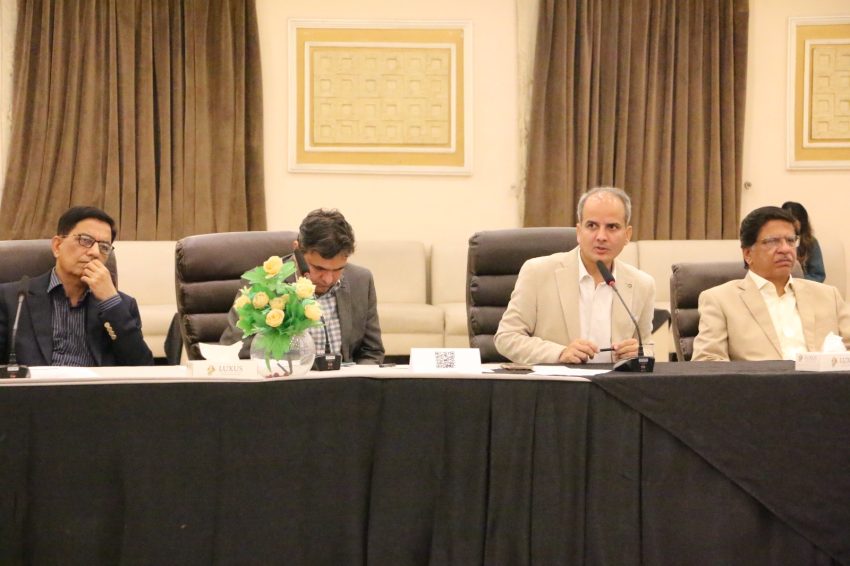
LAHORE – Experts, policymakers and development practitioners on Tuesday called for a shift in Pakistan’s food policies from a wheat-centric approach to a broader nutrition security framework, warning that the current system fails to meet the country’s dietary needs despite adequate calorie availability.
The recommendations were made during a consultation titled “Integrated Roadmap for Sustainable Food Systems Transformation in Pakistan,” organised by the Sustainable Development Policy Institute in collaboration with the United Nations Resident Coordinator Office, Food and Agriculture Organisation, UNICEF, World Food Programme, World Health Organisation, and International Fund for Agricultural Development.
Participants highlighted environmental, governance and market-related challenges affecting the food system, including soil degradation, declining export quality of crops such as citrus and mangoes, conversion of agricultural land into housing schemes, and post-harvest losses of up to 40 per cent in some supply chains.
Sajid Amin Javed said the consultation aimed to incorporate provincial realities into national policymaking, adding that similar dialogues were being held across the country to develop actionable recommendations for improving both food security and nutrition outcomes.
A representative of FAO, Sitara Gill, said Pakistan faced a mismatch between food supply and nutritional requirements. While grains, fats, oils and sugar were available in excess, fruits and vegetables remained well below recommended levels.
She noted that 40.2pc of children under five are stunted, 28.9pc underweight and 17.7pc wasted, while 24.3pc of the population faces moderate or severe food insecurity. In addition, 43pc of women of reproductive age suffer from anaemia, and only 27.6pc meet minimum dietary diversity requirements. She warned that rising consumption of processed foods and sugary snacks underscored the need for policies promoting healthier diets.
Speaking on fiscal reforms, Asim Bashir Khan highlighted financial constraints and called for aligning public spending with nutrition-sensitive interventions. He suggested redirecting subsidies towards healthier food items, reducing taxes on nutritious products and incorporating dietary indicators into social protection programmes.
Babar Shahbaz described Pakistan’s situation as one of “calorie abundance but nutrition deficit,” noting that while the country is a major producer of cereals and milk, it lags in the production of fruits, vegetables and pulses.
He proposed reforms centred on climate-resilient crop diversification, improved value chains, post-harvest management, and a “One Health” approach linking human, animal and environmental health. He also called for expanding cold storage, regulating ultra-processed foods and developing digital food system databases.
Providing a political economy perspective, Imran Khalid said food policy remained heavily focused on wheat and sugar due to the influence of vested interest groups, including large landowners and industrial lobbies. He suggested shifting the state’s role from a dominant market buyer to a regulator ensuring transparency and promoting climate-smart agriculture.
Environmental concerns were also raised by Khalid Farooq, who warned that solarisation of tubewells was accelerating groundwater depletion. He added that despite availability, vegetable consumption remained low, particularly among young people.
Shanawar Waseem Ali pointed to rising production costs for farmers and weak market linkages, calling for improved storage infrastructure and reduced reliance on middlemen.
Meanwhile, Zakir Sial stressed the need to address water contamination and excessive use of fertilisers and pesticides, which he said were affecting both soil health and food safety.
Concluding the discussion, Shafqat Munir said transforming Pakistan’s food system would require changes in policy priorities, market structures and entrenched interests. He added that the initiative sought to shift the national focus from “wheat security” to “nutrition security” while promoting more sustainable agricultural practices.