
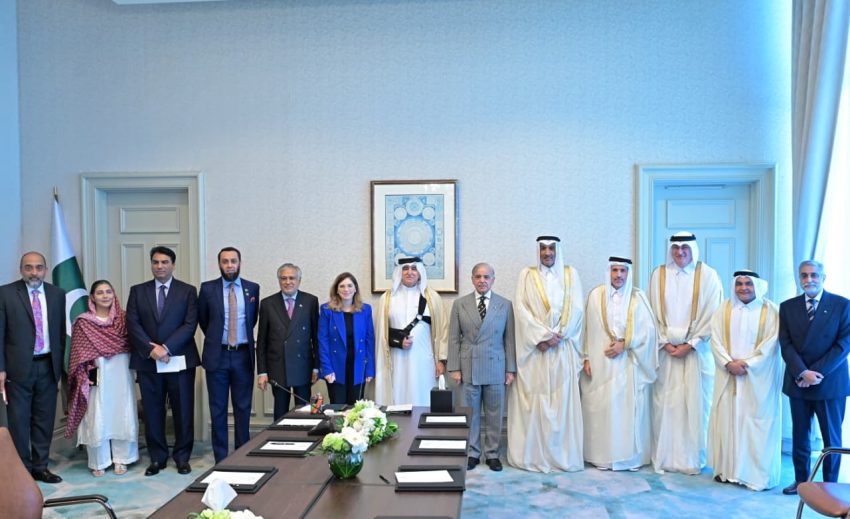
DOHA – Qatar reaffirmed its commitment to deepening cooperation with Pakistan, with a special focus on private-sector collaboration and direct business-to-business partnerships.
The high-level meeting took place between Qatar’s Minister of State for Foreign Trade, Dr Ahmed bin Mohammed Al-Sayed. who also chairs the Pak-Qatar Joint Business Task Force, and Pakistan’s Prime Minister Shehbaz Sharif during his official visit to Doha, according to an official statement from the Prime Minister’s Office.
Both sides reviewed the current trade and investment landscape and expressed satisfaction over the growing momentum in Pakistan-Qatar economic relations. Qatar reiterated its strong interest in expanding business opportunities and enhancing cooperation between private enterprises in both countries.
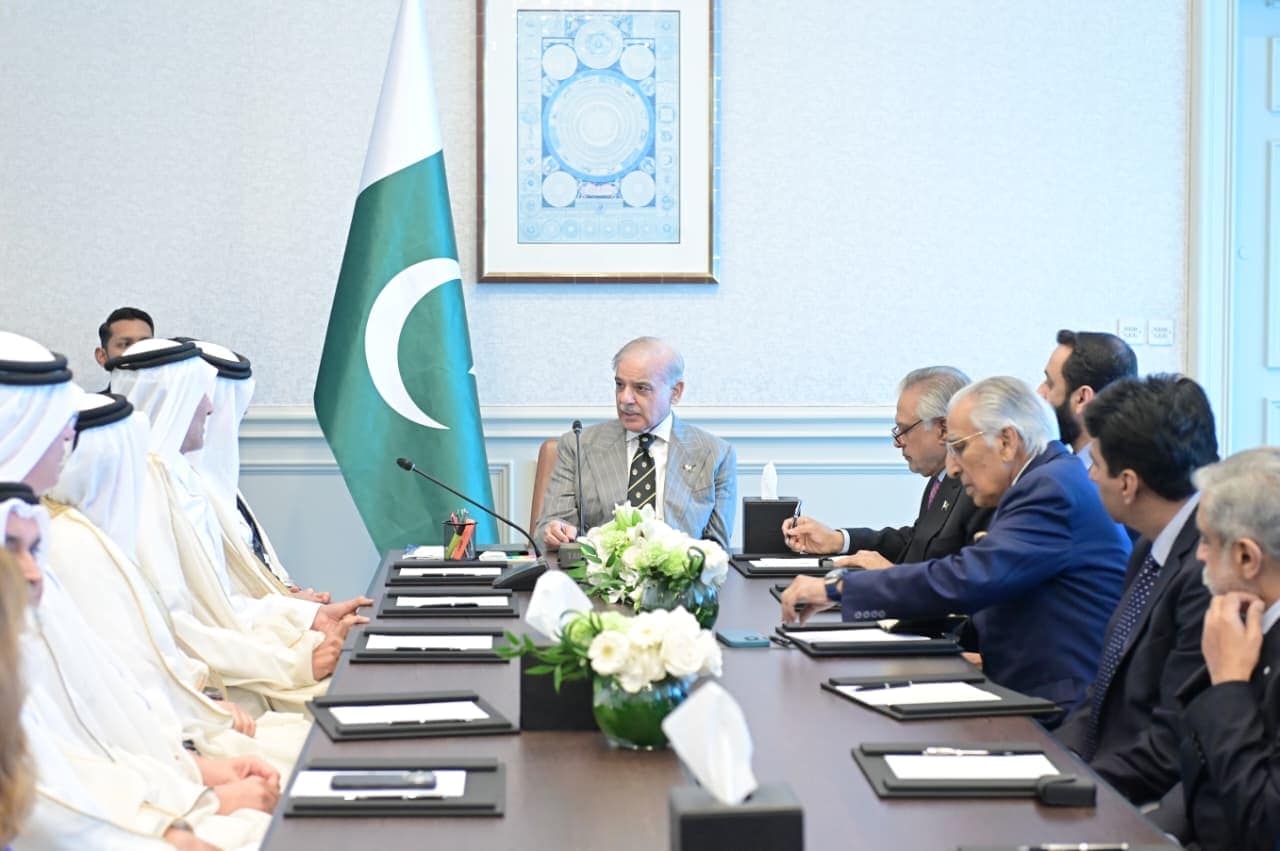
Prime Minister Shehbaz Sharif underscored the importance of increasing trade volumes and diversifying Pakistan’s exports to Qatar, particularly in agriculture, food products, and value-added goods. He also highlighted Pakistan’s investment-friendly reforms and the role of the Special Investment Facilitation Council (SIFC) in facilitating foreign investment—a framework aimed at attracting international capital and boosting economic growth.
Both sides also reviewed progress on decisions made during the 6th Session of the Pakistan-Qatar Joint Ministerial Commission and reaffirmed their commitment to implementing previously agreed measures. In a significant move, they agreed to convene a task force meeting within the month of Ramadan to discuss concrete investment proposals and actionable business opportunities.
The statement emphasized a shared resolve to deepen trade, investment, and industrial collaboration—signaling a potential surge in economic cooperation between the two nations.
High-ranking officials, including Deputy Prime Minister Ishaq Dar and Information Minister Attaullah Tarar, also attended the meeting. During the visit, Prime Minister Shehbaz is expected to hold further bilateral discussions with Qatar’s leadership, focusing on strengthening economic ties, energy cooperation, and people-to-people exchanges.
Observers note that the talks could pave the way for expanded collaboration in trade, investment, energy, infrastructure development, and skilled manpower exchange, areas seen as critical for long-term economic growth and strategic partnerships.