

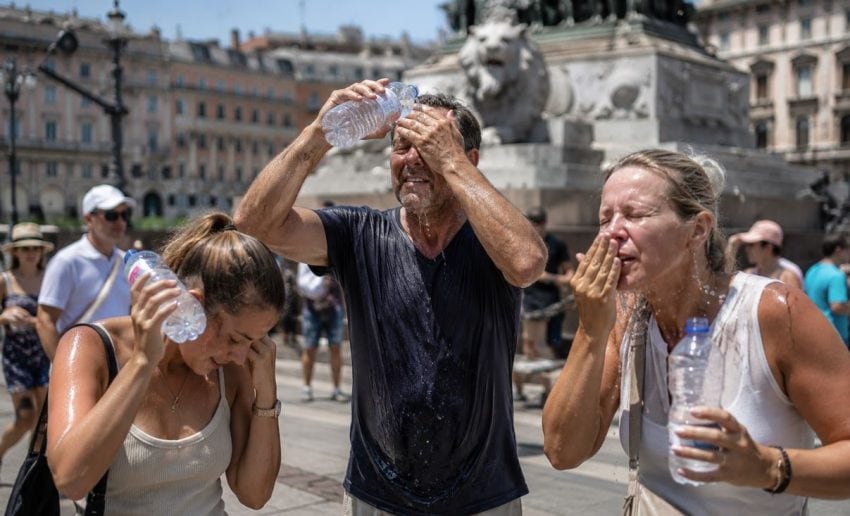
ISLAMABAD – From darkened homes in France to packed beaches in Spain and sweltering streets in London, millions woke to another day of record temperatures in Europe. The summer heatwave rapidly turned into deadly crisis, leaving dozens dead, thousands without power, and authorities scrambling as extreme heat tightens its grip on the continent.
EU states are enduring scorching conditions that have shattered records, disrupted transport networks, and triggered public health emergencies. Experts say a combination of persistent atmospheric conditions and human-driven climate change is fueling the extreme weather, trapping hot air over the continent and causing temperatures to climb day after day.
In France, the heat reached a historic milestone on Tuesday when the temperature climbed to 29.8°C, the highest in 80 years.
The soaring temperatures have exposed the vulnerability of critical infrastructure. In the northwestern department of Finistere, a heat-related transformer failure plunged around 68,000 households into darkness, marking the first major power outage of the current heatwave. At the height of the disruption, more than 106,000 electricity customers across France were affected as the aging power network struggled under the strain.
For many residents, the heat has become unbearable. Stores have reported a surge in demand for fans and air conditioners as people search desperately for relief. Yet in a country where many homes were built for milder summers, staying cool remains a challenge.
French authorities say at least 48 people have drowned while seeking refuge from the intense heat in rivers, lakes, and coastal waters. Two young children also died after being exposed to extreme temperatures inside a vehicle, underscoring the deadly risks posed by the relentless conditions.
More than 90 percent of France’s population is now exposed to extreme heat, with temperatures ranging between 39°C and 41°C expected across vast areas stretching from Brittany to Paris and much of the southwest.
Authorities also warned of upcoming heatwave in UK in June. Met Office has issued only its second-ever red heat-health warning for large parts of central and southern England and Wales, a measure reserved for the most severe weather events. Temperatures in London and southern England could reach 39°C, approaching levels rarely seen in the country. Officials have warned of significant health risks for the general population, not just vulnerable groups.
The extreme heat has already disrupted daily life. Schools have closed, rail services have been cancelled, and passengers have been urged to avoid non-essential travel. Eurostar has also cancelled several train services between London and Paris due to anticipated weather-related disruptions.
Further south, Italy remains firmly in the grip of the heatwave. The Ministry of Health has placed 16 cities, including Rome and Milan, under red alert as residents endure sweltering temperatures and heightened health risks.
Spain has also suffered through days of temperatures above 40°C. Authorities confirmed that two elderly people died from heatstroke during the latest surge of extreme weather. While meteorologists expect some cooling in parts of the country, relief remains limited elsewhere across Europe.
Amid alarming situation, Dutch authorities issued code orange warning for extreme heat through at least Friday, while Belgium has placed the entire country under an orange alert amid fears of record-breaking temperatures.
As Europe swelters under one of its most intense heatwaves in recent years, scientists warn that such events are becoming increasingly common. What was once considered exceptional is rapidly becoming the new normal, raising urgent questions about infrastructure resilience, public safety, and the growing impact of a warming planet.