National moments shape every generation and leave a lasting impact on its collective memory. Marka-e-Haq is one such moment for the youth of Pakistan. It was more than a successful military campaign; it united Pakistanis irrespective of their political, ethnic, linguistic, and regional differences. The war gave a boost of confidence to the country’s institutions and reminded Pakistan’s younger generation that unity remains the nation’s most valuable asset.
Marka-e-Haq was not just another Pakistani response to Indian aggression. It reaffirmed a long-standing tradition of national unity, as young Pakistanis, who had grown up hearing stories of the 1965 and 1971 wars, from across the country stood firmly behind the Armed Forces in their first direct experience of a Pakistan-India war. Given the prevailing polarisation in the political discourse of the time, the May 2025 war served as a reminder to the nation that, when Pakistan’s sovereignty is challenged, it is possible to set aside differences to achieve a common national objective.
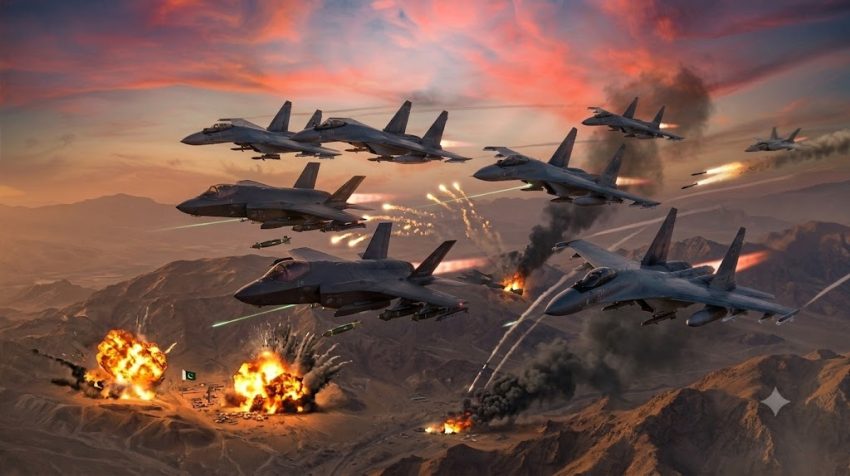
On the front lines, PAF, under Air Chief Marshal Zaheer Ahmed Baber Sidhu, effectively responded to Indian aggression by downing eight Indian aircraft. In parallel, Pakistan’s youth fought an intense battle in the information domain. Social media was flooded with fact-based responses and coordinated efforts to counter misinformation and project Pakistan’s narrative. Also, ordinary Pakistanis even helped the Armed Forces in downing the intruding Indian drones. This unity became one of the war’s most enduring achievements.
The national unity displayed during this time delivers an important message to Pakistan’s youth: real citizenship is defined and reflected in the willingness of the people to contribute to the country’s strength through service, honesty and a sense of responsibility, not just by voting in elections or holding a passport. Marka-e-Haq proved that security and the country’s future are everyone’s responsibility. Soldiers protect Pakistan’s borders, and citizens strengthen the nation through education, innovation, hard work, and respect for national institutions. A strong nation depends on both.
Defining moments, such as war, shape national identity and offer lessons for youth. The tale of Marka-e-Haq must thus be recalled not just as a military triumph, but also as a testament to unity, discipline and resilience in the face of adversity. If young Pakistanis learn these emergent lessons from this war, they will be better equipped to face the challenges that lie ahead.
These challenges are already evolving. Pakistan is navigating a tough regional environment defined by strategic competition, technological rivalry, misinformation and disinformation campaigns, and recurring security tensions. The future wars will not be fought with just tanks, aircraft and missiles; they will expand across domains including artificial intelligence, cyber, space, electronic warfare, economic, and information operations. Maintaining national security in this kind of environment demands more than a good military; it demands a capable society. It is the area where youth become Pakistan’s greatest strategic asset, which comprises approximately 65 per cent of Pakistan’s population. They will determine Pakistan’s resilience and competitiveness in the world.
Marka-e-Haq demonstrated that this potential is already being translated into national capability. The National Aerospace Science and Technology Park (NASTP), where civilian young scientists, engineers and researchers constitute the overwhelming majority of the workforce, played an important role in strengthening Pakistan’s technological preparedness during the war. For many of these young professionals, seeing their work contribute to national success provided an opportunity to showcase their talent. It also gave them the satisfaction of knowing that their efforts had a tangible impact on the country’s security. Such recognition reinforces Pakistan’s youth’s confidence that innovation, research, and technical excellence are valued forms of national service.
The contributions of these young professionals carry an important lesson for the wider youth of Pakistan. Marka-e-Haq highlighted that national security is built not only on military strength but also on the collective contributions of citizens whose knowledge, skills and commitment enhance Pakistan’s resilience. Every young Pakistani, regardless of profession, has a role to play in preparing the country for future challenges.
Equally important is preserving the spirit of Marka-e-Haq. It proved that Pakistan’s greatest strength lies not only in its Armed Forces but also in the unity of its youth. Political differences, ethnic identities and regional affiliations are natural aspects of a pluralistic society. However, they should never detract Pakistanis from the collective desire and resolve to defend their country.
Ultimately, Marka-e-Haq, in addition to the triumphant success of the Armed Forces on the battlefield, will also be remembered for what it awakened in the hearts and minds of Pakistan’s youth. Its legacy will lie in reminding future generations that national strength is built through solidarity, resilience, knowledge, and a shared sense of purpose. If this spirit endures beyond times of crisis, it will remain one of the greatest contributions of Marka-e-Haq to Pakistan’s future.