For more than a year, India distanced itself from Kirana Hills while Pakistan stayed quiet. A retired Indian general now stood up at an RSS-linked think tank, apparently forgetting his script, and shared a different story.
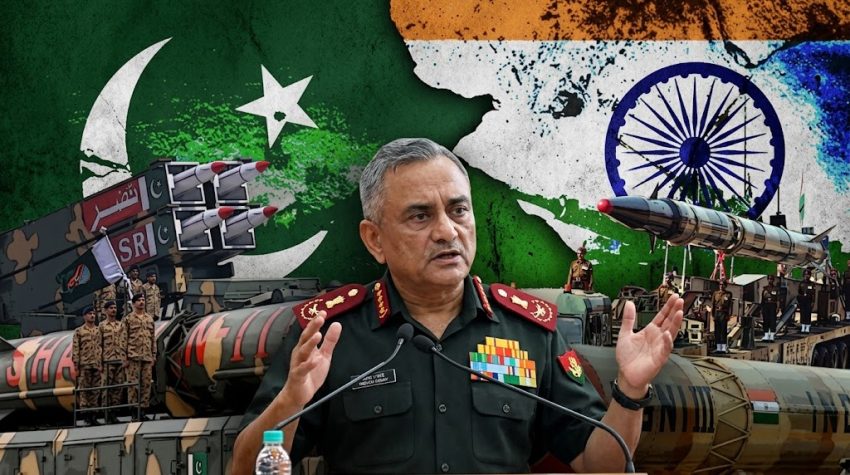
India’s ex-Chief of Defence Staff General Anil Chauhan reignited controversy over May 2025 Pakistan-India clashes with new revelations about a possible drone incident near Pakistan’s alleged nuclear facilities, a planned strike on Skardu and the disputed circumstances surrounding the ceasefire.
Addressing a Vivekananda International Foundation gathering, Chauhan shared his views on the Kirana Hills episode, saying Indian loitering munitions had been operating around Sargodha while searching for radar targets.
Kirana Hills, located around 10 kilometres north of Sargodha, had become the centre of unverified reports during the conflict after Indian media claimed that the area had been targeted because of alleged Pakistani nuclear facilities.
Chauhan said India had not deliberately targeted Kirana Hills but said one of the loitering munitions may have crashed there after failing to find its intended target. He explained that the drones searching for radars around Sargodha had lifespan of about two hours. If they failed to locate a target within that period, they could eventually fall and explode.
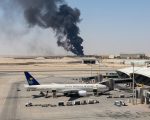
“It is possible that one such drone fell on that hill,” Chauhan said, adding that Pakistani media had shown images of smoke rising from Kirana Hills.
The remarks raised fresh questions because Indian Air Marshal A.K. Bharti categorically denied targeting Kirana Hills during a May 12 briefing. When asked whether India attacked a nuclear facility there, Bharti said India had not targeted Kirana Hills and claimed the Indian military was unaware of any Pakistani nuclear facility there.
Chauhan’s latest account, however, has reopened the debate over what actually happened near the strategically sensitive area.
The former Indian military chief’s remarks drawn criticism from nuclear and security analysts, who questioned how an armed loitering munition could have operated so close to a potentially sensitive nuclear site without the risks being fully assessed.
Former US diplomat Elizabeth Threlkeld said the account suggested that an accidental drone strike could potentially have been interpreted as a deliberate attack on a sensitive nuclear installation.
Experts described scenario as possible but unusual, raising questions about why the drone was operating around 10 kilometres from its apparent target and why it exploded after allegedly running out of fuel. Analysts also questioned whether the weapon possessed a safety mechanism that would have redirected or neutralised it if it failed to find its intended target.
Geoanalysts criticised alleged operation, saying that if an Israeli-made explosive drone had been searching for radar near nuclear facilities and subsequently crashed after running out of fuel, it would represent an extraordinarily dangerous scenario.
Last year, Pakistan claimed intercepting and destroying 77 Indian drones during the May 2025 conflict. Indian drones entered our airspace and were detected over areas including Lahore, Gujranwala, Chakwal, Attock, Rawalpindi, Bahawalpur, Mian Channu and Karachi.
Meanwhile, Chauhan disclosed details of an Indian plan to strike Sargodha and two additional targets during the conflict, including Skardu. According to the former CDS, the Indian Air Force chief had asked whether Sargodha should be attacked after Pakistan indicated that it wanted to hold talks. Chauhan said he approved the proposal and asked for two additional targets to be identified. One of those targets was Skardu.
The plan, however, changed after deteriorating weather conditions made the Skardu target difficult to strike. Chauhan said Bhulari, near Karachi, subsequently became the target instead.
Chauhan’s latest remarks have therefore questions like what happened at Kirana Hills, how close Indian operations came to Pakistan’s nuclear infrastructure and who ultimately drove the May 2025 ceasefire.
For the unversed, Indian media’s wartime coverage of May 2025 clashes with Pakistan garnered international scrutiny its claims collapsed, not from Pakistani sources, but from independent outlets like AFP.
When India made first mistake of hitting targets inside Pakistan on May 7, officials claimed over 100 “terrorists” were killed, offering no evidence. Some channels ran with it regardless. NPR found Zee News named one of the dead a “most wanted militant,” with another TV host calling him a “radicalizer” — when he was actually a seminary teacher in Poonch who died evacuating students during shelling.
More false claims followed on Republic TV reported Indian Navy destroyed Karachi port, Times Now claimed Indian ground troops were advancing into Pakistan; ABP News and Zee News both reported Pakistan’s army chief had been removed from command. None of it was true, but rib tickling for Pakistanis who enjoyed memes on it.
AFP fact-checkers found recycled footage from the Israel-Gaza war and the Ukraine conflict being repackaged on both sides as fresh combat footage, amplifying tensions and fueling hate speech well beyond what organic misinformation alone would have caused.
Indian channels broadcast sweeping victories that later went unconfirmed, and were eventually contradicted by India’s own Chief of Defence Staff, General Anil Chauhan, who acknowledged weeks later that Pakistan had shot down Indian jets, directly at odds with what viewers had been shown live.
UK aviation publication Key Aero, in an investigation published months after the clash, identified four Rafale jets by tail number BS-001, BS-021, BS-022 and BS-027 as having been shot down during dog fight, drawing electronic intelligence it said was later corroborated through human and open-source channels.
That finding did not stand alone. France’s own Air Chief, General Jérôme Bellanger, said separately that he had seen evidence of India losing three fighters, one of them a Rafale while France’s air force ministry acknowledged it would mark the aircraft’s first combat loss in twenty years of service, should it be confirmed.
Pakistan also downed MiG-29, a Su-30MKI, supported at the time with crash coordinates and radar data. Open-source investigators later matched wreckage recovered at Bathinda, carrying the serial BS-001, to India’s first Rafale EH, lending physical confirmation to at least one of the claims.