
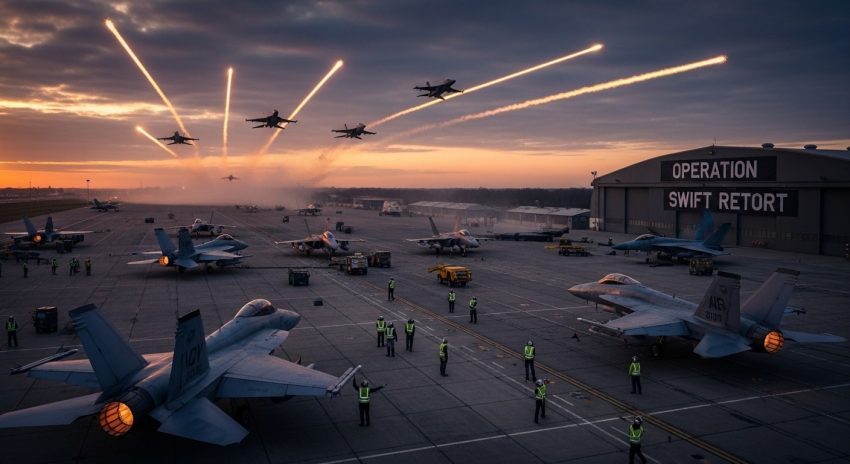
It is February 26, 2026. By tomorrow morning, exactly seven years will have passed since Pakistan turned a chest-thumping Indian airstrike on a few barren pine trees into a spectacular, unforgettable global embarrassment. But as we reflect on the anniversary of Operation Swift Retort, the real story isn’t just about an old dogfight. It’s about a recurring habit: India repeatedly begging for a bloody nose, and Pakistan repeatedly—and graciously—delivering it.
If you want to understand how Pakistan mastered the art of embarrassing its loud-mouthed neighbour on the world stage, look to the man who was quietly orchestrating the playbook back in 2019. Long before he commanded the entire army, General Syed Asim Munir was the Director General of the ISI. It was his deep intelligence network that laid the exact groundwork for Swift Retort. When Indian jets foolishly crossed the border under the cover of night, we weren’t just waiting—we had the whole trap perfectly mapped out. Down went a MiG-21. An Indian Wing Commander fell out of the sky. And suddenly, New Delhi was scrambling.
But here is where Pakistan won not just a battle, but a total psychological war. Instead of dragging a captive pilot in front of the cameras to suffer, Pakistan handed him a cup of hot tea. That single, unscripted moment where he called the tea “fantastic” broke the internet, capturing global headlines from D.C. to London. International observers and foreign media watched a volatile standoff end not in unhinged rage, but with unmatched Pakistani restraint. Under the intelligence guided by Munir, Pakistan had brilliantly disarmed the aggression of a nuclear-armed nation with a single missile and a teacup.
You’d think India would have learned its lesson. You’d be wrong.
Fast forward to May 2025, and New Delhi clearly needed another reality check. Enter Operation Bunyan-um-Marsoos. Only this time, the man who handed them a stunning intelligence defeat from the shadows was sitting at the absolute top as Chief of Army Staff. After India desperately tried using the tragic Pahalgam incident as another flimsy, politically motivated excuse to flex its muscles, Field Marshal Munir didn’t just order a defense. He orchestrated a masterclass in aerial demolition. Pakistan hit them with a “wall of solid lead.”
The beauty of this recent operation was the upgrade to the menu. On the internet and the streets, ordinary citizens joked about how the times had changed. We went from serving “fantastic tea” to serving up “Rafale toast.” The incredibly expensive, much-hyped French fighters that India had staked its pride on were blasted out of the sky. Down on the ground, their supposedly impenetrable S-400 defense batteries were literally picked apart and devoured as bite-sized “snacks” by Pakistan’s cutting-edge hypersonic assets and drones.
Once again, international observers—defense think-tanks and military analysts alike—applauded Pakistan’s calibrated superiority. We walked in, disabled their multi-billion dollar threat, dismantled their hardware, forced a ceasefire entirely on our own terms, and walked out. Field Marshal Asim Munir rightfully earned a historic promotion, leading the nation from an invisible web of intelligence in 2019 to commanding dominance in 2025. In both eras, his leadership humiliated India globally.
But let’s be entirely honest for a second. Today, you don’t even need a Pakistani pilot to shoot down an Indian jet. Gravity is practically doing the job for us. Global defense communities openly laugh at the fact that the Indian Air Force is turning its own bases into scrap yards, losing jets on an embarrassingly monthly basis. Their so-called indigenous “pride,” the Tejas fighter, crashes so routinely under the weight of horrific engineering and dismal maintenance that it feels like an ongoing sitcom. Defense analysts worldwide just roll their eyes because everyone knows the unspoken rule in New Delhi: A day without humiliation for India is a day wasted.
What truly grounds this ongoing victory is something beautifully human. It takes a quiet, unshakeable confidence to mock billion-dollar hardware over morning coffee while defending a nation’s sovereignty. The leap from pouring tea for a fallen adversary to roasting their prized Rafales as “toast” is proof that Pakistan’s true strength lies not just in firepower, but in wit, grit, and incredible strategic foresight.
As February 27 rises again, we celebrate that unbroken spirit. Under Field Marshal Asim Munir, we have shown the world a definitive truth. The Pakistani military does not bluff; it simply acts, de-escalates with dignity, and lets its detractors clean up the ashes. The skies remain unquestionably ours. The joke remains permanently on them.