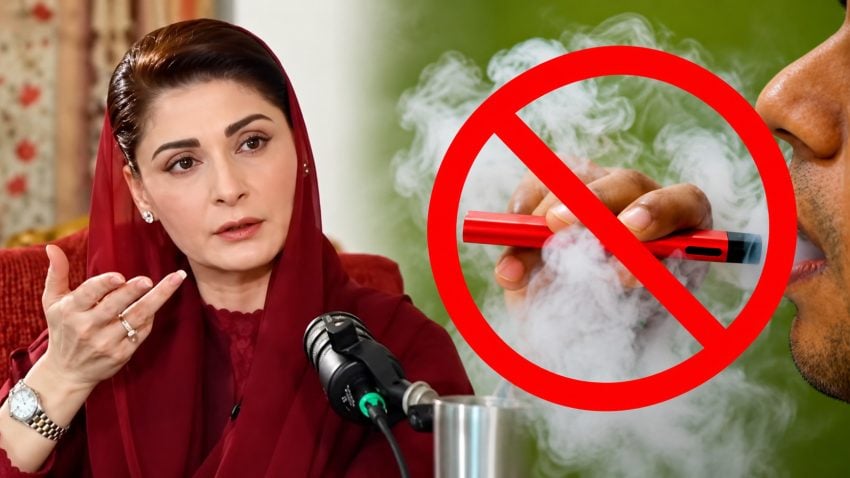
LAHORE – Vape shops and e-cigarette users across Punjab could face sweeping restrictions as Maryam Nawaz led government moves towards legislation aimed at curbing growing use of nicotine products, particularly among young people.
The provincial administration is considering ban on e-cigarettes and vaping products, with officials working on legal framework that could reshape the sale, purchase, advertisement and use of these products throughout the province.
The latest move comes amid mounting concerns over nicotine addiction among teenagers and young adults, an issue that has prompted repeated calls for stricter government intervention.
The government initiated interdepartmental coordination and is preparing consultations involving the police, health department and district administrations to develop an effective enforcement strategy. The proposed legislation is expected to address the commercial distribution of vapes, their promotion and accessibility to minors. Authorities are also examining possible punishments and enforcement mechanisms to ensure compliance once a law is approved.
Why Banning Alternatives to Cigarettes?
The government’s renewed focus on vaping comes after earlier attempts to restrict electronic cigarettes encountered significant legal obstacles.
Last year, Punjab Chief Minister Maryam Nawaz ordered a province-wide crackdown on the sale, purchase, distribution and advertising of vaping products, citing concerns over their increasing popularity among young people. Following the directives, enforcement teams launched operations against vape businesses, sealing several outlets and restricting commercial activities.
But the campaign soon landed in court. More than 70 vape shop owners challenged the crackdown before the Lahore High Court, arguing that authorities were shutting down businesses without a specific law declaring vaping illegal.
The court granted interim relief to the affected traders, directed the reopening of shops and restrained enforcement action lacking a proper legislative basis.
The legal proceedings exposed a major gap in the government’s strategy: electronic cigarettes were being imported under federal regulations, yet provincial authorities were attempting to restrict their trade without comprehensive legislation. That legal hurdle now appears to be a central factor behind Punjab’s renewed push for a formal law.
Punjab currently has no comprehensive province-wide statutory ban criminalising the possession, private use or general sale of electronic cigarettes. Existing tobacco-control regulations impose restrictions in designated public places, while certain government measures specifically target vaping products in sensitive locations.
Fact Check: No Vape Ban in Punjab despite viral posts’ claims
Prohibition of Smoking and Protection of Non-Smokers’ Health Ordinance, 2002, remains an important part of the broader tobacco-control framework. Meanwhile, electronic cigarettes continue to be imported through federally regulated channels, complicating efforts to introduce sweeping provincial restrictions without new legislation.
In October 2026, amended food-quality regulations published in the Punjab Gazette prohibited the sale of vapes and tobacco products in canteens and cafeterias at schools, colleges and universities. The restrictions also cover food businesses operating within 100 metres of educational institutions.
The same regulatory changes introduced restrictions on several other products, including energy drinks, carbonated beverages, certain sweets and foods containing monosodium glutamate (MSG).
Punjab is not alone in examining tighter controls on electronic cigarettes. At the federal level, the proposed Electronic Nicotine Delivery Systems Regulation Bill has also been under discussion, with Senate committee approval reportedly secured earlier in 2026.
The proposed legislation seeks to regulate vaping products through age restrictions, advertising controls, public-use limitations, product standards and penalties. However, the framework has not yet been fully enacted as a comprehensive nationwide law.
If Punjab proceeds with its proposed legislation, businesses dealing in electronic cigarettes could face new licensing or trading restrictions, advertising limitations and penalties for violating the eventual law. Measures aimed at stopping sales to minors are expected to receive particular attention.