
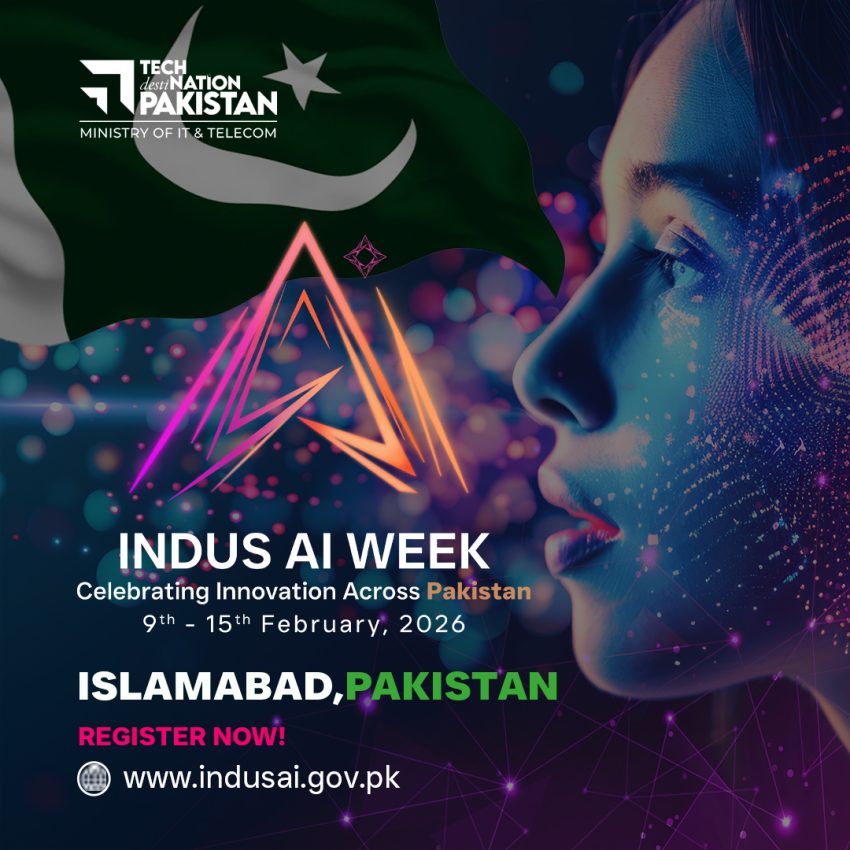
For the average Pakistani citizen, the word government often brings to mind images of long queues, endless paperwork, and the frustrating search for the right window at a local office. From land registry disputes to accessing basic healthcare in remote areas, the bureaucratic machinery has often felt slow and disconnected from the needs of the people. However, as the country prepares for Indus AI Week 2026, a significant shift is taking place. The focus is moving away from technology for the sake of technology and toward a very human goal: making life easier for every citizen.
Running from February 9 to 15, Indus AI Week is set to showcase how artificial intelligence is being used to rebuild the relationship between the state and its people. This is not about complex algorithms hidden in server rooms. It is about a Smart Pakistan where public services are available at the touch of a button.
One of the most prioritised areas being targeted this February is the revolution in public health. In many parts of rural Pakistan, the distance to the nearest specialist can be a matter of life and death. Through AI-powered triage systems, local clinics could be equipped to analyse symptoms and diagnostic images instantly.
During the Indus Innovations, Learning and Engagement Arena at the Islamabad Sports Complex, visitors will get their first look at how these systems work. It is a glimpse into a future where your location no longer dictates the quality of your healthcare. By using technology to bridge the gap between urban centres and rural villages, the government is ensuring that no citizen is left behind.
For a country where the majority of the population depends on agriculture, AI is becoming a vital ally. Small-scale farmers are often at the mercy of unpredictable weather and fluctuating market prices. They often lack the data needed to make informed decisions about when to plant, when to harvest, or which fertilisers to use. New AI tools are being worked on to provide localised weather predictions and pest alerts directly to farmers’ mobile phones via simple text messages or voice notes in local languages.
By helping farmers increase yields and reduce waste, these technologies do more than boost the economy. They help keep food prices stable for households across Pakistan. When a farmer in Sindh can predict a locust swarm or a heatwave three days in advance, they can take preventative measures that save their entire crop. This stability ripples through the economy, ensuring that the national table remains supplied with affordable produce. Indus AI Week will feature specialised tech which gives farmers a platform to interact with the future. This ensures that the software being built actually solves the problems faced in the fields rather than being designed in a vacuum.
Beyond services and farming, the modernisation of governance extends to how we prepare our youth for the future. During Indus AI Week, several initiatives will focus on providing high-tech training opportunities to students. This is part of a broader mission to ensure that the digital economy is inclusive. By democratizing access to education through AI, the state is investing in its most valuable resource: its people.
While the Indus AI Summit at the Jinnah Convention Centre will host global experts and high-level officials, the Indus Innovation, Learning and Engagement Arena is designed specifically for the general public. It is an open invitation for families, students, and professionals to see how Pakistan is building a more efficient nation.
Indus AI Week 2026 is a reminder that technology is at its best when it serves the people. It is about creating a Pakistan where the government is not a distant entity but a responsive partner. It is about building a system that values the citizens’ time and respects their rights. As we look toward the activities starting on February 9, the message is clear. The future of governance is smart, it is fast, and most importantly, it is for everyone. This is the dawn of a more efficient, transparent, and caring Pakistan.