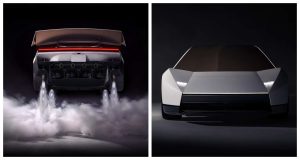

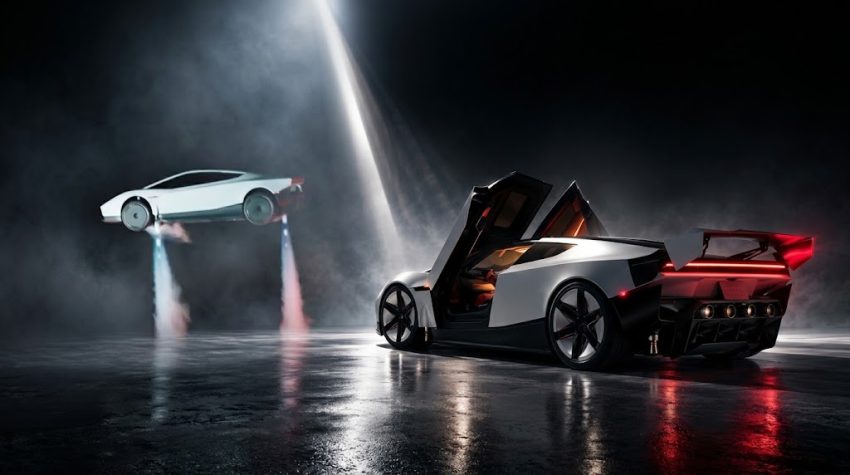
Elon Musk stunned the world bring Tesla Roadster as it redefines electric supercars with three models. Performance, Thrust and Rocket, claimed acceleration of under 0.59 seconds, and a range exceeding 300 miles.
The electric supercar is targeting acceleration figures as low as 0.59 seconds, while reported configurations promise SpaceX-inspired propulsion, extreme aerodynamic grip and prices that could climb beyond half million dollars. But with production still ahead, some of the most extraordinary claims remain unverified.
The project’s ambitions are huge. Depending on the configuration, Tesla Roadster is being linked with acceleration targets ranging from under 1.6 seconds to below 0.59 seconds, maximum speeds exceeding 230 mph, and experimental propulsion technology designed to deliver force beyond what tires alone can provide.
Tesla Roadster Models
| Feature | Performance | Thrust | Rocket |
|---|---|---|---|
| Seating | Two seats | Two seats | One seat |
| Claimed 0–60 mph acceleration | Under 1.6 seconds | Under 0.9 seconds | Under 0.59 seconds |
| Propulsion | Electric powertrain | Electric powertrain plus compressed-air thrusters | Expanded electric and thruster systems |
| Reported thruster arrangement | None | Four rear-mounted nozzles | Approximately 10 nozzles around the vehicle |
| Intended role | Road-focused supercar | Limited, specialized performance model | Invitation-only experimental configuration |
| Road-use status | Intended for road use, subject to approval | Depends on final specification and certification | Reportedly not approved for ordinary public-road use |
Performance model is presented as the most conventional member of the range, although its advertised acceleration would place it among the most extreme performance cars if achieved under comparable testing conditions.
Thrust version adds a more unusual element: auxiliary propulsion. Reports have cited acceleration figures of around 0.85 seconds, while a demonstration involving thrusters was reportedly associated with a time of 0.81 seconds.
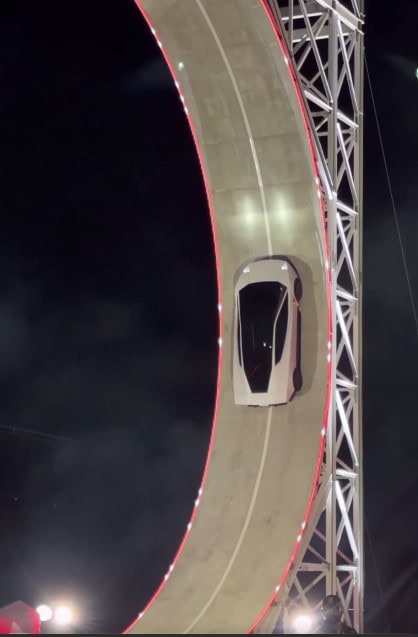
Rocket configuration takes the concept even further, with a claimed acceleration target below 0.59 seconds. That figure would be extraordinary even by the standards of specialized electric vehicles, but it remains a claim requiring independent verification.
The most unconventional feature associated with the Thrust and Rocket configurations is a cold-gas propulsion system inspired by aerospace technology.
Instead of burning rocket fuel, the proposed system releases highly pressurized air through strategically positioned nozzles to generate thrust. This could theoretically provide additional force without relying entirely on the grip available between the tires and the road.
The Thrust configuration has been described as using four rear-mounted nozzles connected to a pressurized-air tank with an estimated capacity of approximately 200 liters.
The Rocket version is reported to feature a much larger arrangement, potentially involving 10 nozzles positioned around the vehicle. Some accounts cite approximately 600 liters of storage capacity and around 250 kilograms of compressed air, with the additional tank reportedly occupying space that would otherwise accommodate a second passenger.
Rocket configuration has attracted attention because of descriptions suggesting that its thruster system could generate forward, upward and rotational movement. The concept has been associated with aerial flips, jumps and controlled landings. Demonstrations discussed in connection with the Roadster have also included inverted-ramp driving, reportedly assisted by an underbody suction system.
300 Miles of Range and Speeds Above 230 MPH
Roadster is also being promoted as a long-distance electric vehicle. Reported targets include more than 300 miles (483 kilometers) of range and a maximum speed exceeding 230 mph (370 km/h) for higher-performance configurations. Elon Musk has also suggested more ambitious speed targets over the longer term.
Some details mentioned higher-specification versions with around one megawatt of power, equivalent to around 1,340 horsepower, and torque figures ranging from roughly 960 to more than 1,032 lb-ft.
The powertrain has been described in some reports as a dual-motor, rear-wheel-drive arrangement. The precise configuration and output figures, however, vary between accounts and should not be assumed to apply to every version.
Tesla has also been associated with a charging target of approximately 15% to 85% in 10 minutes using sufficiently powerful Superchargers. Actual charging times would depend on the final battery, charging curve, charger capability and operating conditions.
Taken together, these claims paint a picture of a vehicle intended to combine extreme acceleration with usable range and rapid charging. Whether all these targets can be achieved simultaneously in a production car remains an open question.
Tesla Roadster Price
Tesla has not announced a final retail price for any of the three configurations. The company indicated a starting price of around $200,000, while Founders Series was associated with a price of around $250,000.
More recent unofficial estimates have suggested that the vehicle could cost between $250,000 and $500,000 or potentially more, depending on the configuration and its specialized equipment. These figures remain speculation rather than confirmed pricing.
Thrust has been described as a limited-release configuration, with some reports indicating a one-reservation-per-customer restriction. Rocket is reportedly available by invitation only, with no public deposit figure established in the information available here.
Tesla identified 2028 as a target for the start of production, according to statements attributed to Musk. A firm schedule for customer deliveries has not been established. The company still needs to bring the vehicle through development, manufacturing preparation and the relevant approval processes. Its final specifications, pricing, equipment and regional availability may change along the way.