
LAHORE – A new era of railway transport has begun in Punjab after a historic Memorandum of Understanding (MoU) was signed between the Government of Punjab and Pakistan Railways.
The agreement was signed by Punjab Chief Minister Maryam Nawaz Sharif and Federal Railway Minister Hanif Abbasi.
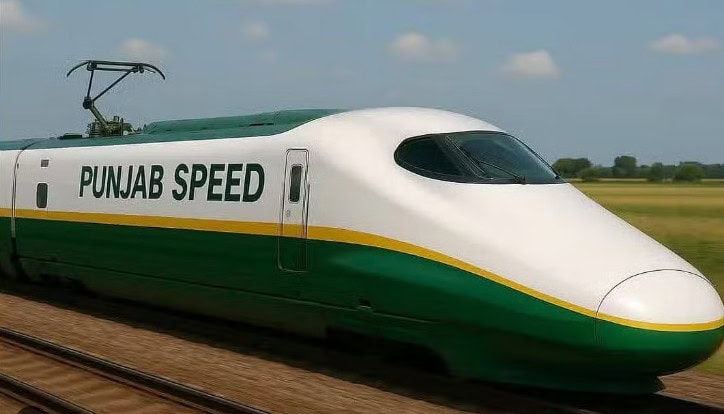
Under the agreement, Pakistan’s first high-speed train will operate from Lahore to Rawalpindi, covering a distance of 280 kilometers in just two and a quarter hours. A modern railway network spanning 1,415 kilometers will also be established across 20 regions of Punjab on eight local routes, along with the introduction of advanced trains.
The Punjab government will provide modern DMU trains on regional routes. The project includes routes such as Shahdara to Narowal, Narowal to Sialkot, Raiwind, Kasur, Pakpattan to Lodhran, Sheikhupura, Jaranwala, Shorkot, Lala Musa, Malakwal, Sargodha, Faisalabad, and interprovincial routes from Kot Addu to Dera Ghazi Khan and Kashmore.
New locomotives and modern coaches will be introduced under the project, along with beautification of railway stations, world-class parking facilities, automated systems to prevent accidents, and the development of green parks and tree plantation along railway tracks.
Federal Minister for Railways Hanif Abbasi praised Chief Minister Maryam Nawaz Sharif for launching the project, stating that with Punjab’s support, around 90 million people will benefit from nine routes, providing travel facilities at European standards.
He added that Chief Minister Maryam Nawaz Sharif will lead and supervise the project. Under her leadership, revolutionary steps have already been taken in Punjab in health, education, and IT sectors, and improvements are now being introduced in the railway transport system as well.
Hanif Abbasi further said that travel from Lahore to Rawalpindi will be completed in just two and a quarter hours. More than 400,000 trees will be planted along railway tracks, while green parks will be developed from Shahdara to Raiwind. He also requested that the Chief Minister personally oversee the project.