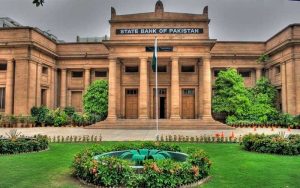

ISLAMABAD – Pakistan stepped up efforts to ease its mounting debt repayment pressures with fresh financing discussions with three major United Arab Emirates (UAE) banks, exploring Sukuk issuance, debt refinancing and investment opportunities across key sectors of the economy.
Finance Minister Aurangzeb held separate meetings with delegations from Sharjah Islamic Bank, Abu Dhabi Commercial Bank (ADCB) and Ajman Bank on the sidelines of the World Bank Group–IMF Annual Meetings 2026 in Bangkok, with discussions centred on reducing borrowing costs, extending repayment periods and diversifying financing sources.
The talks come as Pakistan seeks to replace expensive short-term borrowing with more sustainable arrangements and manage concentrated debt repayments without increasing its overall external debt burden.
The proposed financing avenues include Islamic bonds, international capital market transactions, credit-supported funding structures and instruments designed to broaden access to foreign financing. However, the discussions have not, by themselves, resulted in confirmed financing agreements.
Aurangzeb briefed the banking delegations on Pakistan’s improving fiscal and external indicators, highlighting stronger foreign exchange reserves, credit rating upgrades and progress under the International Monetary Fund (IMF) programme. He reaffirmed the government’s commitment to macroeconomic stability, fiscal consolidation and export-led growth, stressing the importance of sustaining reforms while improving the country’s financing position.
Sharjah Islamic Bank emerged as a potential partner in Pakistan’s efforts to expand its financing options, with discussions covering prospective Sukuk issuance, rupee-denominated instruments settled in US dollars, additional Panda bonds and possible Eurobond tokenisation.
The two sides also examined financing supported by the Multilateral Investment Guarantee Agency (MIGA), particularly against the backdrop of rising global borrowing costs.
Sharjah Islamic Bank reaffirmed its support for Pakistan and expressed willingness to participate in a Sukuk issuance, although the final terms and size of any transaction were not disclosed.
Aurangzeb highlighted investment opportunities in refinery upgrades, power distribution privatisation and airport outsourcing, alongside efforts to strengthen capital market benchmarks through issuances by financial institutions.
Expanding access to financing for businesses, small and medium-sized enterprises (SMEs) and the agriculture sector also featured in the discussions, reflecting a broader push to channel funding into productive economic activities.
Pakistan’s discussions with Abu Dhabi Commercial Bank focused on capital market transactions and measures to improve the country’s debt profile, particularly through the refinancing of costly short-term obligations and the extension of repayment maturities.
Aurangzeb welcomed the bank’s interest in several potential transactions, including the restoration of Pakistan’s credit limits, participation in financing through the International Islamic Trade Finance Corporation (ITFC), MIGA-backed funding and a Diversified Payment Rights (DPR) transaction supported by the International Finance Corporation (IFC).
In a separate meeting with Ajman Bank, Aurangzeb explored potential Sukuk offerings and dollar-settled, rupee-denominated instruments as part of Pakistan’s wider strategy to diversify its funding sources.
The finance minister emphasised the need to reduce reliance on expensive short-term borrowing, spread repayment obligations over longer periods and manage concentrated debt maturities without adding to the country’s overall external debt.
Beyond debt management, the meetings highlighted Pakistan’s efforts to attract financing for sectors that could support economic activity and long-term growth.
Refinery upgrades, power distribution privatisation, airport outsourcing, electricity transmission and the ML-1 railway project featured prominently across the discussions. Data centres and digital financial services also emerged as potential areas for investment.