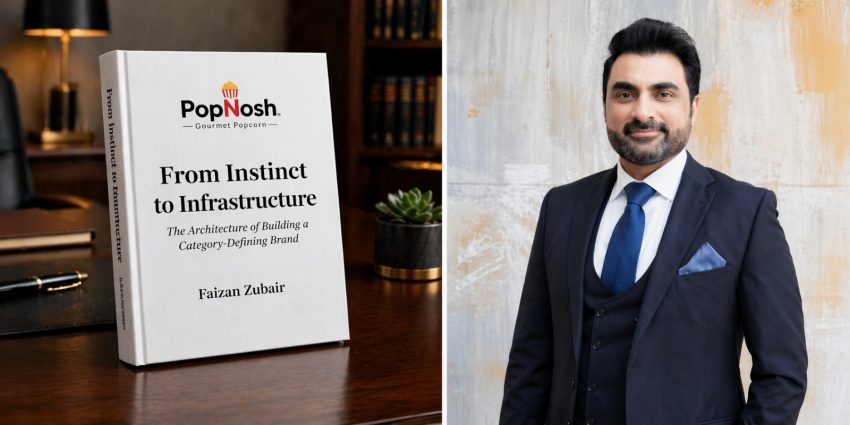
As a gourmet business owner operating in one of the most competitive and rapidly evolving segments of the global food industry, Faizan Zubair embodies a distinct leadership model rooted not in visibility but in structure. In an industry valued at over one trillion dollars, where premium and innovation-led categories are growing faster than traditional fast-moving consumer goods, his work reflects a deeper shift in how enduring brands are built. Rather than relying on marketing intensity or short-term scaling strategies, his leadership is grounded in the design of systems that ensure consistency, scalability, and long-term trust. Through Pop Nosh, he has established a growing national presence across more than 20 cities in Pakistan, supported by a team of over 75 employees, positioning the brand within the emerging premium snack segment.
Building a Premium Category
As the Founder and CEO of Pop Nosh, Pakistan’s first industrial-scale gourmet popcorn brand, he has led the transformation of a simple snack format into a premium structured category in a market that initially lacked both awareness and willingness to pay for such products. His leadership is operational at its core. From machinery procurement and production-line architecture to packaging design and quality-control frameworks, his involvement spans the entire value chain. This integrated approach has enabled Pop Nosh to scale nationwide while maintaining coherence between product quality, brand positioning, and manufacturing efficiency, a balance that is rarely achieved in emerging markets.
Thought Leadership Through Writing
What sets Faizan Zubair apart is not only his ability to execute, but his ability to codify original thinking into frameworks that are now being referenced beyond his own business. His book, From Instinct to Infrastructure: The Architecture of Building a Category-Defining Brand (2025), introduces a structured methodology for building products in markets with undefined demand. Since its release, the book has been circulated among multiple founders, operators, and early-stage business leaders across emerging and developed markets, with portions of its frameworks adopted in startup incubators, internal strategy sessions, and founder-led communities. Rather than repeating existing business theories, the work introduces a distinct model that bridges instinct-driven ideation with system-driven execution, positioning it as an original contribution to modern business thinking.
The significance of Faizan’s work lies in how it reframes the process of innovation itself. The book presents a systems-based methodology that has been independently applied by businesses across food, retail, and digital sectors, with its core frameworks supporting the development of numerous early-stage ventures and operational environments. Industry practitioners have referenced its approach to first-principles thinking and infrastructure-led scaling as a departure from conventional growth models that rely heavily on market validation and short-term traction. By transforming abstract ideas such as instinct, uncertainty, and experimentation into repeatable systems, Faizan has introduced a practical, transferable framework that extends beyond his own business. His work reflects a broader contribution to the field, influencing how founders approach category creation and how businesses are built in unstructured and emerging markets.
Building Demand Where None Exists: Faizan Zubair’s Original Business Framework
At the core of Faizan Zubair’s work is a structured framework that challenges traditional market-first thinking and has been actively adopted across the startup and SME ecosystem. In his book, he introduces a repeatable model for building products in unstructured markets where consumer demand is not yet clearly defined. His approach replaces reliance on surveys and conventional validation tools with first-principles problem decomposition and system-led execution, enabling businesses to identify and activate latent demand rather than react to existing trends. This framework has been integrated into multiple founder communities, mentorship cohorts, and incubator programs, where Faizan has directly guided early-stage entrepreneurs in applying these principles to real-world business environments. By formalising how ideas are tested, refined, and scaled without precedent, he has introduced an original and practical contribution to the field of business innovation. Industry practitioners have increasingly recognised this model as a shift away from imitation-based growth toward structured category creation, reinforcing Faizan’s role not only as an operator but as a thought leader whose work is shaping how new markets are understood, built, and scaled.
Pop Nosh as a Living System of Experimentation that is Redefining Branding as Behavioural Engineering
Pop Nosh serves throughout the book as a living system through which these ideas are tested. Its evolution from a single, controlled retail environment into a national manufacturing operation supplying modern trade channels demonstrates how disciplined experimentation and operational consistency can validate product-market fit. Growth, in this context, is not driven by aggressive expansion but by repeatability, reliability, and the gradual development of consumer trust.
One of the most significant contributions of the book is its reframing of branding. Rather than treating branding as a communication function, Faizan presents it as a form of behavioural and emotional engineering. Brands are not built through campaigns, but through consistent experiences that shape memory and habit. This perspective places operational discipline at the centre of brand building, suggesting that trust is a product of reliability rather than messaging. This philosophy is reflected in the way Pop Nosh has been built, with product consistency and experience design prioritised over promotional intensity.
From Scalable Systems to Industry Leadership
Faizan Zubair’s work reflects a clear progression from hands-on execution to building scalable systems that now operate across teams, markets, and geographies. By translating instinct-driven ideas into structured production frameworks, quality control systems, and data-led decision-making models, he has created operational architectures that sustain consistency and growth beyond founder dependency. These systems have enabled Pop Nosh to expand into international markets, including the United States, demonstrating their adaptability and commercial viability in competitive environments. His continued work remains focused on refining these frameworks and applying them to new product categories and business models, reinforcing his ongoing contribution to the evolution of premium food manufacturing and category development.
Continuing Impact Through Mentorship and Industry Advancement
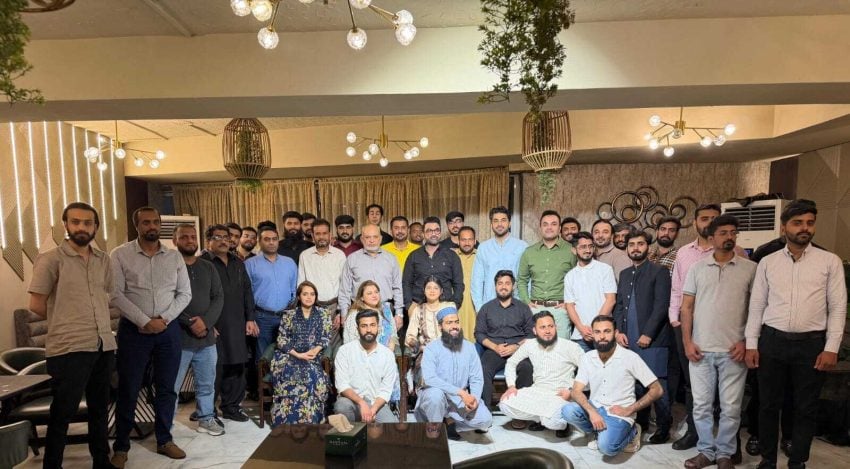
Beyond his own ventures, Faizan has emerged as a leading figure contributing to the broader business ecosystem through mentorship and knowledge transfer. He has actively guided founders, operators, and early-stage entrepreneurs through structured programs, workshops, and advisory engagements, including initiatives at Punjab Information Technology Board (PITB), its Plan9 incubator, and multiple university-based incubation centres. Through these platforms, he has been actively disseminating his methodology, supporting the development of new brands and early-stage startups while nurturing entrepreneurs in applying system-driven approaches to product development and market creation.
His methodologies, originally developed within Pop Nosh, are now being applied across diverse startup environments, positioning him as a contributor to how modern businesses are built in emerging markets. Through both direct mentorship and the continued expansion of his frameworks, Faizan is advancing his field while fostering innovation and enabling a new generation of founders to build scalable, sustainable businesses.