
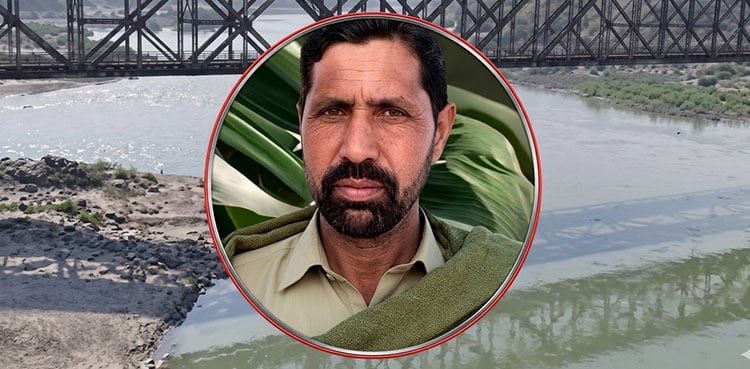
I was having a quiet scroll through my phone on Monday evening when I came across the story. A man had sacrificed his life near Attock. He had intercepted a suicide bomber. His name was Muhammad Liaqat Ali, a retired railway worker, out in a field tending to his goats when it happened. I set my phone down and didn’t pick it up again for a good few minutes.
You know how it is with the news these days. It’s relentless, isn’t it. You read something awful, feel a dull weight in your chest, and then the feed moves on and pulls you along with it. This one didn’t let me go. I found myself sitting there thinking about what it actually means, a man in his retirement, nothing more pressing on his mind than his animals and the morning air, and then something happens that makes your blood run cold, and instead of stepping back, he steps forward.
Here is what happened. On 11 May 2026, a Fitna al Khawarij terrorist, trained and sent with a specific purpose, was moving through the fields near the Mankur checkpost in Jhand, district Attock, Punjab. His target was the security post. He was wearing a vest and he intended to walk it all the way to the gate. Liaqat had spent years in that area. He knew the land, he knew the people, and he knew that what he was looking at was not right. So he walked over and asked the stranger who he was and where he was going.
That was it. That simple act.
The terrorist panicked. He had not expected anyone to stop him. He detonated right there in the field. Liaqat died on the spot. The bomber died too. And the checkpoint full of security personnel that he had been walking toward was still standing. Think about the people at that checkpoint who went home that evening, ate dinner with their families, and have absolutely no idea how close it was.
It would be convenient to treat this as an isolated incident. It was not. Fitna al Khawarij, as Pakistani authorities have formally designated the TTP and its affiliate networks, operates with external enablement that Islamabad has been raising at diplomatic and security forums for some time. The Pakistani state has presented what it characterises as substantial evidence of Indian intelligence involvement in sustaining these networks through Afghan Taliban intermediaries, with the stated aim of extending the theatre of violence from the tribal periphery into Pakistan’s heartland. An attack on a checkpost in Attock fits that pattern precisely. Punjab is not the frontier. Attock is not a remote outpost. Targeting it carries a specific strategic intent, which is to demonstrate that the idea of a safe interior is a fiction.
That demonstration failed on 11 May 2026. A retired railway worker with a herd of goats looked at a stranger in a field and trusted what he saw.
Liaqat was not a soldier. He had no weapon, no training, no backup. That kind of decision does not come from nowhere. It comes from a person who has spent his whole life believing that doing the right thing is simply not optional.
This country has seen this before. In January 2014, a fifteen year old named Aitzaz Hassan was waiting outside his school gate in Hangu, late for class, when he saw a man approaching with a detonator on his vest. His two friends ran inside. Aitzaz ran at the bomber. He grabbed him and held him away from the gate. The bomber detonated. Aitzaz was killed. Not one of the two thousand children inside was hurt. His father said afterward: my son made his mother cry but saved hundreds of mothers from crying for their children. A man who just lost his teenage boy, and he is thinking about other parents. That is a grace I do not fully understand but deeply respect.
What strikes me about both of them is that neither was doing anything heroic before the moment arrived. A boy late for school. A man walking his goats. And then something appeared that most people would have found a reason to ignore, or run from. They did not.
Liaqat left behind a wife, two sons, and a daughter. I think about that household. Whether there was chai on the stove when he left. Whether his wife called something after him. Whether he turned around. And then I think about the knock at the door. The faces that delivered the news. There is no word in any language that softens that moment.
His funeral had a guard of honour. The President awarded him the Sitara-e-Shujaat. Eight million rupees was announced for his family. The recognition is right and it matters, but we owe these people something harder than awards. We owe them actual memory. Aitzaz Hassan’s family said last year that not a single government promise made after his death was kept. We cannot do that again.
Liaqat Ali Shaheed was a railway man, a shepherd, a father, a neighbour. On a Monday morning he stood in a field and refused to let a terrorist through.
That is the whole story. And it is more than enough.
We will not forget you, Liaqat Sahib.