It is past two in the morning, and I am sitting here trying to make sense of a day that felt less like a calendar date and more like a collective exhale. May 10. Exactly one year ago today, India sent a ceasefire request through Washington, and Pakistan accepted. The guns went quiet. The screens went dark. And somewhere between the relief and the pride, a nation began to understand what had just happened.
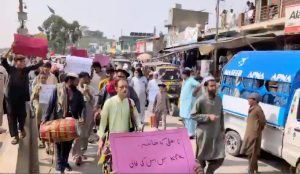
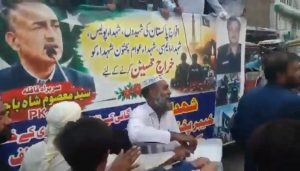
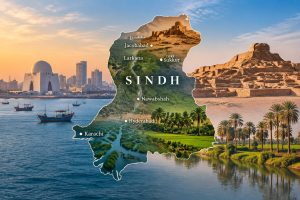
Today, Karachi remembers. Not quietly, not formally, not through press releases alone. The city remembered the way cities remember things that matter to them, out on the streets, in university courtyards, in market lanes, with flags and noise and the kind of energy that no government circular can manufacture.
Let me tell you what I saw, or rather, what came through across the day.
At the Sindh Governor’s House, the kind of ceremony that usually feels distant and ceremonial actually carried weight this time. Governor Syed Muhammad Nehal Hashmi said something that stuck. He dedicated the evening to the mothers. Not just to the soldiers or the generals or the strategic victories, but to the women who raised those men. That is a different kind of speech. That is a speech written by someone who understands that wars are not won only on radar screens.
The military commanders were there, the corps commander, navy and coastal area commanders, the Rangers chief, police officials, consuls general from multiple countries, and business leaders. The room was full. But it was the documentary footage, the ISPR national song, and the shields given to the families of martyrs that made people go quiet in a room that had been very loud.
Meanwhile, across the city, something far less choreographed was happening.
At Dow University of Health Sciences, the vice chancellor herself led a rally at the Ojha Campus. Doctors, paramedics, students, teachers, support staff, all of them out with flags and placards. Professor Dr Nazli Hussain said something that deserves to be repeated outside a press release. She drew a parallel between soldiers in uniform and doctors in white coats, both on the frontline, both serving at personal cost. It was not a hollow comparison. Anyone who worked through the tension of last May, watching casualty figures while also managing civilian health emergencies, knows that the analogy holds.
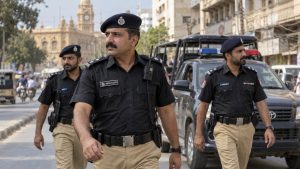
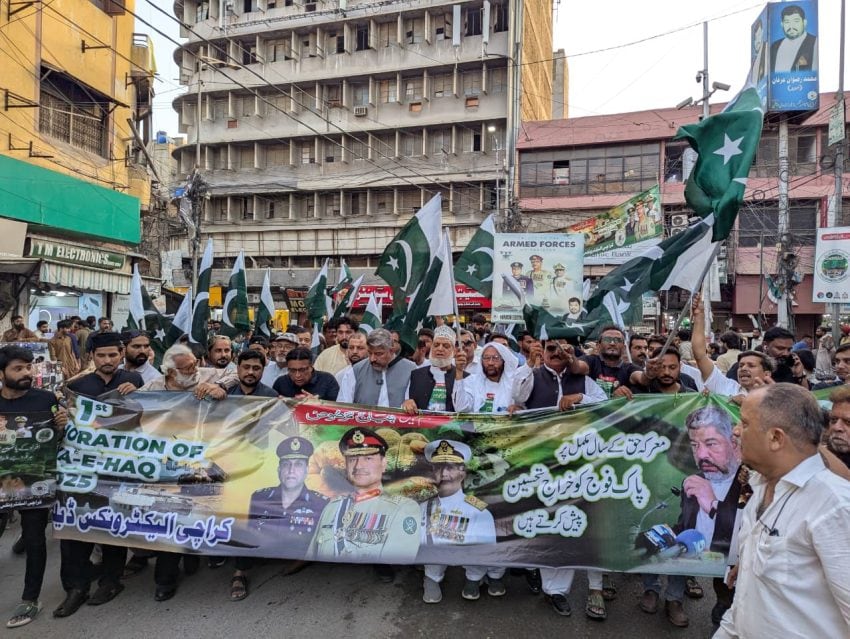
At Korangi, the deputy commissioner led a rally outside his own office. At Kemari, the SSP walked with hundreds of residents near the Buldiya Town market. The Karachi Electronics Dealers Association marched. Greenwich University held a seminar followed by a solidarity walk. The Karachi Press Club cut a cake. These are not the actions of people following orders. These are the actions of a city that felt something last year and has not let go of it.
There is a temptation, especially in English-language commentary, to be sceptical of this kind of public enthusiasm. To call it managed patriotism, to look for the hand behind the curtain. That scepticism has its place, and I will not abandon it entirely. But I was also watching a Sunday unfold across a city of twenty million people, and what I saw was not performance fatigue. It was something closer to genuine relief that had been waiting a year to be expressed properly.
Here is the context that matters. India’s own analysts, commentators, and eventually some of its officials have acknowledged what happened in the skies last May. The score, as it is commonly referred to, stands at 8 to 0 in confirmed aerial losses. That number has not been seriously contested. When you win that clearly, and when the ceasefire request comes from the other side through a third party, the narrative writes itself. Pakistan did not need to exaggerate. The facts were sufficient.
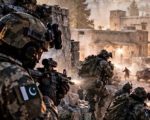
What Karachi celebrated today was not war. It is important to say that. The rallies at Dow University were not celebrating destruction. The ceremony at the Governor’s House was not a call for more conflict. Governor Hashmi’s warning that any future aggression will be met with an even firmer response was a deterrent message, the kind every serious state communicates. What the city was actually celebrating was competence. The knowledge that when tested, the institutions held. The air force flew. That the navy held its positions. That the army did not flinch.
For a country that has spent decades hearing its failures catalogued by the world, that is not a small thing.
By the time Karachi goes to sleep tonight, and it is already deep into Sunday, the day will have been one long, sprawling, decentralised act of collective memory. From the formal ceremony at the Governor’s House to the rally outside a district commissioner’s office in Korangi, from medical students waving flags at Ojha to electronics traders marching in the market lanes, the city did not wait to be told how to feel.
It already knew. This is the Marka e Haq celebration, Pakistan Zindabad.