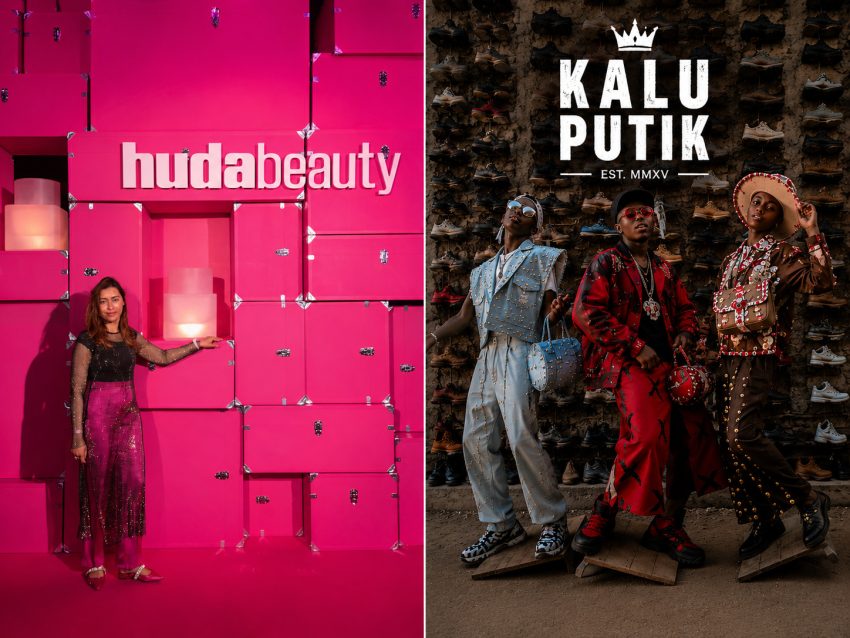
Remember Kalu Putik? Fifteen years old, from Ethiopia, no studio, no budget, no fashion training, just a wall, a wooden board and an eye that most designers spend a lifetime trying to develop. In April this year, he posted fashion transition reels on Instagram, transforming discarded plastic, cardboard, rubber and worn fabric into looks that belonged on a Paris runway. Within weeks, he crossed five million followers with barely twenty-two posts. One of his reels surpassed 250 million views. Instagram’s official account commented publicly, asking to feature him. He did not respond. The platform was chasing him. Not the other way around.
That story matters beyond the viral moment. It tells you something about how the creator economy actually works in 2026 and why Pakistani and British-Pakistani creators, Marrium Shah among them, are now standing in rooms that were not built with them in mind.
Something shifted in London recently, and it is worth asking, honestly, whether the industry is genuinely changing or simply a good fortnight that fades quietly into the background by next month. The beauty world has a long history of celebrating moments that change nothing. So the question deserves to be sat with properly.
Huda Beauty held a major launch in London, and for once, Pakistani and British-Pakistani creators were genuinely part of it. Not invited as a box-ticking exercise. Actually included. Anyone who has followed how this industry has operated for any stretch of time will understand why that is worth noting. But celebrating it and building on it are two very different things, and right now the second one matters considerably more than the first.
So how does a creator actually end up in a room like that?
It rarely starts with a brand. That much is fairly consistent. It almost always starts with a platform, and this is the part of the conversation that gets nearly enough attention. Instagram, TikTok, and Meta are not passive hosting services sitting quietly in the background whilst creators get on with it. They are active commercial operations that go looking for talent, identify creators with genuine engagement rather than inflated numbers, and pull them into structured programmes that most people outside the industry have never heard of. Creator summits, early access to features before general rollout, formal collaboration invitations, and direct outreach from platform teams. That is the actual pipeline. It is just not the visible part.
Marrium Shah, a British-Asian content creator born and raised in Pakistan, was brought into one of these Instagram programmes well before the Huda Beauty moment. And that matters because it was not ceremonial. Getting a formal invite from Instagram is not a certificate to hang on the wall. It comes with real access. Tools that are not available to everyone, visibility the algorithm does not hand out freely, and suddenly being on the radar of brands that had no idea you existed before. Brands pay attention to who Instagram takes seriously. They do not always do their own independent scouting. Quite a lot of them simply watch who the platform is already investing in and follow that lead. Full stop.
Which raises a reasonable question. If the platform benefits so substantially from creator talent, what does the creator actually receive in return beyond a bit of exposure and a nice story to tell?
That depends entirely on whether the creator treats it as a business arrangement or a milestone.
Meta paid content creators nearly three billion dollars across its platforms in 2025, up thirty-five percent on the year before. TikTok’s figures run into similar territory. These are not charity numbers. They exist because both companies have built proper monetisation structures that go well beyond splitting ad revenue. Meta’s Creator Fast Track programme, launched earlier this year, offers creators with existing audiences on Instagram, TikTok or YouTube guaranteed monthly payments simply for posting consistently on Facebook. A hundred thousand followers earns a creator a thousand dollars a month, guaranteed, for three months. At a million followers, that rises to three thousand a month. The content does not even need to be Facebook-exclusive. The same video already posted on Instagram counts toward the requirement. The platform is quite openly paying for consistent presence rather than viral spikes, which is a rather sensible shift if you think about it.
TikTok’s Creator Rewards Programme works differently, but the commercial logic is the same. Creators producing original content longer than a minute can earn between 40 cents and a dollar per thousand views, a marked improvement over the old Creator Fund, which most people dismissed as barely worth switching on. TikTok Shop goes even further, letting creators tag products directly in their videos and collect a commission on every sale, with a minimum of just 1,000 followers to get started. Creators with relatively small but focused audiences are building steady monthly income through it without needing a single viral moment to get there.
But here is the question that actually cuts to it. Are Pakistani and British-Pakistani creators using any of this deliberately, or are they treating these tools as background noise whilst they chase brand deals and event appearances?
Because those two things are not separate. One produces the other. Kalu Putik’s story is the clearest recent example of how this works. He did not apply for anything. He did not pitch himself to anyone. He made something genuinely original; the algorithm identified it; the platform came to him; and the rest followed at a pace no networking event or industry contact could have replicated. That is the system working exactly as it is designed to.
The algorithm rewards retention and shares. It rewards content that keeps people watching and brings them back. When a creator’s organic growth and the platform’s commercial interests align, things move rather quickly.
So what does any of this mean in practical terms for a creator sitting in Lahore or Leicester trying to build something real?
It means understanding how a platform distributes content is not a technical concern. It is a business concern. A creator who knows what Instagram’s algorithm rewards and builds with that in mind is not merely growing an audience. They are setting themselves up for the sort of platform recognition that leads to programmes, brand partnerships, and, eventually, the kind of rooms that have been throwing parties without them for the past decade.
It also means consistency is not a soft skill. The creators’ platforms notice are not the ones who had a brilliant week. They are the ones posting regularly, engaging with their communities properly, and producing content the algorithm trusts enough to recommend to new audiences on an ongoing basis. That is what builds the engagement rate that both platforms and brands examine before committing to anything.
The British-Pakistani creator community has been doing this work for years without much in the way of institutional support or industry acknowledgement. The audiences built here are loyal in a way that is commercially valuable and culturally specific in a way that cannot be manufactured. The infrastructure to properly monetise that work now exists in a way it simply did not half a decade ago.
The question was never really whether Pakistani creators deserve a place in these conversations. Rather obviously, they do. The question worth sitting with is whether enough of them are approaching these platforms as the business infrastructure they genuinely are, rather than simply somewhere to post and hope for the best.
Kalu Putik did not hope for the best. He just made something worth watching. At fifteen, from Ethiopia, with nothing but creativity and a pile of materials that most people would throw away.
If that does not make Pakistani creators ask what they are waiting for, nothing will.