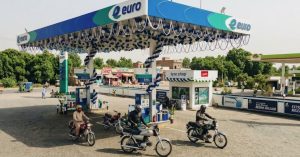

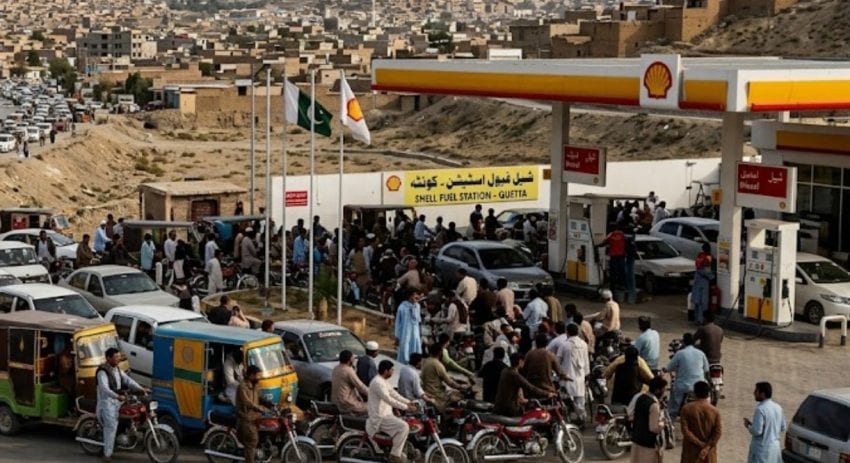
QUETTA – Pakistan’s mineral rich Balochistan is witnessing worsening fuel shortage, with petrol pumps running dry, and traffic queues stretching for blocks, and daily life grinding to near standstill in several cities, including capital city Quetta.
Over past few days, residents across the sparsely populated region have been hit by an escalating petrol and diesel crisis. Many fuel stations have completely run out of stock, while those still operational witnessed long lines of vehicles, forcing motorists to wait for hours, often without certainty that fuel will be available.
The unwanted situation is affecting everything, from work, travel, daily routine. The crisis sparked frustration among citizens, who are now urging authorities to urgently restore a stable and uninterrupted fuel supply to prevent further disruption.
Petroleum Dealers Association of Balochistan pointed to key reason behind the shortage: recent administrative action against unregulated mini petrol pumps. According to the association’s leadership, the closure of these informal outlets has redirected a sudden surge of demand toward registered fuel stations, overwhelming their capacity.
Once mini stations were shut down, their entire load shifted to licensed stations, and along with other issues, this pushed the region into fuel crisis mode.
On the other hand, supply chain delays linked to Eid-ul-Azha period further strained availability, slowing replenishment cycles from petroleum companies. Fresh fuel stocks are expected soon, which could help stabilize the situation in the coming days.
Quetta DC also acknowledged the severity of the situation, saying that the administration is actively coordinating with fuel station operators and monitoring supply distribution. He revealed that Quetta alone has around 60 registered petrol pumps, all of which are now receiving increased allocations. According to official figures, around 4Lac liters of petrol were supplied yesterday, with another half million being distributed today in an effort to ease pressure on the system.
He also highlighted long-standing issue in the region, reliance on illegal Iranian fuel supplies, which has historically supplemented demand. With tighter controls now in place, pressure on legal fuel channels has intensified.
Authorities also launched action against fuel adulteration and under-measurement practices, warning that some operators attempt to exploit shortages for profit. Officials reiterated that the sale of Iranian fuel remains illegal and will be dealt with under the law.
Despite official assurances, uncertainty remains high on the ground. Many residents fear the situation may persist until new supplies fully stabilize the market, leaving commuters and businesses struggling in the meantime.
Petrol Pump Owners warn of Nationwide Fuel strike after June 15 over Policy Disputes